Just arrived in Japan

English

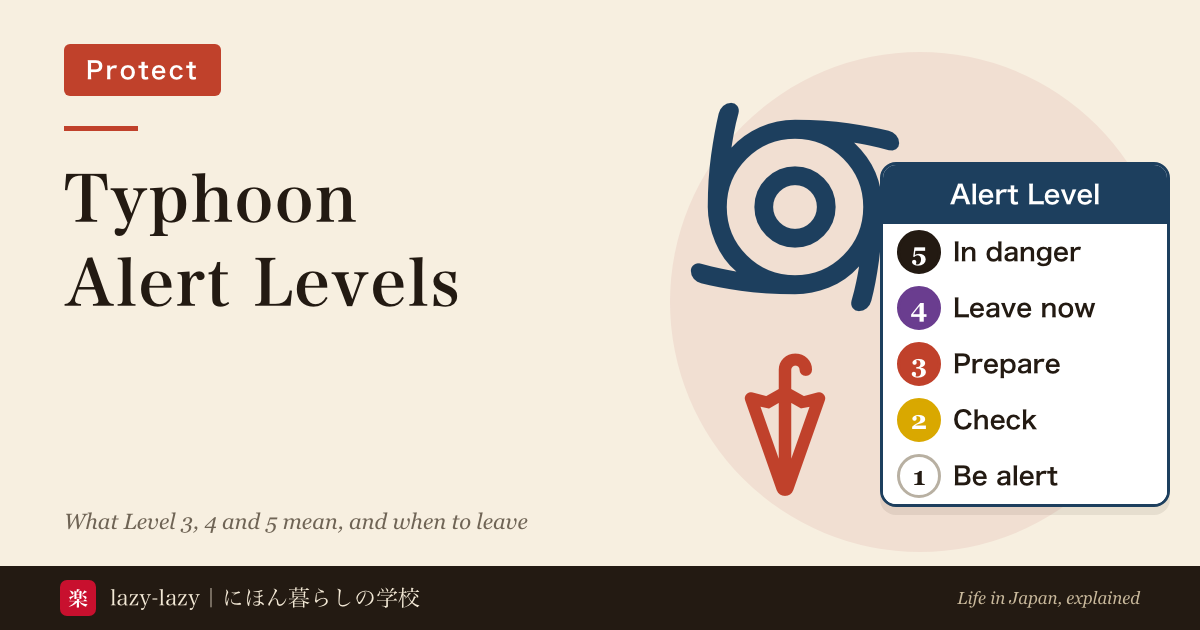
Typhoon Alert Levels in Japan 2026: What Level 4 Means, When to Leave

Alert Levels 1 to 5 for typhoons and heavy rain in Japan. At Level 4 everyone in the danger area leaves; do not wait for Level 5. Checked October 2026.
English
How to Pay in Japan Without a Credit Card 2026: Konbini, Debit, COD

You can run most of daily life in Japan without a credit card. ahamo and Rakuten Mobile take direct debit, and povo takes Paidy, payable by direct debit or at a konbini. UQ WiMAX and SoftBank Air take direct debit, with the router paid cash on delivery. Debit cards can be refused for phone bills and utilities. Amazon konbini payment is due by 23:59 three days after the number is issued, and the ETC Personal Card costs 1,257 yen a year. Fees and the five-year rule on unpaid bills included.
English

Noise Complaints in Japan 2026: Lease Rules, Eviction, Where to Call

In a Japanese apartment block sound travels next door and up and down, and the government tells foreign residents to take care especially from late at night to early morning. Japan's model lease bans high-volume TV, stereos and piano playing; adding a live-in person needs notice and subletting needs written consent. One complaint does not end a lease: termination comes after a warning with a deadline, if the problem is not fixed and the lease becomes hard to continue. Ignoring an official's order to stop and staying extremely loud is a minor offence (detention or a 1,000 to under 10,000 yen fine). Where to go: management company, city pollution complaints desk (free), #9110, 188.
English

How to Write a Japanese Address 2026: 6 Parts, in English and Japanese

A Japanese address runs largest first in six parts: 7-digit postal code, prefecture, city, town and chome, ban and go (or banchi), building and room. 1-chome 15-ban 1-go is written 1-15-1. For mail, a correct postal code lets you drop the prefecture and city. In English, reverse the order and end with the postal code and JAPAN. On bank and post office forms, copy the address on your residence card, and report a move within 14 days.
English

Tenant Rights in Japan 2026: Who Pays If the AC or Water Heater Breaks

In a rented flat in Japan, the landlord must repair equipment that breaks from age, such as the AC or water heater (Civil Code Art. 606). You pay if you broke it or lost your key. Tell the management company first; for a leak, close the stop valve. If they won't fix it, you may repair it and claim the cost (Arts. 607-2, 608), and since April 2020 rent is reduced for what you can't use (Art. 611).
English

Cheap Furniture in Japan 2026: Second-Hand Appliances, Recycling Fees

Three cheap ways to furnish a flat in Japan: second-hand shops with an antique-dealer licence, your city's reuse furniture, and people giving things away. Sagamihara's reuse furniture costs 350, 650 or 1,300 yen by size (residents of junior-high age or older, one item a month, lottery). Check the PSE mark on used electronics. Fridges, washing machines, TVs and air conditioners cannot go out as oversized rubbish: you pay a recycling fee (Sharp example: fridge over 170 L 4,730 yen, washer 2,530 yen) plus a collection fee. Avoid unlicensed free-pickup trucks.
English

Passport Renewal or Lost Passport in Japan 2026: Your Residence Card

You renew your passport at your own country's embassy or consulate. A new passport does not change your residence card, which has no passport number, so there is nothing to tell Immigration unless your name, date of birth, sex or nationality changed (then within 14 days, no fee). Keep the old passport: carrying both covers any re-entry permit stamp. Lost it in Japan? File a report at a police box, then go to your embassy, and replace a lost residence card within 14 days.
English

Winter Electricity Bills in Japan 2026: How to Stay Warm and Pay Less

Winter electricity bills in Japan jump because heating raises your usage and, on stepped plans, each kWh costs more. On TEPCO's Meter-Rate Lighting B from November 2026, the first 120 kWh cost 29.85 yen and anything over 300 kWh 40.54 yen. The bill is basic charge + energy charge (with the fuel cost adjustment) + renewable surcharge of 4.18 yen/kWh; the average model comes to 9,561 yen for November. The government guideline is 20°C, and turning an air-con from 21°C to 20°C saves about 1,650 yen a year under set conditions. Turn kerosene heaters off before refuelling and ventilate. No bill discount had been announced for October onwards as of 30 September.
English

Halal Food in Japan 2026: Read Labels for Pork, Alcohol and Allergens

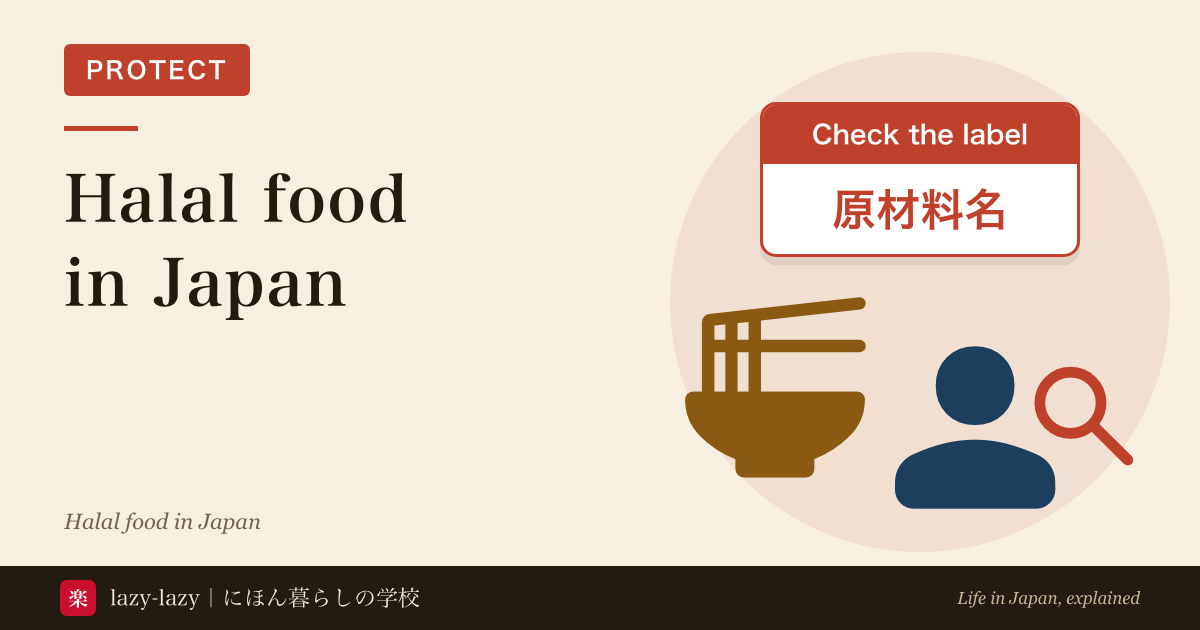
Japan has no central halal certification body, so you check food yourself. On packaged food, read 原材料名: pork appears as 豚肉, ポーク or 豚脂, alcohol as 酒精, 洋酒 or みりん. Only 9 allergens must be labelled; pork and gelatin are among the 20 recommended ones, so they can be present even when the allergen note is silent. Restaurants and in-store food carry no label, so ask with JNTO's bilingual sheet. For school lunch, religion or allergy, talk to the class teacher.
English

Contact Lenses in Japan 2026: Eye Exam at 30%, Prescriptions, Online

In Japan, contact lenses are highly controlled medical devices, and zero-power coloured lenses have been too since November 2009. The eye exam for contacts is covered by health insurance: about 1,030 to 1,480 yen at 30% at a new clinic, lenses extra. Shops, online included, must check you have seen a doctor, and "no prescription needed" selling is called improper. Plus the two-month import limit, symptoms that mean see a doctor now, and why glasses are not insured except treatment glasses for children under 9.
English

Japanese Wedding and Funeral Money 2026: Amounts, Envelopes, New Bills

No law sets wedding or funeral money in Japan. In surveys by the All Japan Kankonsosai Mutual Aid Association, the most common gift for a coworker's wedding reception was 30,000 yen (average 31,696, FY2023) and koden for a coworker's family funeral was 5,000 yen (average 5,336, FY2021). Avoid 4, 9 and even amounts; use crisp new notes for weddings but not for funerals. How to write the envelopes, hand them over, and post money by cash registered mail.
English

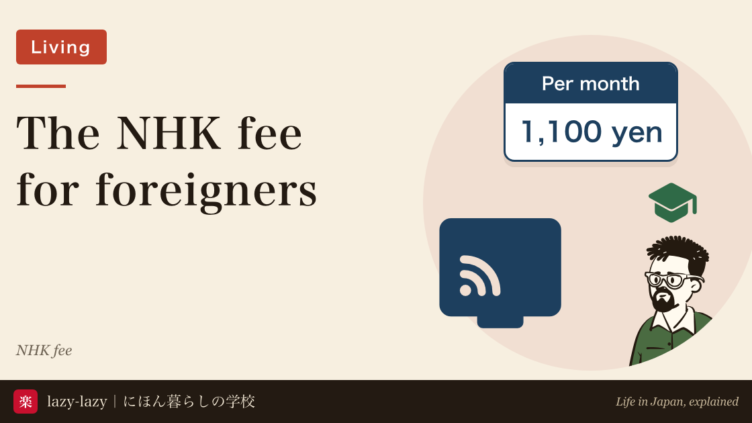
NHK Fee for Foreigners 2026: 1,100 Yen, Student Exemption, Cancelling

Foreigners in Japan pay the NHK fee on the same rules as everyone: if you set up a TV-type device or start NHK ONE, the Broadcasting Act requires a contract. Owning a smartphone alone does not. It costs 1,100 yen a month, or 1,950 yen with BS. Students living alone can be fully exempt with income of 1.87 million yen or less or a pension deferral, from the month they apply. Leaving Japan? Cancel on 0120-222000 from the month before.
English

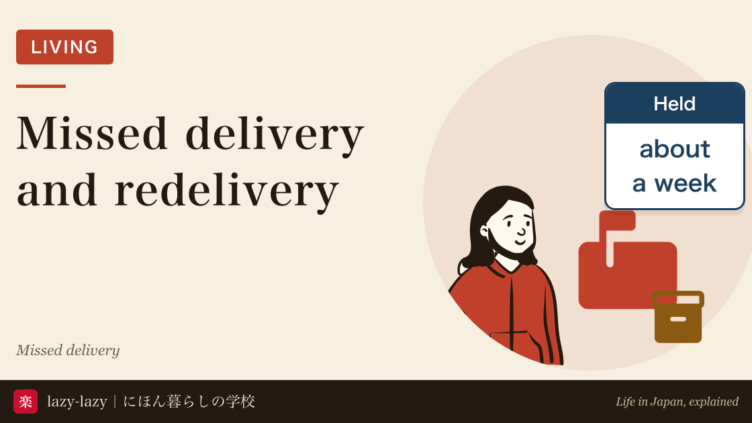
Japan Post, Yamato, Sagawa Redelivery in English 2026: 7-8 Day Hold

A missed delivery notice (fuzaihyo) means a parcel came while you were out. Find the number first: 6 or 11-13 digits for Japan Post, 12 for Yamato, an office and tracking number for Sagawa. Request redelivery by phone, online or LINE; in English call Japan Post on 0570-046-111 or Yamato on 0120-67-9625 (daily 8:00-21:00), or use Sagawa's multilingual chat. Items are held 7 days (Japan Post, Yamato) or 8 (Sagawa). A residence card sent by post and the My Number letter come by registered mail.
English

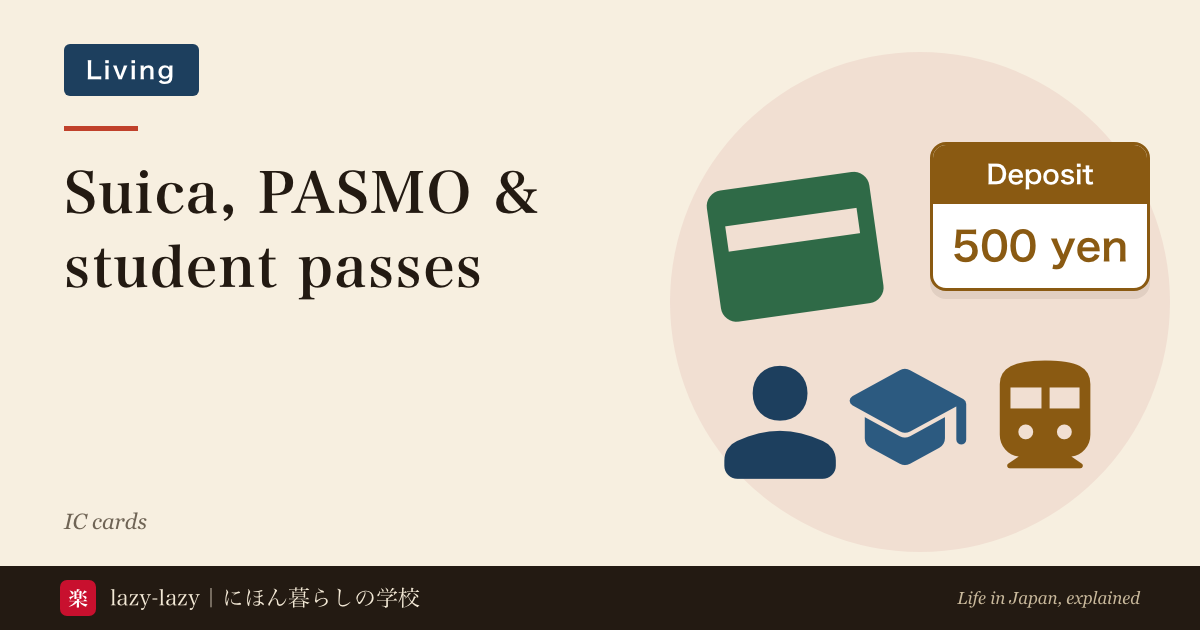
Suica and PASMO for Foreigners 2026: Deposit, Refunds, Commuter Passes

Foreigners can buy Suica or PASMO at any station machine; if you live in Japan, register it. Every card holds a 500-yen deposit you get back on return (phone cards have none). Student commuter passes are only for JR-designated schools: a Japanese language school must be a licensed senshu or kakushu gakko with a designated course. Refunds are at the issuer's stations: balance minus 220 yen plus 500. Leaving Japan? Refund Mobile Suica before closing your bank account.
English

PayPay for Foreigners in Japan 2026: Phone Number, ID Check and Limits

Foreigners can use PayPay, but you need a Japanese mobile number; overseas numbers cannot register. For the identity check, use a residence card with at least 90 days left when you apply (age 16 or over) or a My Number card. Residence cards issued on or after 14 June 2026 are not accepted for now. After the check, paying from your balance rises from 500,000 to 1,000,000 yen in any 24 hours and sending from 100,000 to 300,000 yen, and you can link and withdraw to a bank. Cash top-ups at Seven Bank and Lawson Bank ATMs work even before it.
English

Dentist in Japan Cost 2026: You Pay 30%, First-Visit Fee 830 Yen

Japanese health insurance covers the dentist for foreign residents too: you pay 30%. Under the fee schedule from June 2026, the first-visit fee is 2,750 yen, about 830 yen at 30%, and a repeat visit is 180 yen, with tests and treatment added. Implants are self-pay as a rule and whitening is not covered. How to find a dentist on Navii, book by phone, use the 13-language dental questionnaire, and the one-month rule.
English

Mental Health Help in Japan 2026: Hotlines, Therapy Costs and 10% Aid

Where foreigners in Japan can get help when their mental health suffers. Call Yorisoi Hotline on 0120-279-338 and press 2: daily 10:00 to 22:00, 10 languages, free. TELL takes English calls. Psychiatric clinics take health insurance (you pay 30%), and jiritsu shien iryo cuts ongoing outpatient care to 10% with a monthly cap. Plus university counselling and when to call 119, checked against MHLW, Tokyo and Osaka pages.
English

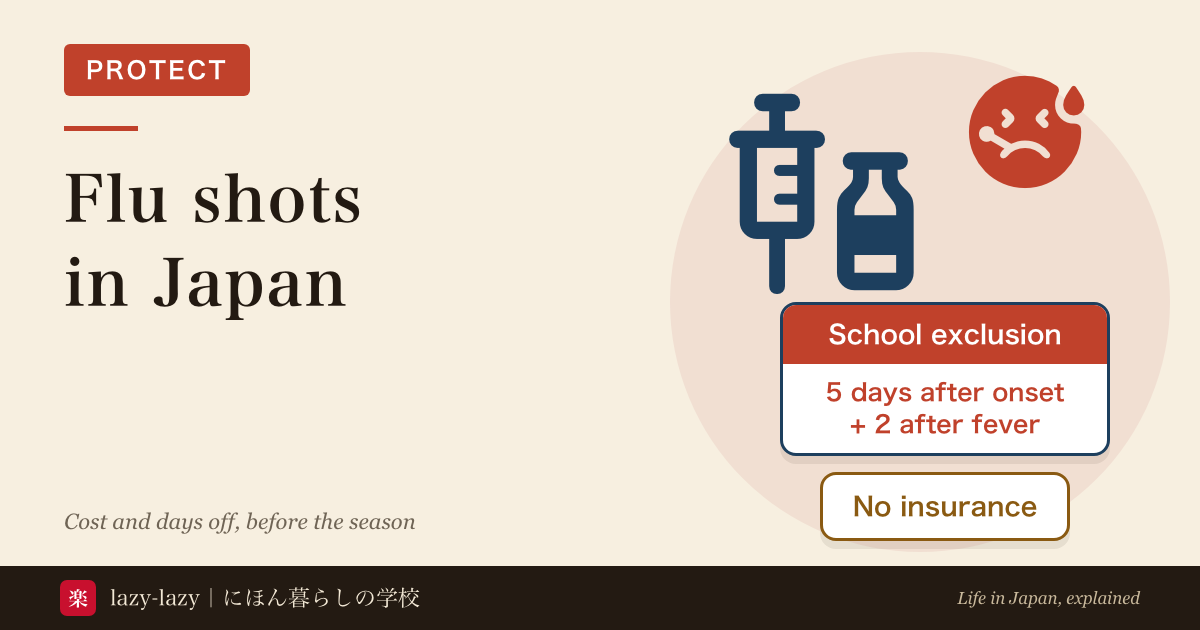
Flu Shot in Japan 2026: Cost, No Insurance, and the 5-Day School Rule

A flu shot is not a treatment, so health insurance in Japan does not cover it and each clinic sets the price. The routine shot is only for 65 and over (and some 60-64): 1,500 yen in Nagoya, free in Shinagawa in FY2026. Some cities pay for children: 2,000 yen off in Shinagawa, free to high school in Chiyoda. Under 13 needs two doses, ideally by mid-December. If you catch it: school exclusion for 5 days after onset and 2 after the fever, language-school attendance, and paid leave or sickness allowance at work.
English

Car Accident in Japan 2026: What to Do, Police Report and Insurance

After a traffic accident in Japan, every driver must stop, help the injured, prevent danger and report to the police (Road Traffic Act Article 72) — cyclists too. Not reporting can mean up to three months or a 50,000 yen fine, and no traffic accident certificate (1,000 yen). Jibaiseki pays only for injuries to others, up to 1.2 million yen. Health insurance still works, with a third-party notification. Bicycle insurance is mandatory in 34 prefectures. Plus free help, including Houterasu's multilingual line.
English

Urgent Care in Japan 2026: Night and Holiday Clinics, What You Pay

Sick at night or on a holiday in Japan but it is not an ambulance case? Go to a holiday and night emergency clinic or the duty doctor. Find one open now with the health ministry's Navii search (in English), #7119 in 41 areas, #8000 for children, or Tokyo and Osaka phone lines. Night and holiday visits add 85, 250 or 480 points: 255, 750 or 1,440 yen at 30%. Walking into a big hospital when it is not urgent can cost 7,000 yen or more.
English

Japan Bicycle Rules 2026: Blue Tickets and Fines From April

Since 1 April 2026, cyclists aged 16 and over in Japan, foreign or Japanese, can be given a blue ticket (traffic infraction notice). Fines include 12,000 yen for holding a phone while riding, 7,000 yen for entering a closing level crossing, 6,000 yen for a red light or riding on the right, 5,000 yen for a missed stop sign, no light, an umbrella or earphones that block sound, and 3,000 yen for a passenger or riding side by side (National Police Agency Bicycle Rulebook). Police warn first and ticket dangerous riding or ignored warnings. Pay within seven days from the day after and the case ends with no trial and no criminal record. Drink-cycling is a red-ticket criminal case. Ride on the left of the road; pavements only in limited cases.
English

Things That Are Illegal in Japan for Foreign Residents: 7 Laws (2026)

Foreign residents in Japan must carry their residence card at all times: not carrying it can mean a fine of up to 200,000 yen, and refusing to show it up to one year in prison. Selling or giving away a bank account or cash card is a crime whether or not you are paid, with penalties raised on 10 July 2026 to up to three years or 5,000,000 yen. Passing a phone or SIM outside your family needs the carrier's consent. Taking someone else's bicycle can be embezzlement or theft. Cannabis, including gummies and liquids, means up to seven years for having or using it, and a conviction alone is a deportation ground. Carrying a blade over 6 cm and unauthorised work are also crimes, and even a fine is looked at in immigration review.
English

Work Injury in Japan 2026: Rosai Insurance Covers Foreign Workers Too

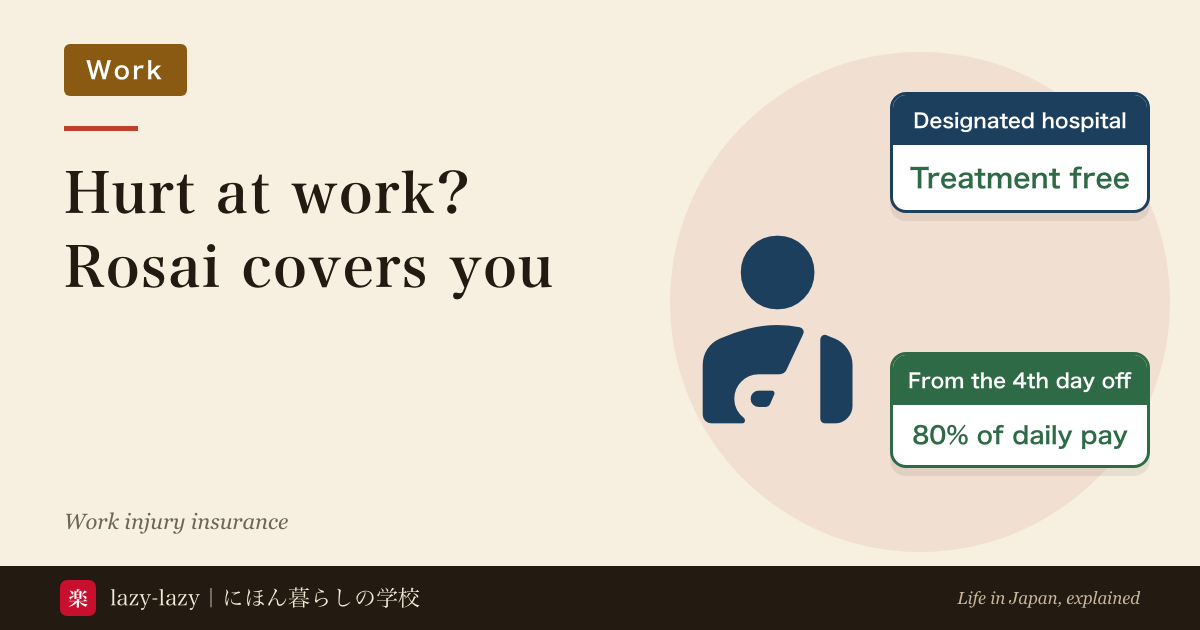
Japan's work injury insurance (rosai) covers foreign workers regardless of nationality, including students injured during part-time jobs, and the employer pays the premium. Health insurance cannot be used for a work or commuting injury: treatment at a rosai-designated hospital is free, and the full cost is refunded if you had to pay elsewhere. From the fourth day off work you receive 80% of your basic daily wage, about 5,217 yen a day on 200,000 a month. You file the claim yourself at the Labour Standards Inspection Office, even if the employer refuses to certify, never enrolled, or has closed, and even after you have left Japan. Time limits: two years for treatment and absence benefit, five for disability and survivors. The MHLW brochure is available in 13 languages.
English

High Cost Medical Expense Benefit Japan 2026: Caps From 36,900 Yen

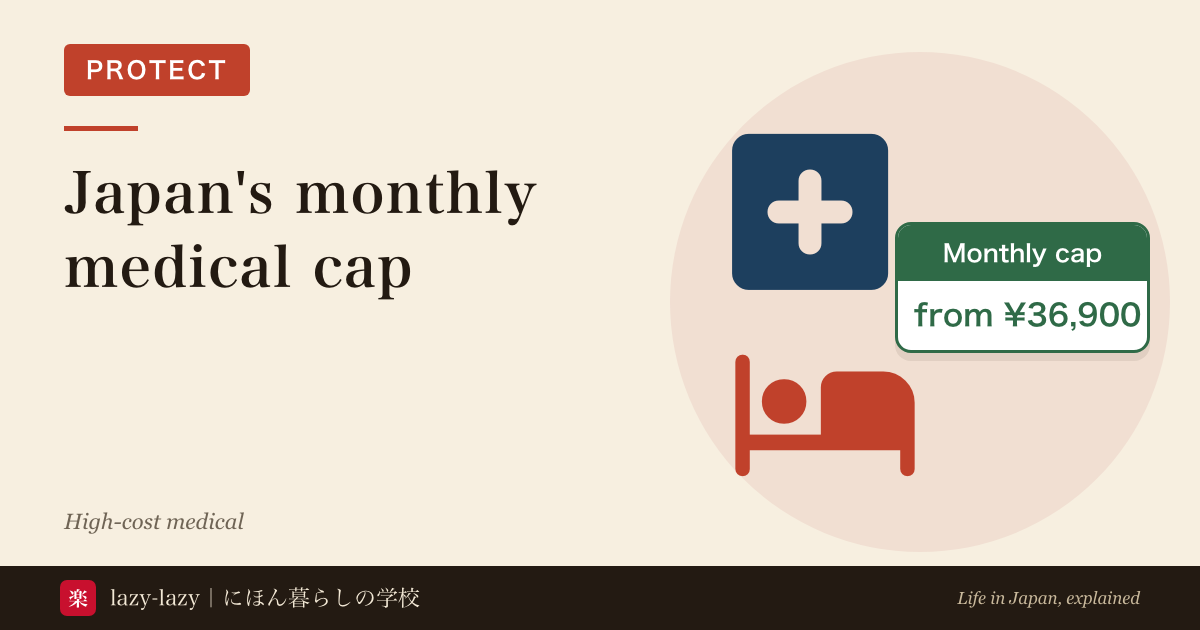
The high-cost medical expense benefit works the same for foreign residents. For under-70s the monthly cap has five income bands: from August 2026, 36,900 yen if you are exempt from resident tax and 61,500 yen up to about 3.7 million yen a year. What a 1-million-yen month costs in each band, why a My Number health card makes the limit certificate unnecessary, why undeclared income puts you in band A, household totals over 21,000 yen, where to claim and the two-year deadline.
English

My Number Card as Health Insurance in Japan 2026: 3 Ways to Register

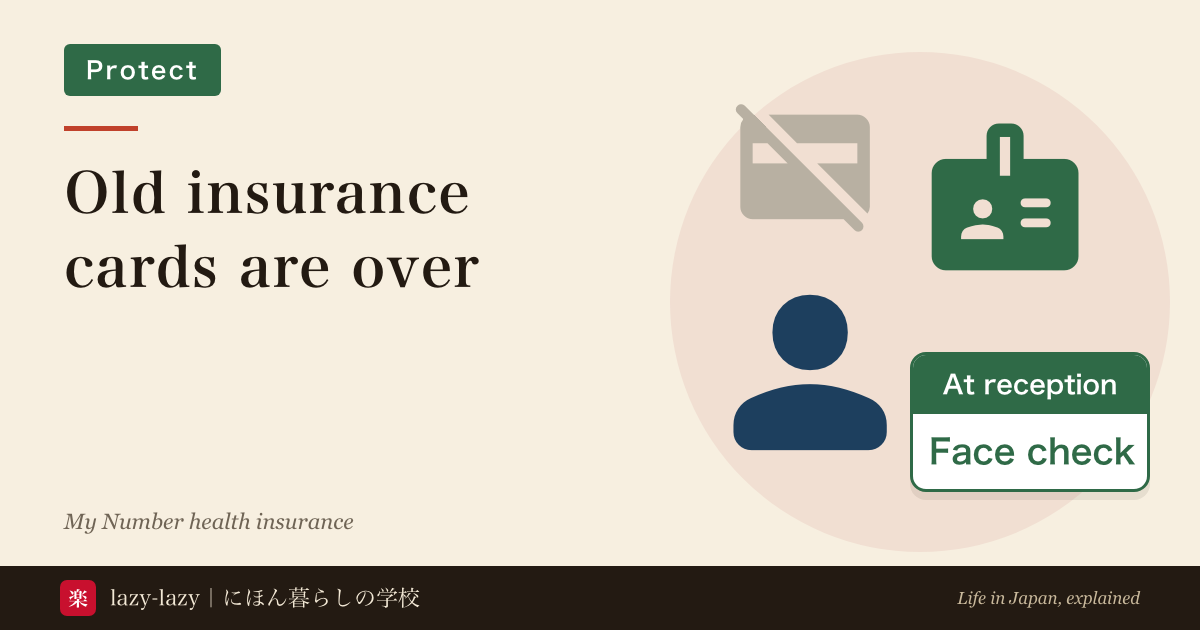
Old health insurance cards in Japan stopped being issued on 2 December 2024, all expired on 1 December 2025, and clinics stopped accepting expired cards on 31 July 2026. You now show your My Number Card registered for insurance, or a Health Insurance Eligibility Certificate, which your insurer sends free and without an application if you have no card. It works the same for National Health Insurance and company insurance. Register at a clinic's card reader, in Mynaportal or at a Seven Bank ATM. For foreign residents the card expires with the period of stay, so extend it at the city office after every renewal.
English

Hanko for Foreigners in Japan: Do You Need One, and How to Register

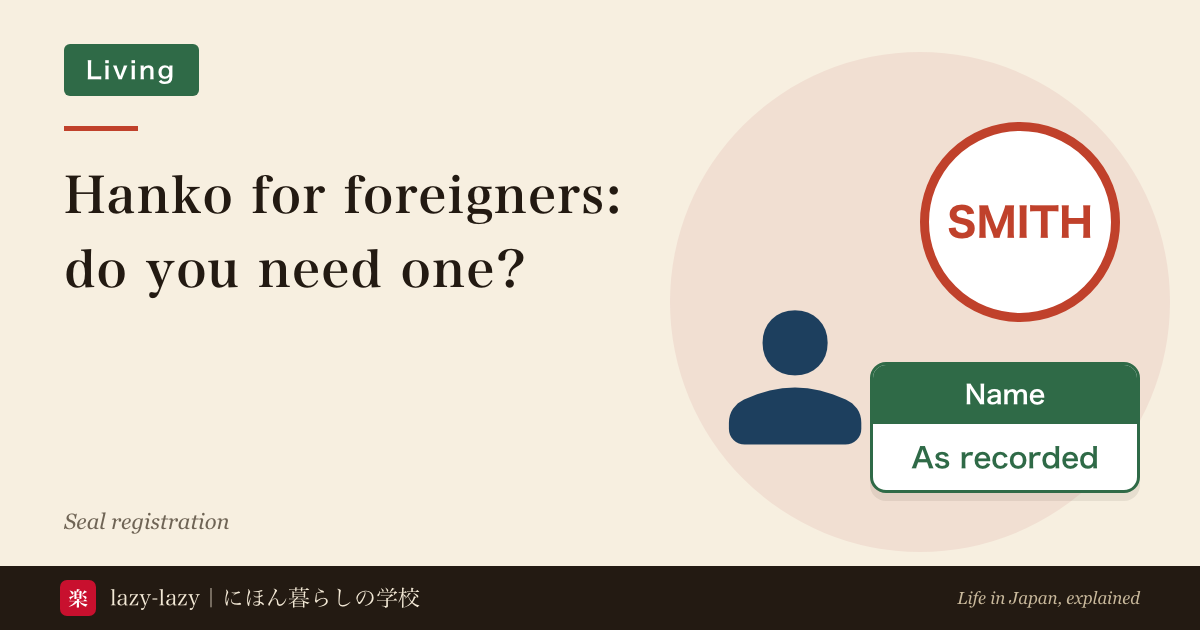
Foreign residents aged 15 or over with a resident record can register a seal (jitsuin) in roman letters, kanji or katakana, but only a name that is on the resident record. For katakana, first have the katakana reading added to the record; for kanji, have it added to the residence card first. Mixed names, initials only and rubber or self-inking stamps are refused, and the impression must be larger than 8 mm and within 25 mm square. You need a registered seal only when someone asks for the seal certificate: registering a car, buying property, a loan. National procedures dropped ordinary seals almost entirely, so few people need one right away. Bring the seal and your residence card, usually same day; certificates are about 300 yen. Moving to another municipality cancels the registration.
English

How to Call an Ambulance in Japan 2026: 119 in English, Free, #7119

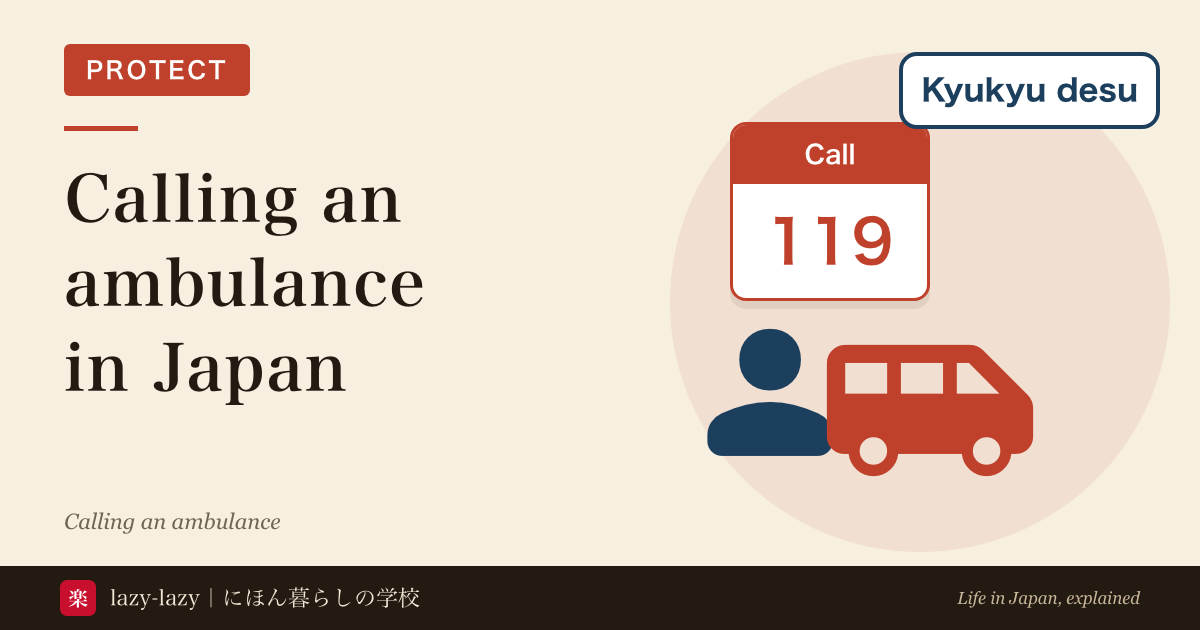
Dial 119 and say "Kyukyu desu". You are then asked for the address, what happened, the patient's age and your number. 673 of Japan's 720 fire departments connect a phone interpreter, all covering English, Chinese and Korean. The ambulance is free whatever your nationality, but the hospital bill is separate, and places like Ibaraki add about 7,700 yen for non-urgent calls. Plus landmarks when you don't know the address, #7119 (41 areas), #8000 and the Q-suke app.
English

Earthquake in Japan: What to Do, Which Apps, and a 3-Day Kit (2026)

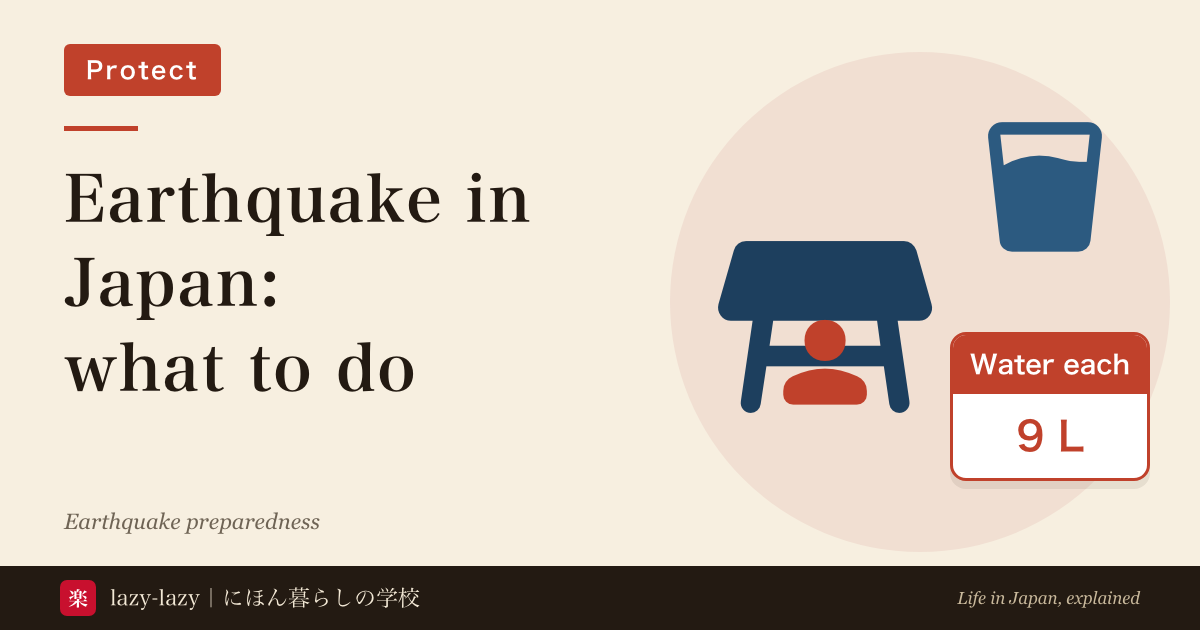
What to do in an earthquake in Japan as a foreign resident: protect your head when the alert sounds, deal with fire when it stops, and know the difference between an evacuation site and a shelter (foreign residents can use both). Covers Safety tips in 15 languages, 9 litres of water per person, 171 and web171 for family abroad, and the 14-day rule for a lost residence card.
English

My Number Card Japan 2026: For Foreigners It Expires With Your Stay

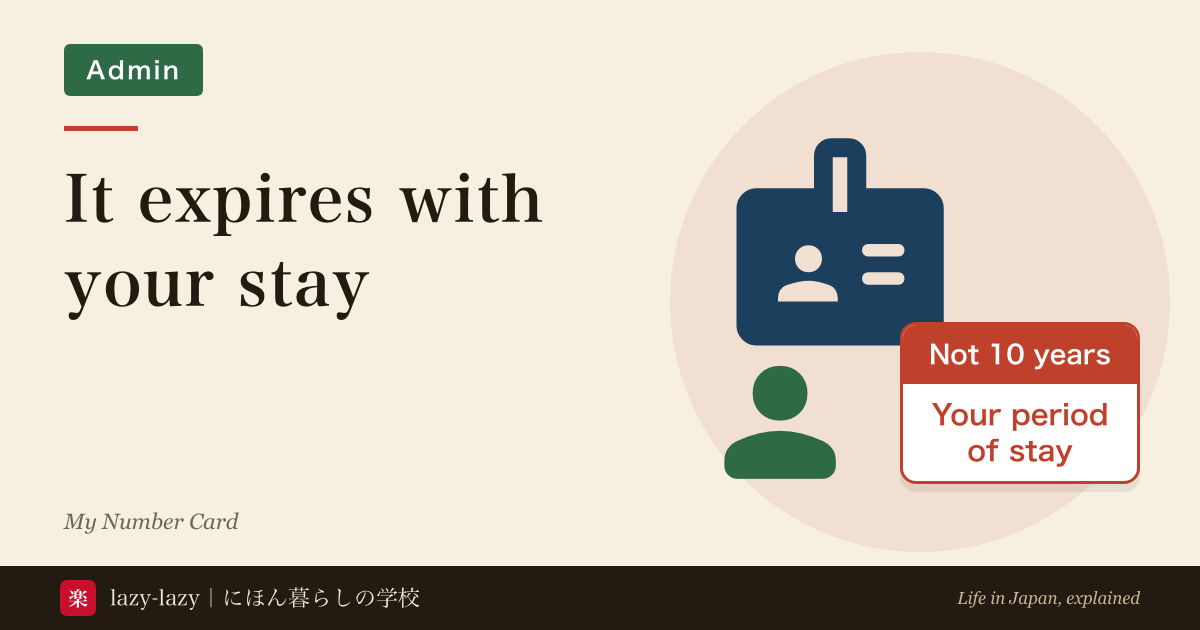
A foreign resident's My Number Card does not last ten years. It expires on the day your period of stay expires. Only Permanent Residents, Highly Skilled Professional (ii) and Special Permanent Residents get the tenth-birthday rule. Extending your stay is only half the job: you must also extend the card at your city office, or it lapses, and if the new residence card is late you can phone the city office for a special extension. Since 14 June 2026 the residence card and My Number Card can be one Special Residence Card, but you cannot apply for it on its own, there is no online route, it takes at least two weeks, and your electronic certificates lapse about a week before you collect it.
English

Scams in Japan 2026: Fake Police and Immigration Calls, How to Report

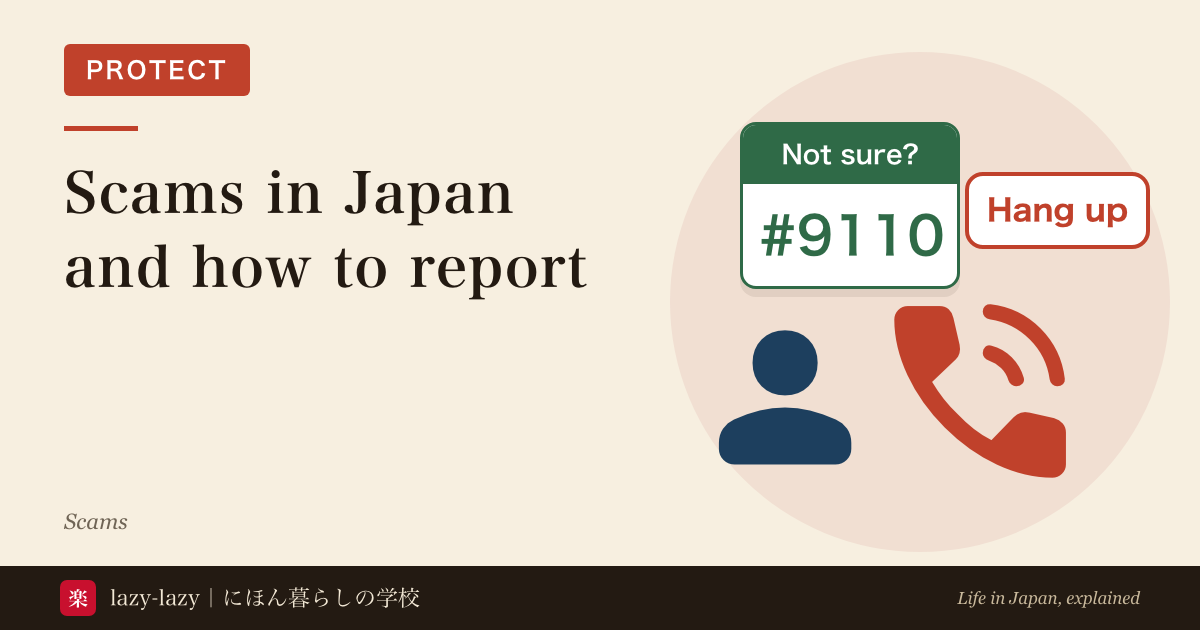
How to spot the scams that target foreign residents in Japan, and who to call if you are caught. Special fraud and social-media investment and romance scams hit 43,000 cases and 325.7 billion yen in 2025. Real police never contact you on LINE or send warrant photos; Immigration asks for no money beyond the fee for an application you made. Call #9110, 188 or 110, and if you paid by bank transfer, call the receiving bank the same day: the Furikome Sagi Relief Act may return money still in the account.
English

Cooling-Off Period in Japan 2026: Cancel in 8 Days, but Not Online

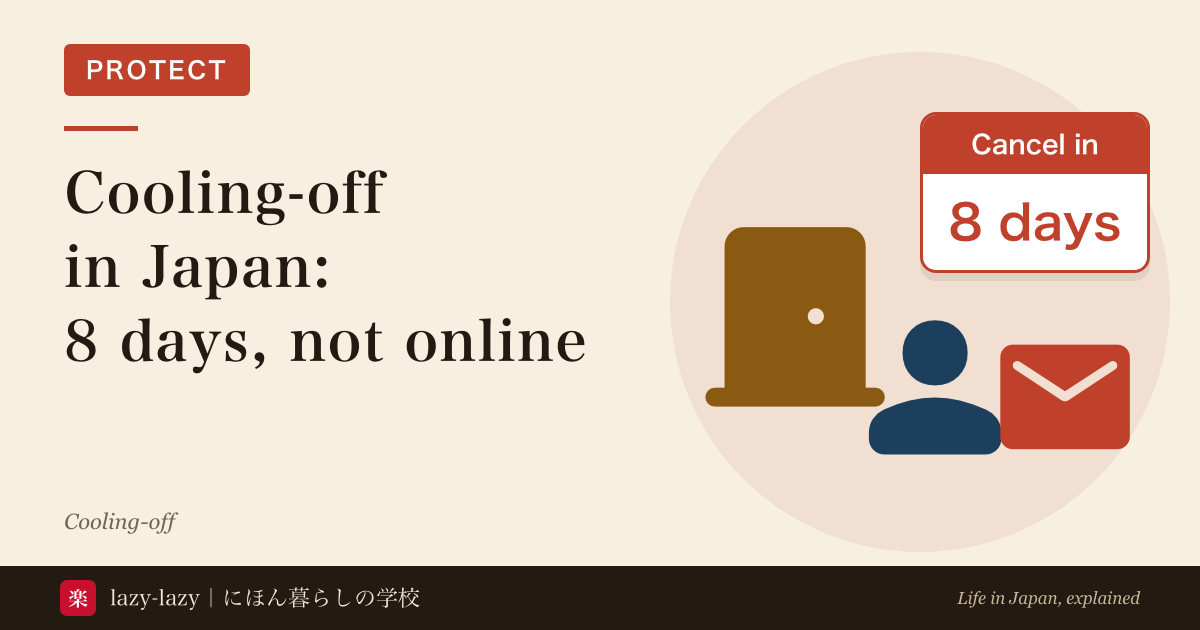
Japan's cooling-off rule lets you cancel some contracts unconditionally: 8 days for door-to-door and phone sales, 20 for MLM, counted from the day you receive the document, and a postcard or email sent on day 8 is in time. Online shopping, shop purchases and leases have no cooling-off. Phone and fibre contracts get an 8-day initial cancellation even if signed in a shop. Adults from 18, and help on 188.
English

Lost Residence Card in Japan: Police, Then Immigration Within 14 Days

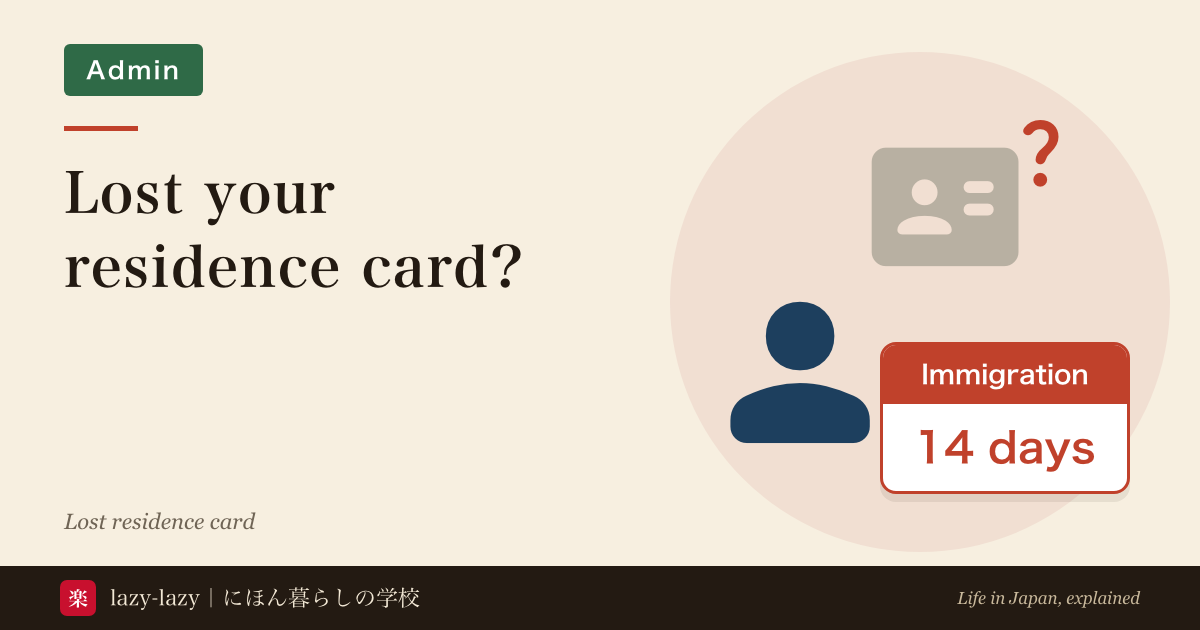
Losing your residence card does not lose you your status of residence. Two steps: report it to the police and get the receipt number, then apply for a reissue at your regional immigration office within 14 days of noticing. There is no fee and the new card is normally issued the same day. Bring the form, one photo, the statement with the police number, your passport and any part-time work permit slip. Lost it abroad? Special re-entry permission does not require the card, so you can still come back; apply within 14 days of landing. Special Residence Card holders get an ordinary card first and should suspend the My Number function. Never applying is an offence: up to a year's imprisonment or a 200,000 yen fine.
English

Re-Entry Permit Japan 2026: Who Needs One, Fees, and the One-Year Trap

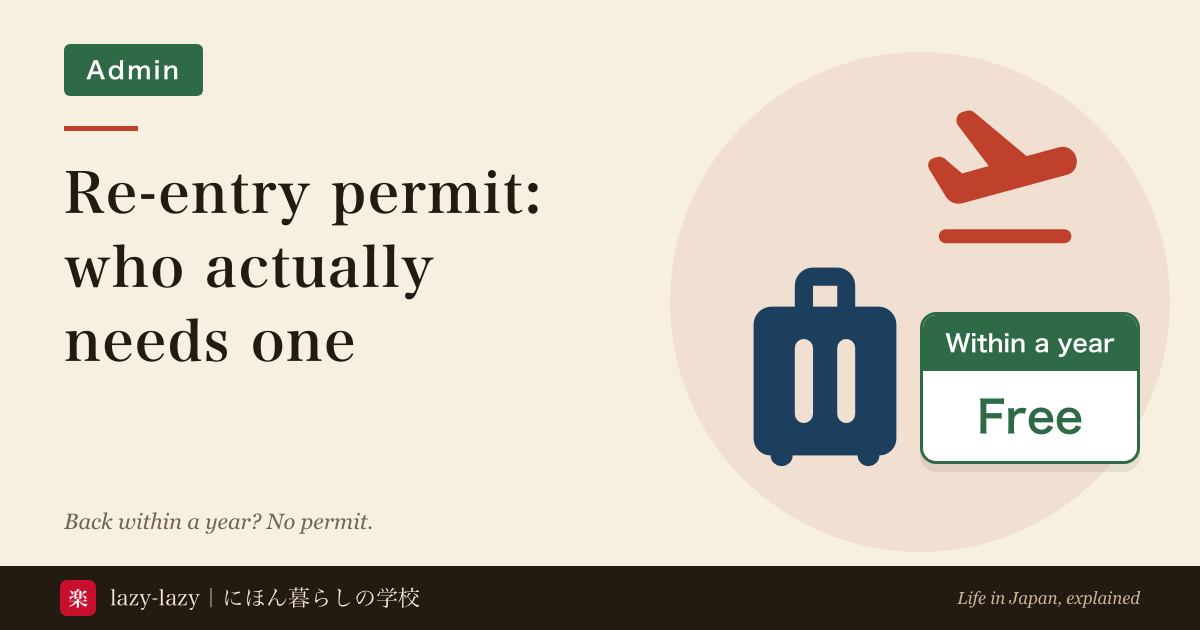
If you return within one year of leaving Japan you do not need a re-entry permit: special re-entry permission covers you, and you simply tick a box on the ED card at the airport, free. But it ends when your period of stay ends if that is sooner, and it cannot be extended from abroad (Immigration Act article 26-2 (3)). If there is any chance of being away longer, get an ordinary re-entry permit before departure - 4,000 yen single or 7,000 multiple, issued the same day - which a Japanese consulate can extend for up to a year and six years in total. Losing your residence card abroad does not stop re-entry, and a proxy in Japan can obtain a certificate of your deadline. Miss the deadline and you cannot re-enter on that status; it starts again from a visa.
English

Japan Visa Fee Increase 2026: Permanent Residence Now 200,000 Yen

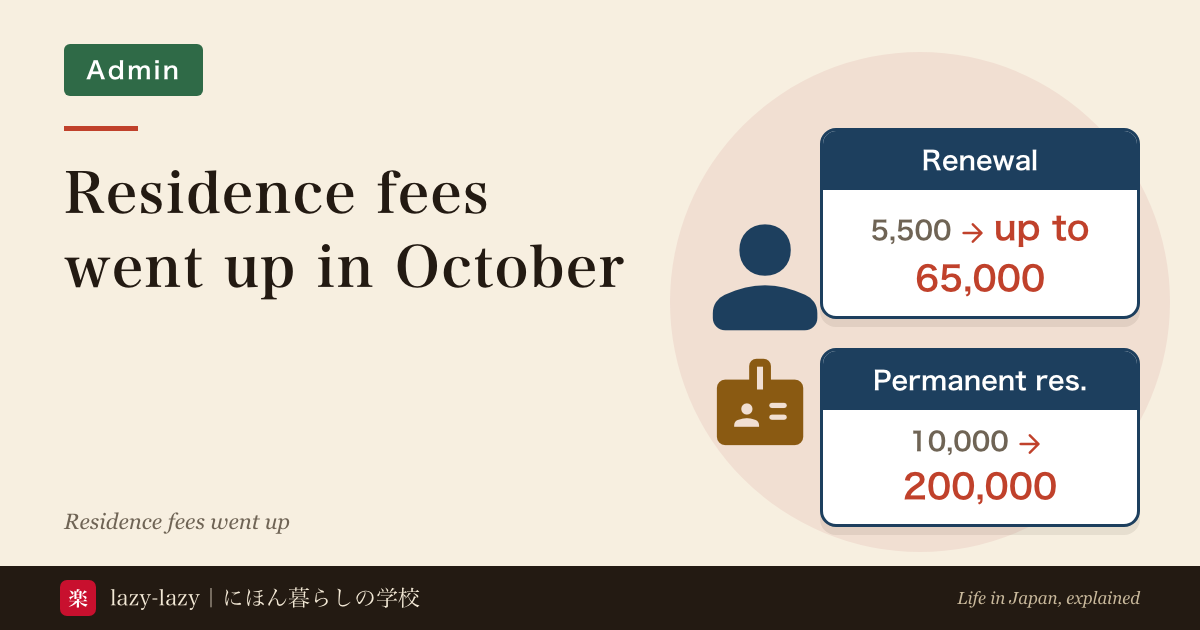
Residence permit fees changed on 1 October 2026. The flat rate was replaced by amounts based on the period of stay granted; applications accepted by 30 September 2026 still pay the old fee.
English

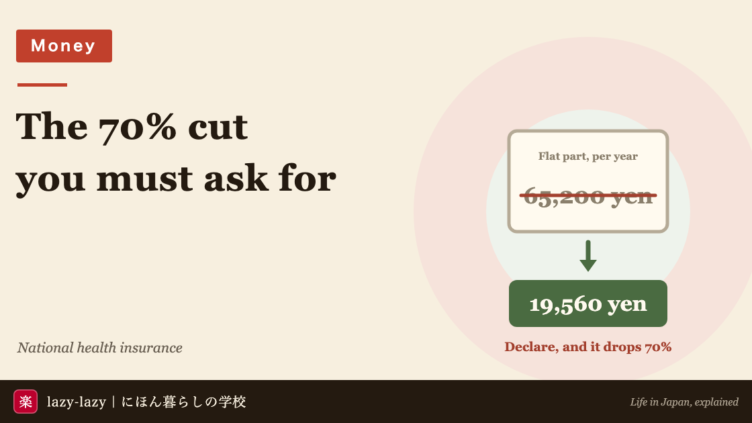
National Health Insurance Japan: The 70% Reduction You Must Ask For

Japan cuts the flat part of your National Health Insurance bill by 70, 50 or 20 percent when household income was low.
English

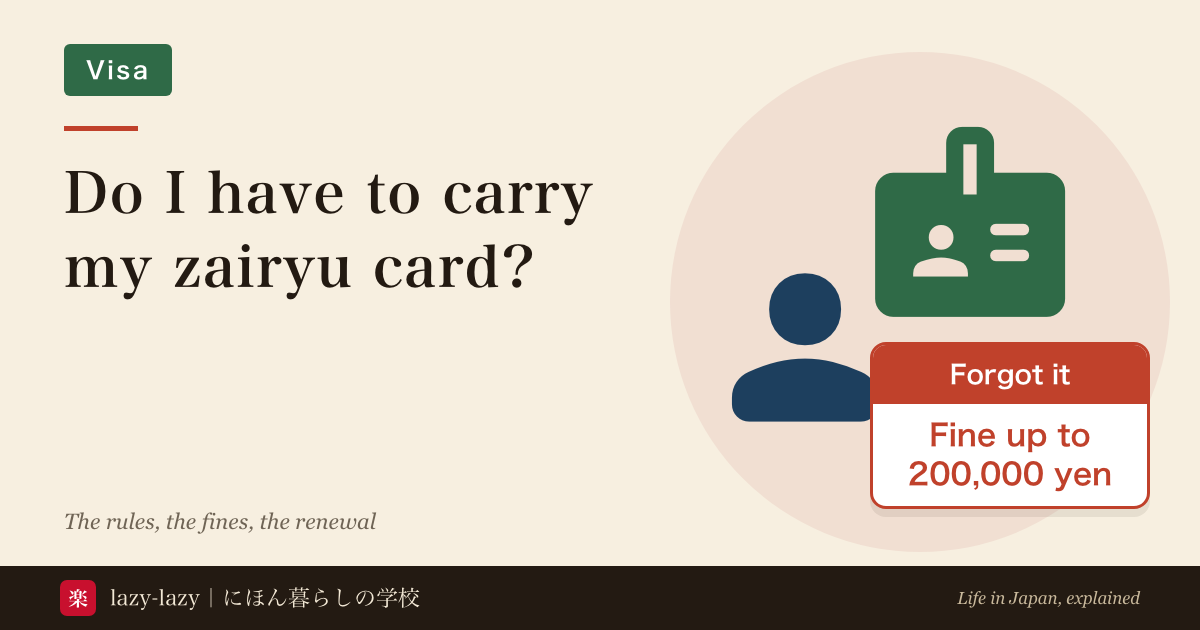
Do I Have to Carry My Residence Card in Japan? Rules, Fines, Renewal

You must carry your residence card at all times in Japan. Only people under 16 are exempt, and permanent residents are not.
English

Finding an Apartment in Japan in English: SUUMO Has None, 3 Ways

SUUMO has no English version (checked August 2026). Three routes remain: Japanese sites, walking into an agency, or foreigner-friendly services.
English

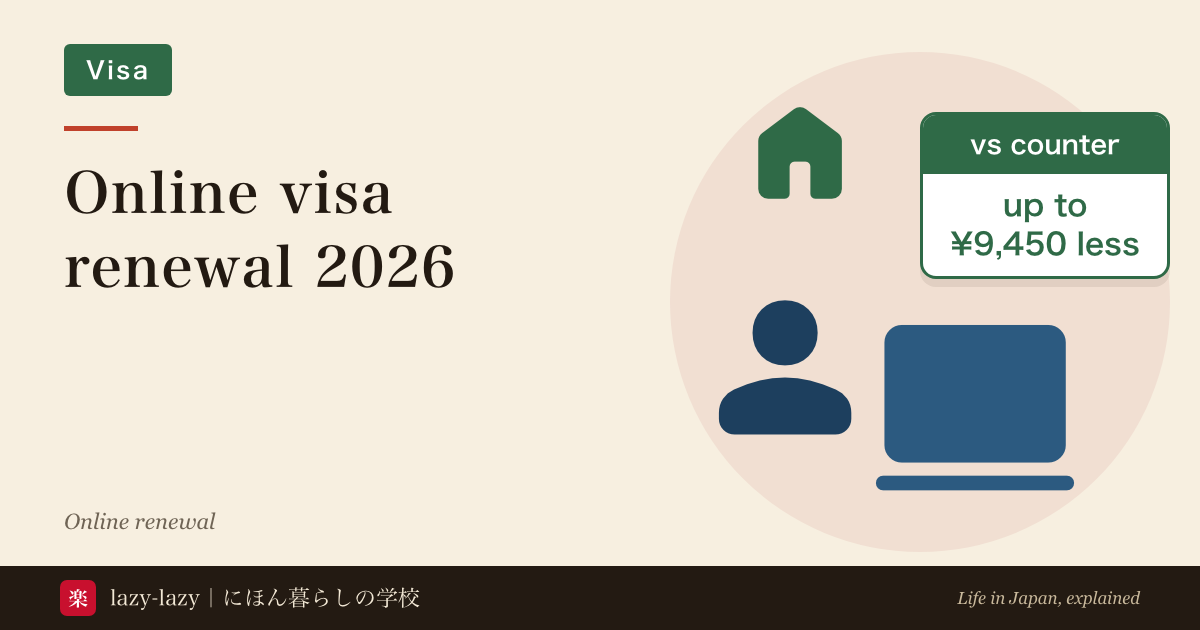
Online Visa Renewal Japan 2026: Apply From Home, Save Up to 9,450 Yen

How to renew your visa or change your status in Japan through the Online Residence Application System. You need a My Number card, a smartphone with the Mynaportal app and a computer, and you can file from three months before expiry up to the day before. From 1 October 2026, online costs up to 9,450 yen less than the counter (27,330 yen for one year), paid at a convenience store or by bank, and the payment notice only comes from @service-dgft.com. Keep the acceptance number email that arrives the next day: it proves you are under application in the grace period. Want the card fast? Collect it at the counter.
English

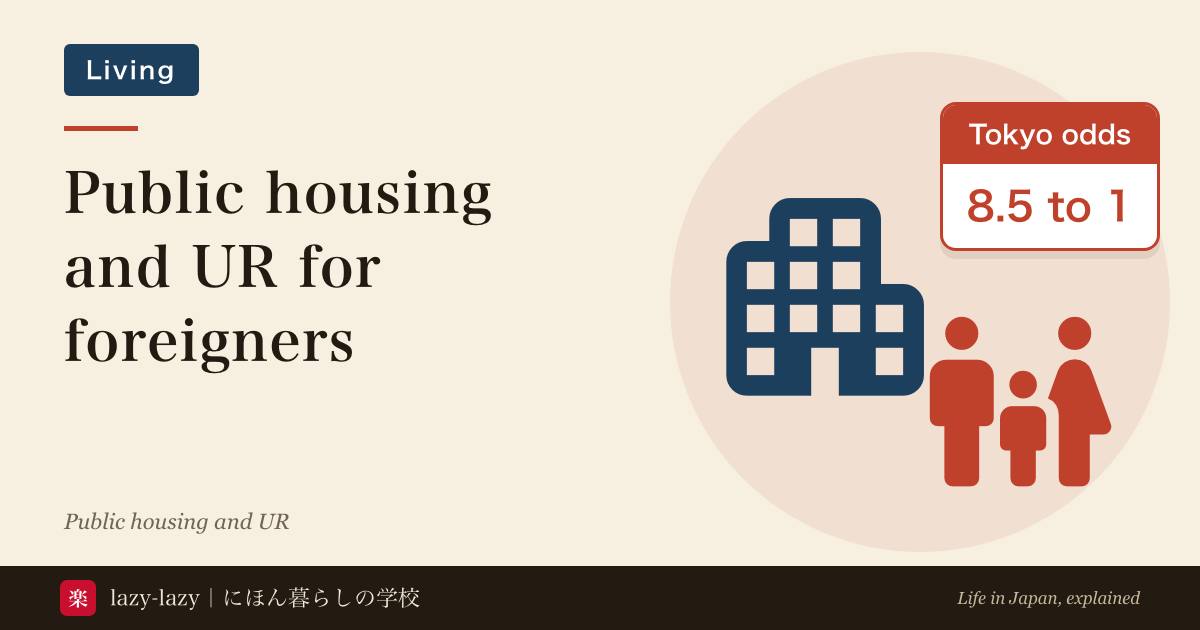
UR Housing and Public Housing in Japan 2026: Can Foreigners Apply?

Foreign residents can apply for public housing. In Tokyo, permanent residents, spouses of Japanese nationals and long-term residents qualify straight away, other statuses after one year, but you must live with family and stay under an income cap of ¥2.276 million for two people. The May 2026 lottery averaged 8.5 to 1, and 99 to 1 in Shibuya. UR housing has no key money, agency fee, renewal fee or guarantor, and needs income of four times the rent, or savings of 100 times the rent, or rent paid upfront.
English

Japan Post Change of Address 2026: Free Mail Forwarding for 1 Year

Japan Post's change-of-address form (tenkyo todoke) forwards mail from your old address to your new one, free, for one year. Foreign residents can file it with a residence card at a post office counter, in a post box or online through e-tenkyo. Registration takes 3 to 7 business days, and the year runs from the day you file, not from the day forwarding starts. Mail marked "do not forward" goes back instead, including My Number letters, which return to the city office. The city office move-in notice is a separate 14-day step, and nothing is forwarded abroad.
English

How to Set Up Utilities in Japan 2026: 3 Calls, and Gas Needs You Home

Setting up utilities in Japan means three calls: electricity to a company you choose (free since 2016), gas to the gas company, where someone must be home for a 20-30 minute opening, and water to your city bureau (Tokyo: 3-4 days ahead). On propane you cannot switch company after moving in, so get prices first. Young singles pay about ¥8,291 a month, and unpaid bills bring notices about 15 and 5 days before a cut-off.
English

Renters Insurance and Renewal Fees in Japan 2026: What You Really Owe

Leases in Japan ask for fire insurance because a tenant who starts a fire still owes the landlord for the flat, even though the Fire Liability Act usually spares the neighbours. If fire from next door burns your things, only your own contents cover pays. Insurance is not legally compulsory, but a lease can require it. The renewal fee comes from your contract, not the law; the Supreme Court held in 2011 that a clear, non-excessive fee is valid. Fixed-term leases have no renewal.
Earn

Free Japanese Classes in Japan 2026: Local Classes and 3 Free Courses

City offices, international associations and volunteer groups run Japanese classes for the foreign residents who live nearby. Toshima City lists five free classes for adults, plus classes at 100 yen a session or 500 yen a month. To find one, search your city's website for 日本語教室, then your international association's list. 38.2% of municipalities have no confirmed class; there, start with the Japan Foundation's free IRODORI, NHK's Easy Japanese or MEXT's Tsunahiro. Also covers the A1–C2 levels and how accredited schools differ.
English

Help for Foreigners in Japan 2026: Free Helplines in English and More

Help for foreigners in Japan, by problem. Not sure where to start? Your local consultation desk: 290 local governments, free, 11+ languages. Visa: 0570-013904 (weekdays, 11 languages incl. Sinhala). Work: English 0570-001-701. Legal: Houterasu 0570-078377. Discrimination: 0570-090-911. Contracts: 188. Feeling low: Yorisoi 0120-279-338, press 2.
English

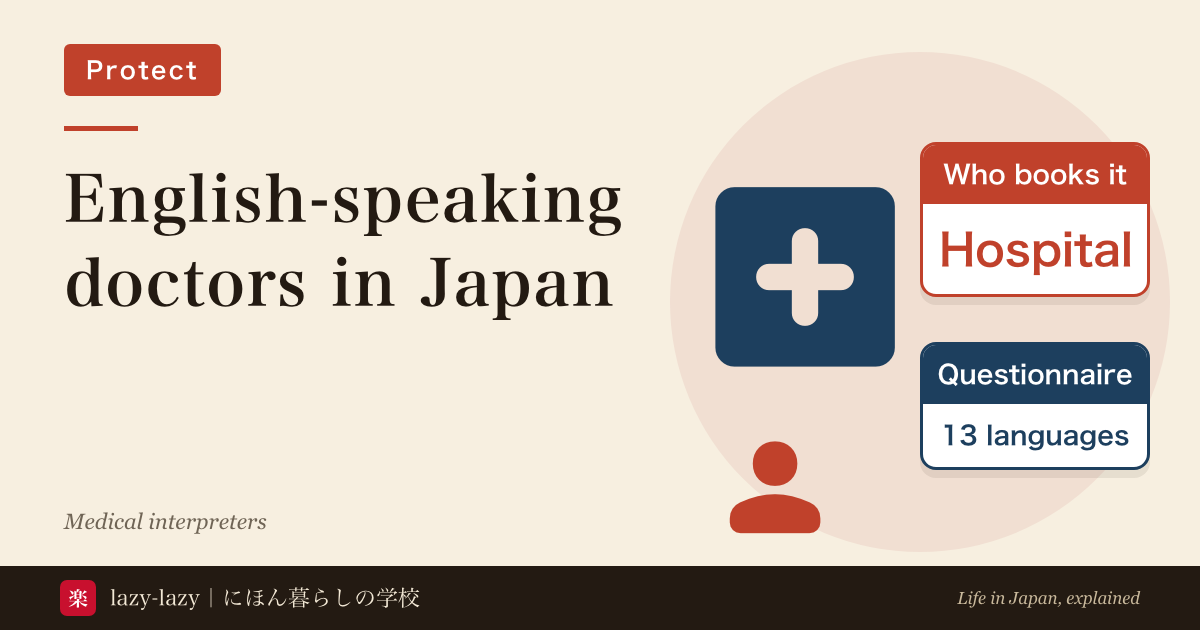
English-Speaking Doctor in Japan 2026: Find One and Get an Interpreter

How to find an English-speaking doctor in Japan, or one in your language. Search JNTO's medical institution list by area, language and department, then call ahead. The hospital books the interpreter, not you. Interpreting fees sit outside insurance: a hospital needs your signed consent, and only 70 of 5,745 did charge. Plus the health ministry's 13-language questionnaires, VoiceTra, what to bring, and 119.
English

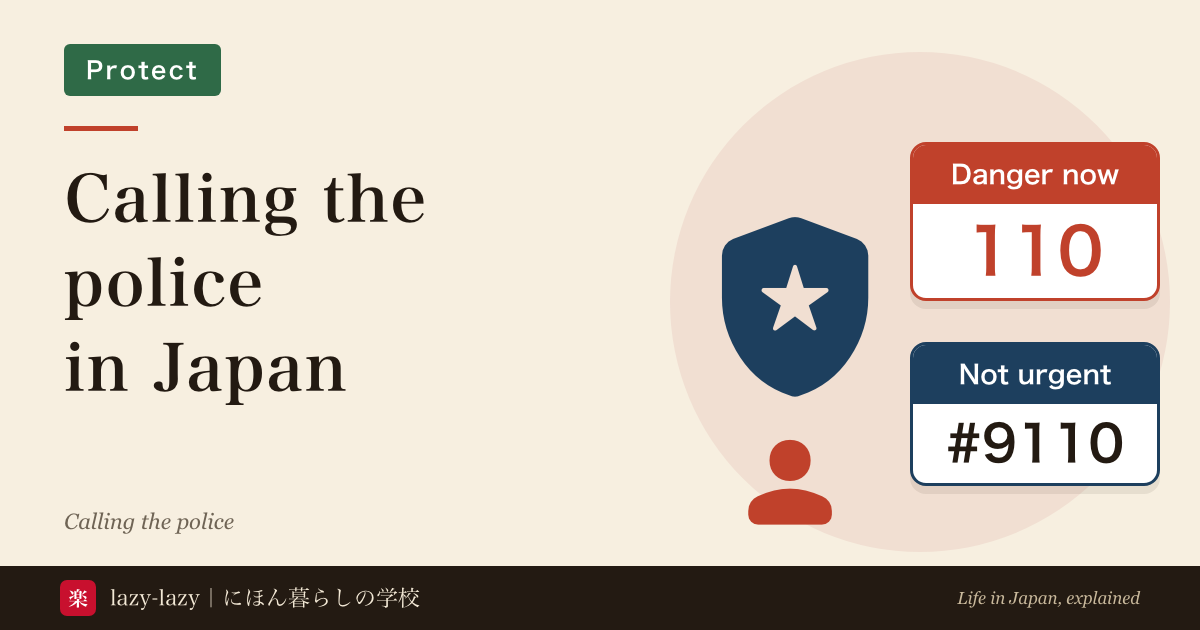
How to Call the Police in Japan 2026: 110 in English, #9110 and Koban

110 is free, and you are asked what happened, how long ago and where. If you do not speak Japanese, the police bring an interpreter into the call, so stay on the line. For non-urgent advice there is #9110 (mainly weekdays 8:30 to 17:15, call charge applies). Any koban takes lost-property reports, and if you hand in what you found within 7 days (24 hours inside a shop or station) you can claim 5 to 20% of its value. Plus showing your residence card and filing a crime report.
English

Garbage Disposal in Japan 2026: Sorting, Sodai Gomi, 4 Appliances

Garbage disposal in Japan follows the rules of your city or ward, not the country. Compare Shinjuku, Osaka and Yokohama and the category names, the size that makes something oversized (30 cm or 50 cm) and the sticker prices all differ. Shinjuku has a sorting flyer in 10 languages, Osaka a guide in 5, Yokohama a leaflet in 10. Oversized rubbish (sodai gomi) is booked and paid for with stickers, and takes about two weeks in Yokohama. Fridges, TVs, washing machines and air conditioners go back through a shop, computers to the maker (free for home PCs sold from October 2003). Illegal dumping carries up to five years in prison or a 10 million yen fine.
English

Bank Account in Japan for Foreigners 2026: Japan Post 3-Month Rule

How foreigners open a bank account in Japan: each bank sets its own residence-period rule, Japan Post Bank accepts you if more than 3 months remain, and online banks need no hanko.
English

Seeing a Doctor in Japan 2026: Clinics, Hospitals and What You Pay

How to see a doctor in Japan: clinic or hospital, the 5 steps of a visit, Japanese phrases that work.
English

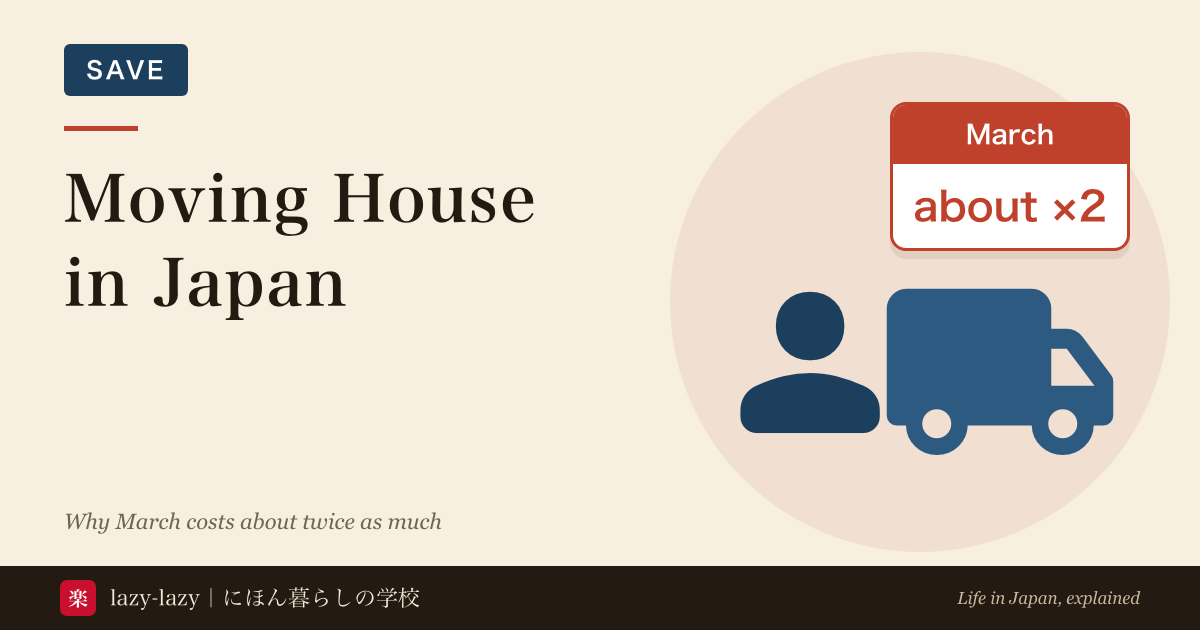
Moving House in Japan 2026: Why March Costs About Twice as Much

A single person pays about 142,000 yen to move in March and 66,000 to 74,000 from May.
English

Residence Registration Japan 2026: Within 14 Days, and What to Bring

How foreigners register their address (juminhyo) in Japan. The 14-day rule, what to bring, why you need it for a bank, SIM, insurance and jobs.
English

Credit Cards for Foreigners in Japan 2026: Check This Before You Apply

"They rejected me when I showed my residence card." The screening criteria are not published, so anyone claiming a card is easy to pass is guessing.
English

Best SIM in Japan for Foreigners 2026: No Credit Card Needed

Which SIM in Japan can you get without a credit card? Compare Rakuten Mobile, ahamo, povo and Nihon Tsushin by price, data, coverage and eSIM.
English

Home Internet in Japan 2026: Fibre, Router or Pocket Wi-Fi, No Wait

Home internet in Japan for foreigners: fibre vs home router vs pocket Wi-Fi.
English

Renting an Apartment in Japan 2026: Costs, Documents and Guarantors

Renting an apartment in Japan: the real move-in cost (4-6 months), the documents you need, and how to rent without a Japanese guarantor using a guarantee company.
English

Health Insurance in Japan for Foreigners: Which One You Are In

Japan has two public health insurances and you are in exactly one. Company employees are enrolled by their employer in Employee Health Insurance (about 10% of salary, half paid by the employer, dependants free). Everyone else - students, the self-employed, people between jobs - joins National Health Insurance at the city office within 14 days and pays the whole premium. Both leave you paying 30% at the clinic. Private insurance is a top-up, not a substitute. This guide tells you which one you are in, then explains kokuho in full: joining, premiums, reductions, what happens if you fall behind, and the high-cost ceiling from August 2026.