Earn

Earn

The Four Quadrants in Japan 2026: Your Visa Limits Which You Can Pick

The four quadrants are Kiyosaki's way of sorting how money comes in, not evidence about Japan. In Japan your residence status sets your activities first. This guide does not claim which status allows which type; it shows the order for checking the scope of your permission.
Earn

Japanese Phrases for Work 2026: 35 Lines for Your Part-Time Job

35 Japanese phrases for a part-time job, from the application call to the till. Say otsukaresama desu to your manager, never gokurousama (government keigo guidelines); 77.1% use otsukaresama to seniors after work. To call in sick, contact the shop yourself before your shift: name, reason, sorede, apology. Changing a fixed shift needs the shop's agreement. And swap ryokai desu for kashikomarimashita.
Earn

Japanese Job Interview Phrases 2026: Onsha vs Kisha, Email Templates

Job-hunting Japanese is a small set of fixed phrases. Say onsha and write kisha for "your company", and call yourself watashi, never boku or ore. In a December 2025 employer survey, 87.7% of companies interview international students entirely in Japanese. Doubled keigo and how to fix it, templates for scheduling and thank-you emails, how to phone a company, and how to decline an offer (by phone, without naming your new employer), checked against JASSO's job hunting guide and the government Guidelines on Keigo.
Earn

Paid Leave in Japan 2026: 10 Days After 6 Months, Part-Timers Too

Paid leave (yukyu) in Japan arises by law after six months of continuous work and 80% attendance, whatever your nationality and even if you are part-time. You start with 10 days and reach 20 after six and a half years; part-timers on 4 days a week or fewer and under 30 hours start with 7, 5, 3 or 1 day. You choose the day, constant understaffing is no reason to refuse, days last two years, employers must make you take 5 if you get 10 or more, and leave before quitting cannot be moved. Free help lines in English included.
Earn

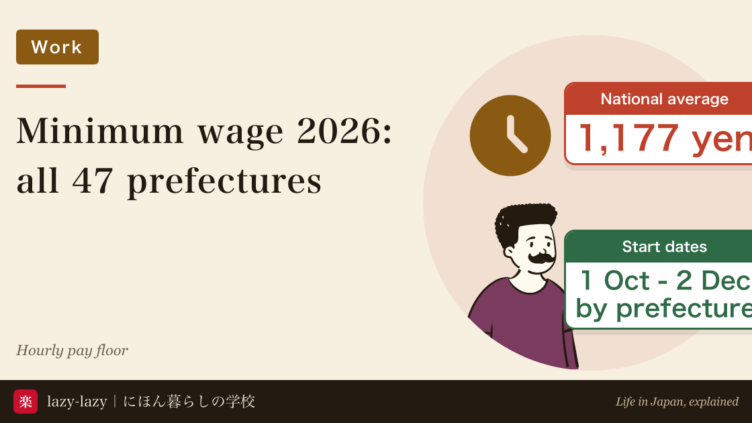
Japan Minimum Wage 2026: All 47 Prefectures and Start Dates

Japan's regional minimum wages for fiscal 2026 were answered by all 47 prefectural councils on 3 September: a national weighted average of the new amounts of 1,177 yen an hour, up 56 yen. Tokyo 1,280, Kanagawa 1,279, Osaka 1,231; the lowest is Miyazaki at 1,085. Start dates run from 1 October to 2 December by prefecture; 15 prefectures, including Tokyo, Kanagawa, Aichi and Osaka, moved on 1 October, and Kyoto follows on 16 November; Iwate, Yamanashi, Saga, Kumamoto and Okinawa are not yet decided (Okinawa planned for 2 December). Until the start date the previous amount applies. The Minimum Wage Act has no nationality limit, so student part-timers, technical interns and Specified Skilled Workers get the same amount. Monthly-paid workers strip out commuting allowance and bonuses and divide by scheduled hours to compare. A contract below the minimum is void for that part and you can claim the difference; the employer faces a fine of up to 500,000 yen. Full table of all 47 prefectures included.
Earn
JLPT 2026 Registration in Japan: December Closed, Fee, Pass Marks

Registration in Japan for the 6 December 2026 JLPT closed on 3 September, with N1 and N2 full by noon on 31 August. The fee is 7,500 yen via MyJLPT. Pass marks are 100 for N1 and 90 for N2, plus a minimum in every section. Results come in late January 2027, the certificate costs 1,000 yen, and Immigration names N4 for Specified Skilled Worker and N1 for 15 Highly Skilled points.
Earn

Rirekisho: The Japanese Resume Template Is Free From the Ministry

The rirekisho template is free. The Ministry of Health, Labour and Welfare publishes it as Excel and PDF, with no sign-up and no payment. There is no official standard form any more: the JIS form was withdrawn in July 2020. On the ministry's form the gender field is optional and may be left blank, and the spouse, dependants, duty-to-support and commuting-time fields were deleted. No photo size is specified. Being asked for your residence card is not discrimination, because the employer must check your status of residence and report the hire or face a fine of up to 300,000 yen. But your registered domicile, birthplace and family must not be asked in selection.
Earn

Hello Work for Foreigners: The Four Free Centres With Interpreters

An Employment Service Center for Foreigners is a Hello Work office built for foreign job seekers, with interpreters on site. There are only four in Japan: Tokyo, Nagoya, Osaka and Fukuoka. Counselling, job introductions and interpreting are all free. The languages differ by centre: Nagoya lists 10 including Nepali and Burmese, Osaka lists 7 on fixed days, and Tokyo and Fukuoka publish no list. The Tokyo centre's own English page says it serves students seeking full-time employment, not part-time work. Bring your residence card and Hello Work registration slip, plus your passport if your status is Designated Activities. If none of the four is near you, ordinary Hello Work offices with interpreters exist in 32 prefectures.
Earn

Specified Skilled Worker Visa 2026: How to Change Jobs, 14-Day Rule

You can change jobs on a Specified Skilled Worker visa, within the same job category or between categories whose skills are recognised as shared. If the company changes you must apply for a change of status of residence, which takes one to two months, and you cannot work for the new company until it is granted. The end of a contract and the signing of a new one are each notified to Immigration within 14 days. Losing your job does not mean leaving Japan: if you are job-hunting you may stay within your period of stay and unemployment insurance applies. But three months or more without SSW work and without good reason makes the status revocable. If the termination was not your fault the employer must support your job change, and if you have not yet passed the SSW tests, you can sign with the next employer and switch to Designated Activities for continued employment support.
Earn

Employment Contract in Japan 2026: 6 Terms You Must Get in Writing

In Japan the law does not require a signed employment contract. It requires a written statement of working conditions from your employer, covering six terms: contract period, place and duties, hours, days off, wages and leaving the job, plus the scope of change and renewal limits since April 2024. Part-time students get one too, with extra items for part-timers. No statement can mean a fine of up to 300,000 yen, and if the job is different you may end the contract at once. Model notices in 13 languages and a free English hotline.
Earn

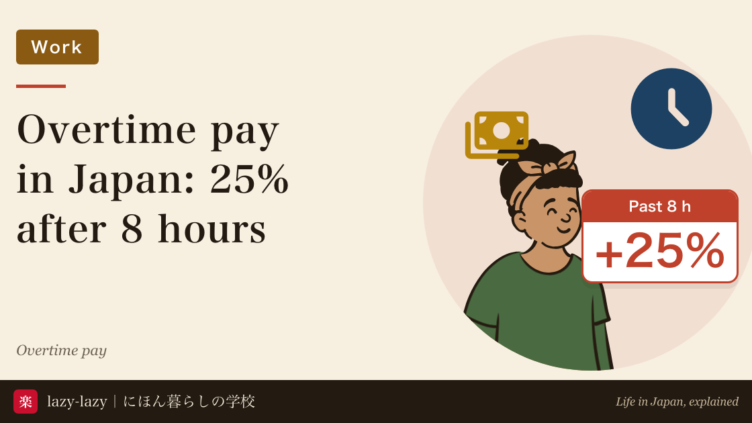
Overtime Pay in Japan 2026: 25% Extra After 8 Hours, Part-Timers Too

Overtime pay in Japan is owed for hours beyond 8 a day or 40 a week, for 10pm to 5am, and for the statutory day off, whatever your nationality and even on a part-time job. The rates are 25%, 50% beyond 60 hours a month, 25% at night and 35% on the day off, so at 1,200 yen an hour an overtime hour pays 1,500 yen and 1,800 yen after 10pm. Overtime needs a 36 Agreement and is normally capped at 45 hours a month and 360 a year. Hours count by the minute, fixed overtime covers only its set hours, and unpaid overtime can be claimed back three years. Free help lines in English included.
Earn
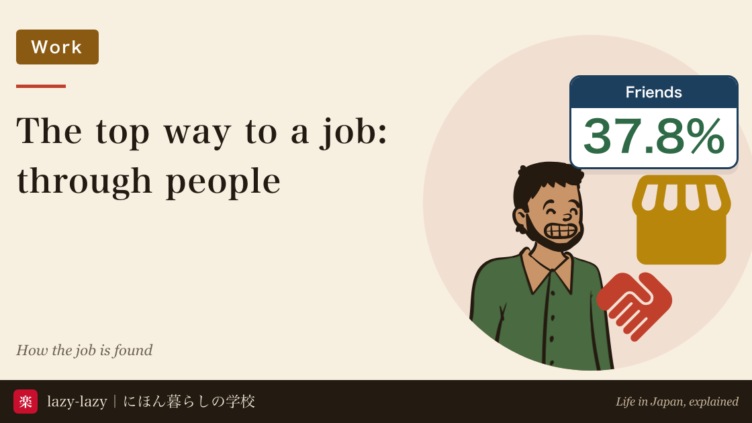
How Foreigners Actually Find Jobs in Japan: 37.8% Through Friends

Japan's labour ministry survey (31 Aug 2026): 37.8% of foreign residents found their job through friends, 19.1% through job ads, 5.8% through school.
Earn

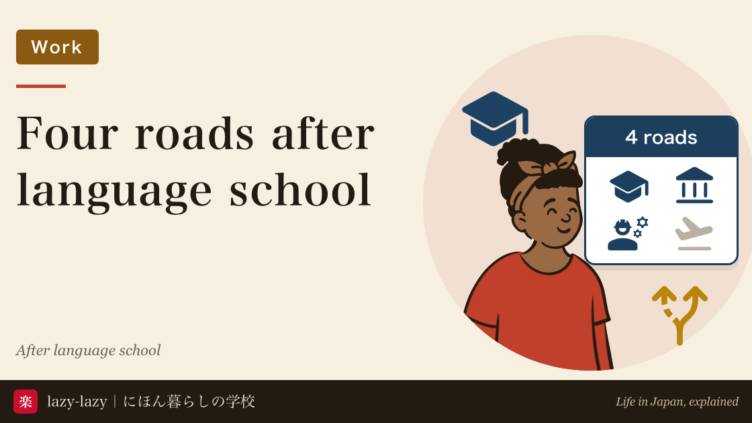
After Japanese Language School: 4 Roads and What Each Needs (2026)

A language school has no job pipeline, and that is not because you are behind.
Earn

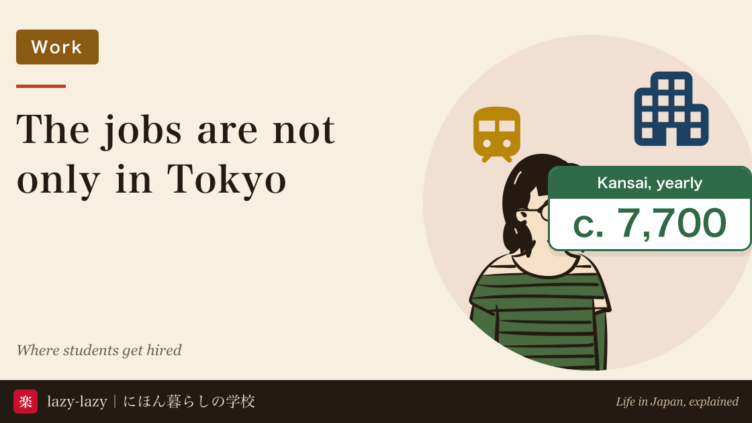
Where International Students Actually Get Hired in Japan (2026 Data)

Last year 39,766 students changed from student status to a working one, including 3,909 Nepalese, at a 96.7 percent approval rate.
Earn

Work Visa Japan 2026: Salary Data by Visa Type and the Equal-Pay Rule

Official data shows every work status in Japan pays more than the 143,360 yen a month a student can earn on 28 hours a week.
Earn

Humanities Visa Japan Jobs 2026: What’s Allowed and What Gets Refused

Japan's Engineer/Specialist in Humanities/International Services visa (gijinkoku) covers work that uses what you studied or a foreign-culture perspective. "No experience needed" jobs are out, and cases where the main work was luggage, cleaning or serving were refused. You need a degree, a senmon-shi diploma or 10 years' experience (3 for translation and PR), pay equal to a Japanese worker, and since 15 April 2026 B2 proof such as N2 for interpreting or front desk work. Plus the 14-day notice and the 2,000-yen certificate.
Earn

Specified Skilled Worker Visa Japan 2026: Requirements, 1 vs 2, Tests

Specified Skilled Worker (SSW) is a status of residence for working in set fields with labour shortages, using skills proven by a test, with no degree required. Type 1 covers 19 fields, lasts five years in total and basically does not allow family; type 2 covers 11 fields, has no cap and allows a spouse and children. Type 1 needs a field skills test and JFT-Basic or JLPT N4, waived after Technical Intern Training (ii). You can sit the tests inside Japan with any status; JFT-Basic costs 10,000 yen. Food service changes have been refused as a rule since 13 April 2026.
Earn

ESD Visa Japan 2026: Employment for Skill Development From April 2027

Employment for Skill Development (ESD, ikusei shuro) replaces Technical Intern Training on 1 April 2027, a date fixed by Cabinet Order. It trains foreign workers for three years in 17 labour-shortage fields. You can change employer by choice within the same job category after 1 or 2 years depending on the field, once you pass a skills test and a Japanese test. Japanese is A1 before work and A2 (about N4) by year three, and SSW (i) requires passing the tests. Current trainees stay on technical intern training. Sending-organisation fees are capped at two months' pay.
Earn

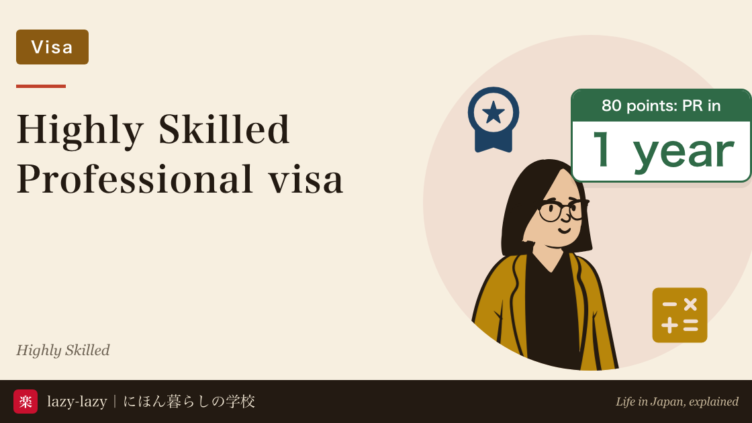
Highly Skilled Professional Visa Japan 2026: 70 Points, PR in 1 Year

The Highly Skilled Professional visa is for people who score 70 points or more on education, career, salary, age and Japanese. You get a 5-year stay, and can apply for permanent residency after 3 years at 70 points or 1 year at 80, instead of 10. Salary points depend on your age and exclude overtime. How to fill in the official points table, what to submit, spouse work and parents, HSP (ii), J-Skip from 20 million yen, and the October 2026 fees.
Earn

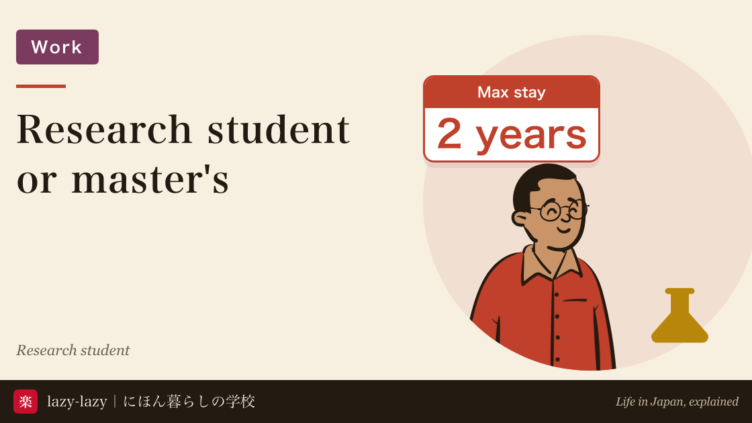
Research Student vs Master’s in Japan 2026: No Degree, 2-Year Visa Cap

A research student (kenkyusei) in Japan is a non-degree student: no master's, no credits. The status is the same Student visa, but only two years as a research student, other universities included. Mainly-Japanese study stopped qualifying on 26 April 2024. Work is capped at 28 hours a week. National graduate tuition is 535,800 yen a year as standard, JASSO's 48,000 yen grant can cover research students, and the job-hunting visa does not.
Earn

Free Japanese Classes in Japan 2026: Local Classes and 3 Free Courses

City offices, international associations and volunteer groups run Japanese classes for the foreign residents who live nearby. Toshima City lists five free classes for adults, plus classes at 100 yen a session or 500 yen a month. To find one, search your city's website for 日本語教室, then your international association's list. 38.2% of municipalities have no confirmed class; there, start with the Japan Foundation's free IRODORI, NHK's Easy Japanese or MEXT's Tsunahiro. Also covers the A1–C2 levels and how accredited schools differ.
Earn

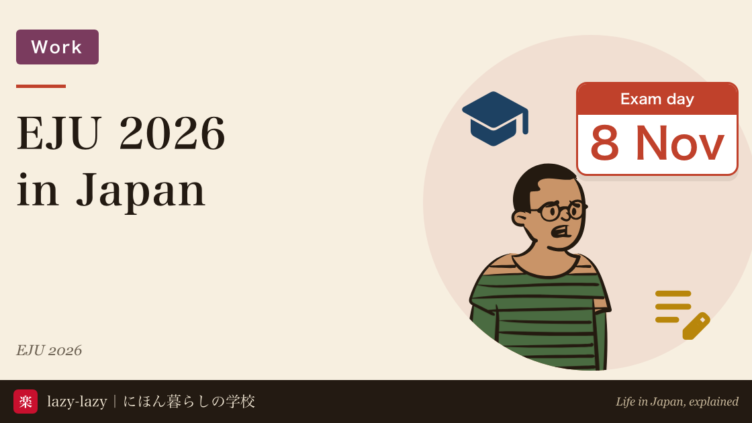
EJU Exam 2026 in Japan: November Registration Closed, Fees, Scores

The EJU measures the Japanese and academic skills of international students entering Japanese universities, with scores instead of pass or fail. The November 2026 exam is on 8 November and registration closed on 30 July. Your university chooses the subjects; the fee in Japan is 12,000 yen for one or 23,000 yen for two or more. Scores last two years, and ticking the box when you apply can reserve a 48,000 yen monthly JASSO scholarship.
Earn

Internship in Japan for International Students: Visa, Paid or Unpaid

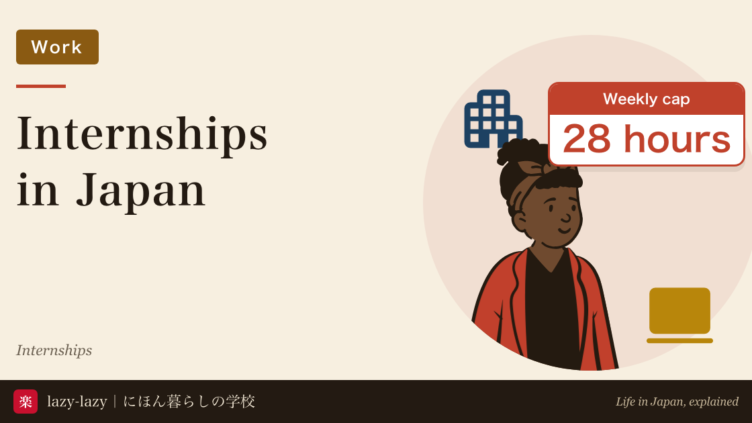
A paid internship on a Student visa needs permission to work. Up to 28 hours a week (8 hours a day on long breaks), the standard permit covers it. Over 28 hours, you need an individual permit, mainly for final-year students with about 90% of their credits; review takes two weeks to two months, free. Unpaid internships need no permit. Students from abroad use Designated Activities No. 9, Cultural Activities or Temporary Visitor.
Earn

Designated Activities 46 Visa Japan 2026: N1, Jobs, vs Humanities Visa

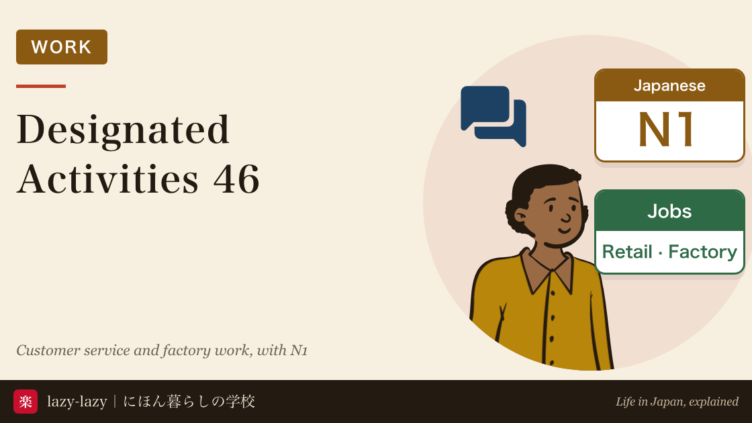
Designated Activities No. 46 lets graduates of Japanese universities with JLPT N1 or BJT 480+ take a wide range of jobs that involve communicating in Japanese, including customer service and factory line work the Humanities visa rarely allows. Since 29 February 2024 it also covers kodo senmonshi from certified vocational courses. Pay must match Japanese graduates, the first period is normally one year, dispatch work is out, and every new employer needs a change-of-status application. Family get No. 47.
Earn

Japanese Payslip 2026: How to Read the 5 Deductions and Take-Home Pay

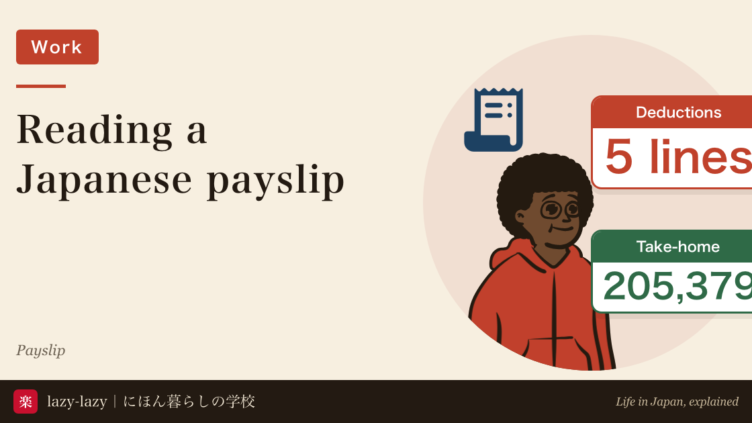
A Japanese payslip has three parts: pay, deductions and take-home pay. The five main deductions follow official tables. In FY2026, health insurance is half of 9.85% in Tokyo, pension half of 18.3% and employment insurance 0.5%, and a 0.23% child support contribution (half each) was added from May pay. Income tax comes from the withholding table: under the kou column it is zero below 105,000 yen a month in 2026, while otsu takes more. On 245,000 yen, take-home pay is 205,379 yen. Students usually pay only income tax, residence tax starts in year two, and employers must give you a payslip by law.
Earn

Social Media for Foreigners in Japan 2026: X, Instagram and LinkedIn

Social media arrives fast; a blog gets found later by search. Use both.
Earn

Vocational School in Japan for International Students 2026: N2 & Fees

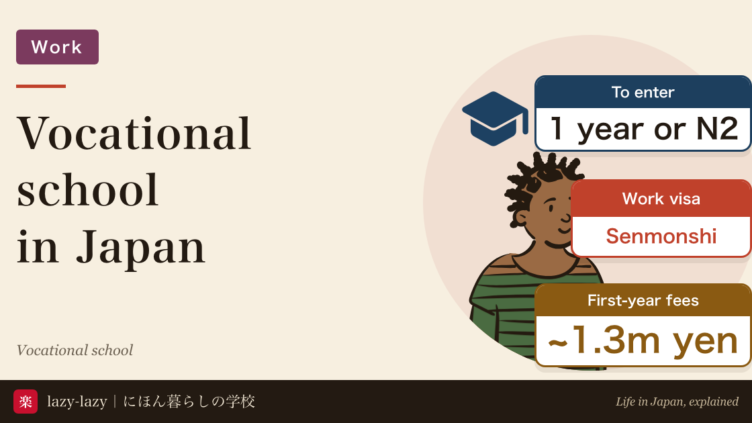
A vocational school (senmon gakko) in Japan is the specialised course of a specialised training college. To enter on a Student visa you need one year at a Japanese language school, JLPT N2 or an equivalent score, or one year at a Japanese school; six months became one year on 26 April 2024. For a work visa you need the senmonshi or kodo senmonshi title and a job related to your course. First-year fees average about 1.3 million yen.
Earn

Learn Kanji With Japanese School Drills 2026: 1,026 Free to Print

Living in Japan but still cannot read the paperwork? Use the drill books Japanese children use, from grade 1.
Earn

Work in Japan Without a Degree 2026: The Three Visa Routes

A degree does not decide whether you can work in Japan, only which route you take. Specified Skilled Worker asks for tests instead of schooling.
Earn

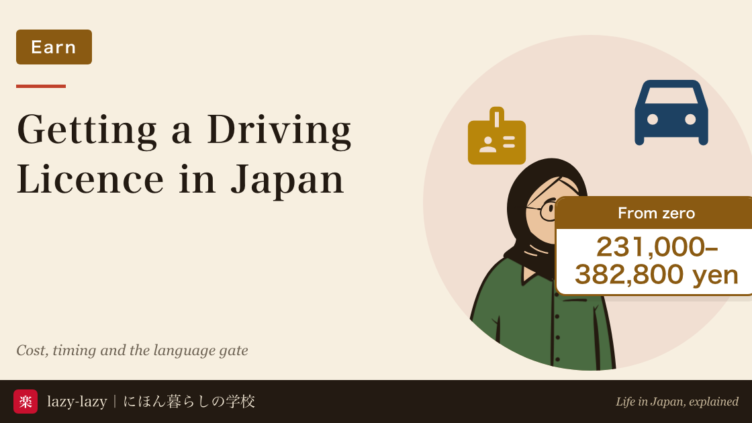
Getting a Driving Licence in Japan as a Foreigner (2026)

Converting a licence costs 4,850 yen; starting from zero costs about 231,000 to 382,800 yen at the driving schools we checked.
Earn
Start a Blog in Japan 2026: Practice Japanese, Build a Portfolio

Japanese practice arrives in weeks, a portfolio in months, income maybe never.
Earn
Keigo vs Casual Japanese 2026: What to Say at Work

You can work a Japanese part-time job with only desu and masu plus eight set phrases.
Earn

Part-Time Jobs in Japan for Students 2026: The 28-Hour Rule

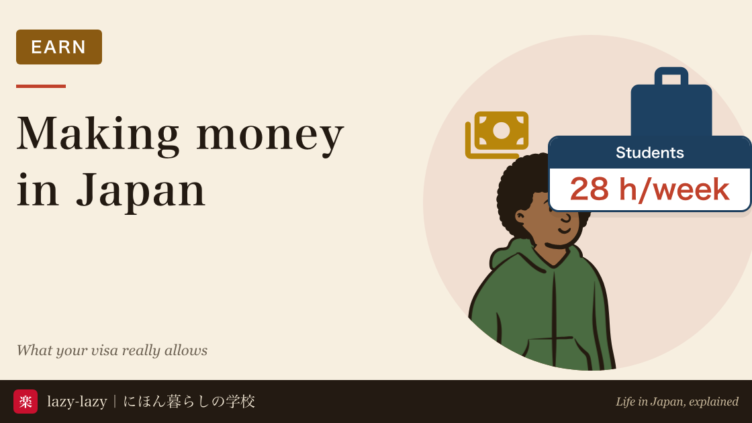
Working part-time as a student needs a free permit and staying under 28 hours a week total across every job.
Earn

How to Make Money in Japan as a Foreigner: What Your Visa Allows

What your visa really allows in Japan: side jobs on a work visa, the 28-hour rule for students.