Figures, prices and terms were checked against the official Rakuten Card pages and CIC, the credit information agency on 6 August 2026. They change — check the current terms yourself before you sign up or file anything.
This article contains affiliate links.
Last updated: October 2026
Summary
- Many foreigners say they were turned down after showing their residence card. But there are things you can check yourself before you apply.
- The Rakuten Card suits a first card: no annual fee, ever; 1% points; 3%+ in the Rakuten shop; and you apply entirely online.
- The fact that you applied stays on your credit record for 6 months. That is why checking before you apply matters.
- Go through the 5-point checklist below before you apply.
Once you know this, you avoid “rejected, then wait six months” and apply once, with the conditions already in place.
- Cash-only living quietly costs you money
- “They rejected me when I showed my residence card” — it’s not your fault
- Why the Rakuten Card is the right first card
- Check your own situation before you apply
- How to apply
- Worried about screening? A debit card is a valid path
- Rules once you have a card
- Frequently asked questions
- Summary
- Related guides
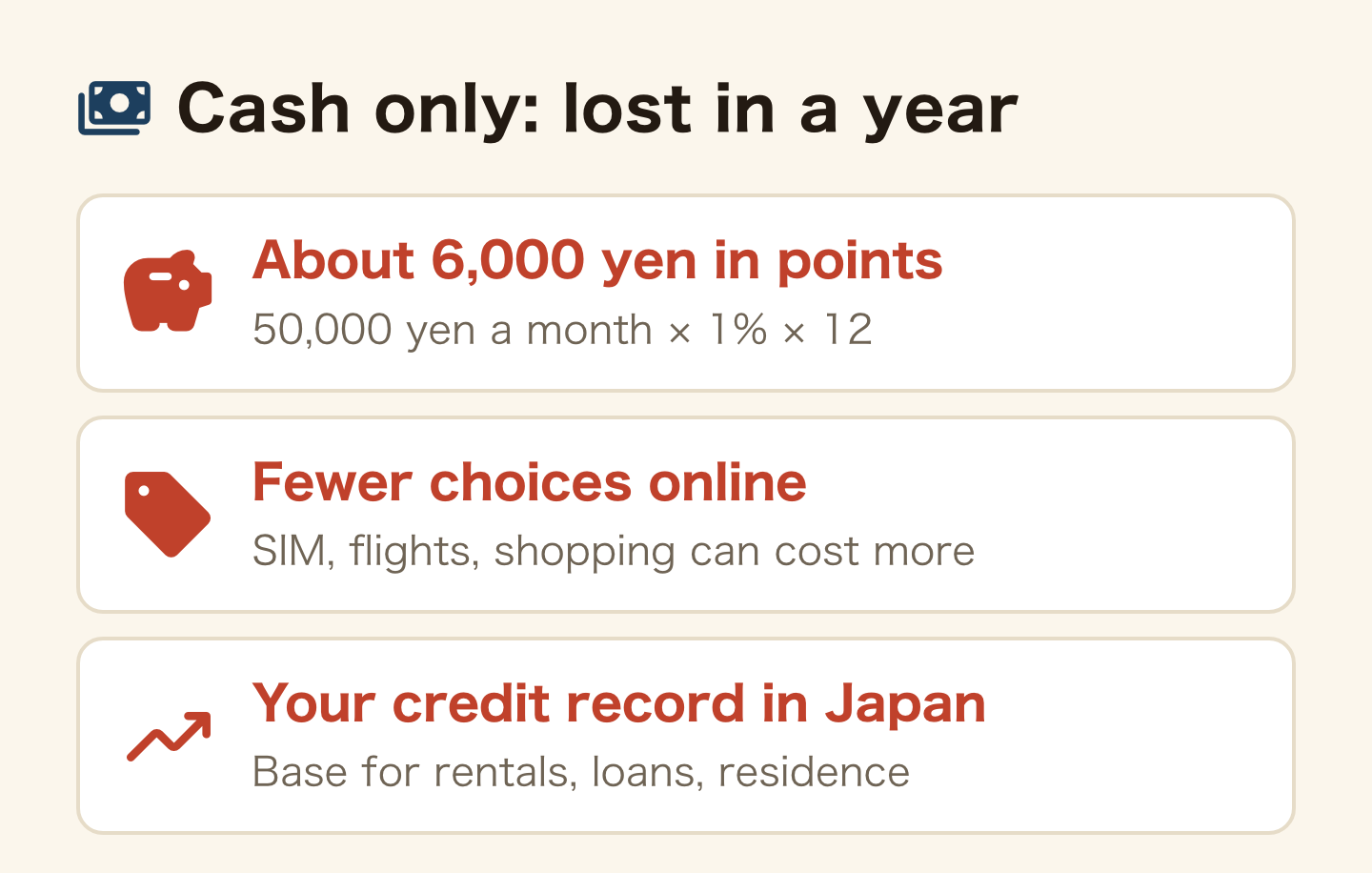
Cash-only living quietly costs you money
Cash still works in Japan, so you might think you don’t need a card. But going without one costs you a little every month.
- Zero points: purchases that would earn 1% back, paid entirely in cash. Put ¥50,000 a month on a card and that is about ¥6,000 a year (¥50,000 × 1% × 12 months; the rate is “1 point per ¥100” on the official Rakuten Card page)
- Stuck online: SIM contracts, flights, online sales – fewer options, or higher prices, without a card
- No credit history: your payment record in Japan is the foundation for future rentals, loans, and even permanent residence. Cash leaves no record.
“They rejected me when I showed my residence card” — it’s not your fault
You feel uneasy the moment you enter your nationality. The mood changes when you hand over your residence card in a shop. You get rejected and no one tells you why. Many foreigners share this experience.
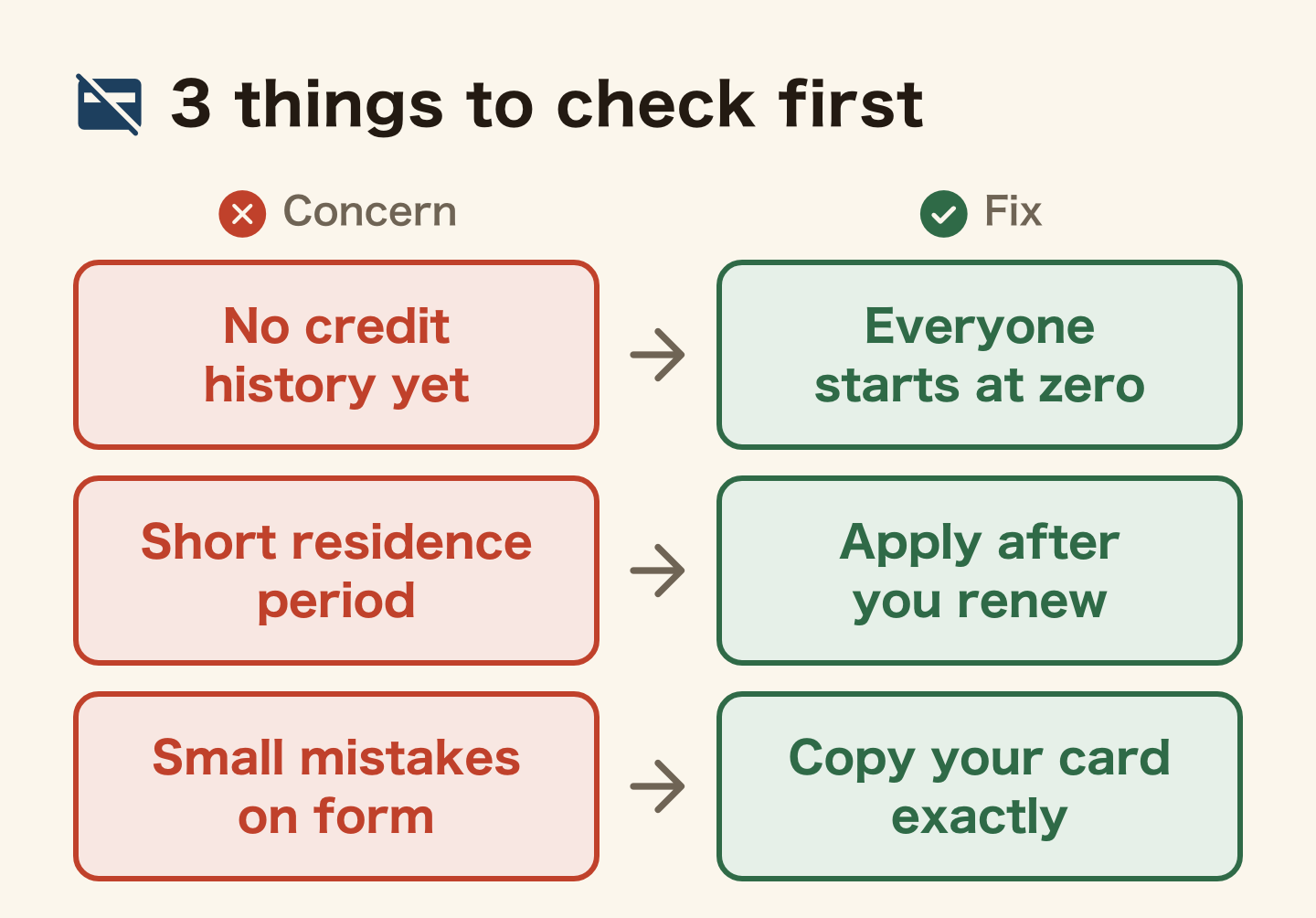
Screening criteria are not published, so no one can tell you exactly why you were rejected. But there are three things you can check yourself before you apply. Sort them out first, then send the application.
- No credit history in Japan: if you have just arrived, the card company has no information about you. Everyone starts from the same place.
- A short residence period: if little time is left, the company may think you could leave Japan before long. → Apply right after you renew.
- Mistakes on the form: your name in roman letters or katakana does not match your residence card, or the income field is vague. You can fix this yourself. → Write everything exactly as on your residence card.
Why the Rakuten Card is the right first card
Card companies do not publish their screening criteria, so no one can promise which card will approve you. What we can say is only what is published and can be compared. The Rakuten Card has no annual fee, ever, so holding it costs you nothing. That is why it suits a first card.
| Rakuten Card | Bank card | Debit card | |
|---|---|---|---|
| Annual fee | Free forever | often paid | usually free |
| Points | 1% (¥100 = 1pt) | ~0.5% | 0.2-1% |
| Screening | criteria not published | criteria not published | none |
| Builds credit | Yes | Yes | No |
| Students / part-time | OK from age 18 | can be hard | anyone |
Why the Rakuten Card suits a foreigner’s first card:
- Free for life – holding it costs nothing
- 1% points – 3%+ in the Rakuten shop; stacks with Rakuten Mobile
- Apply entirely online – no awkward in-store moment
- Students and part-timers can apply from age 18 – write your income honestly (exaggerating is more dangerous than a low figure)
Sign-up bonus (as of July 2026)
A new-card-plus-use campaign gives several thousand yen in Rakuten points (sometimes 5,000+). Since there’s no annual fee, that bonus is pure gain. Check the current amount on the official site.
Check your own situation before you apply
This is the most important part. CIC, the credit information agency, keeps a record of the application itself for 6 months from the date of the enquiry.
Many people get this wrong: CIC’s published list of recorded items does not include the outcome (“rejected”). What is recorded is the fact that “on this date, this company looked up this person”. Even so, several applications in a short span may count against you (screening criteria are not published).
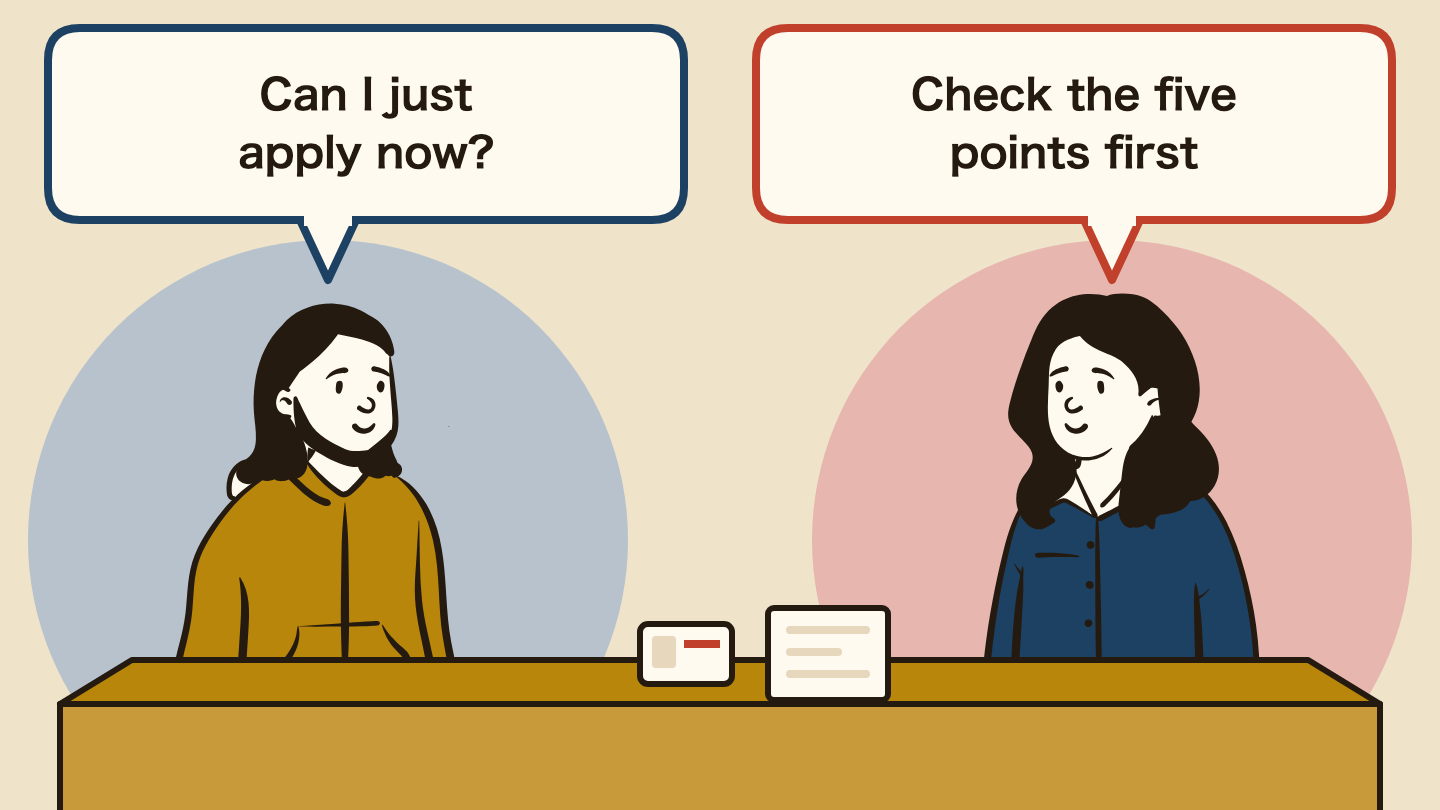
So don’t “just try.” Go through these 5 points and get it right the first time.
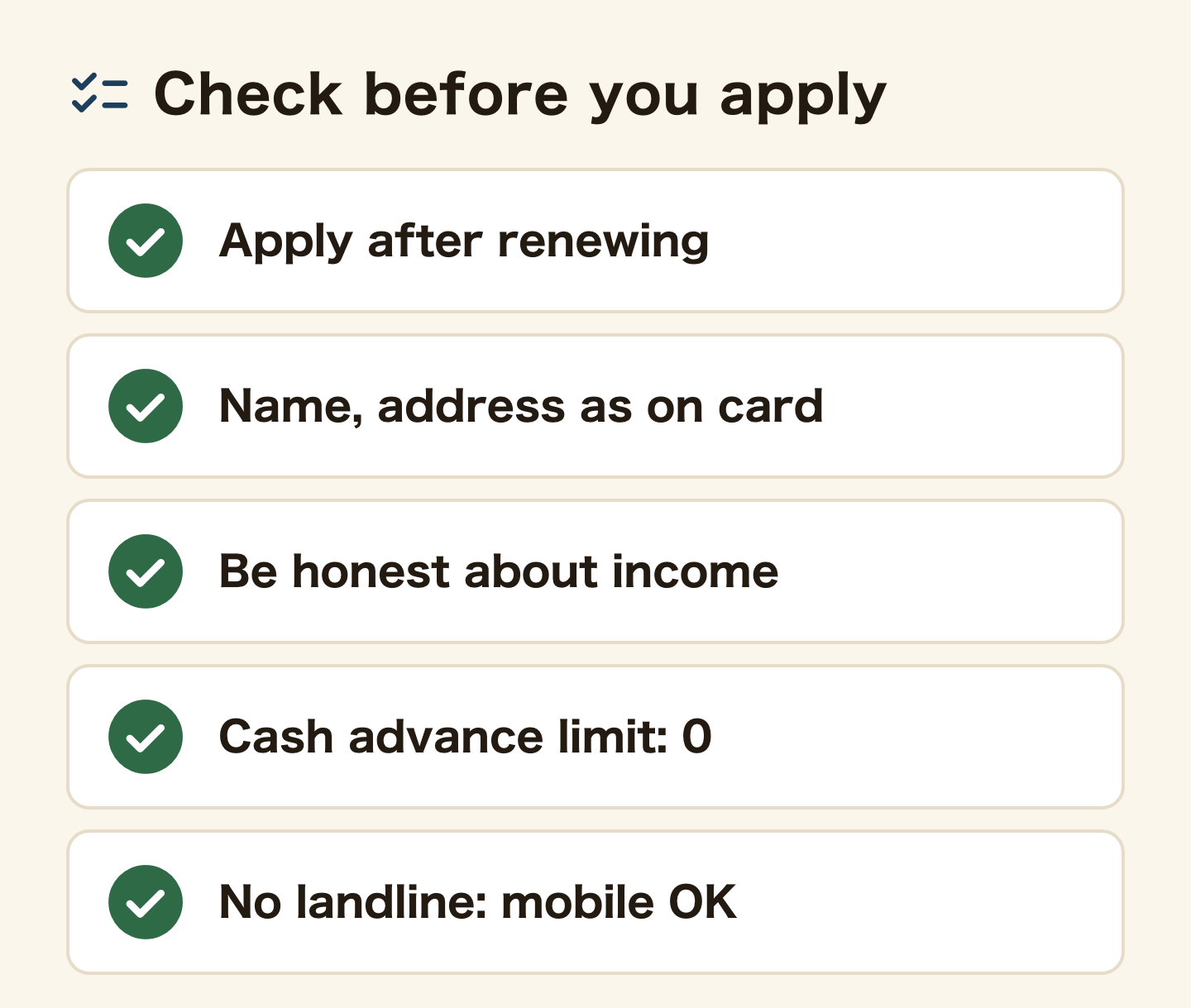
The best time to apply is right after you renew your residence period, while your income is steady. Avoid applying just before you leave Japan or just before your renewal.
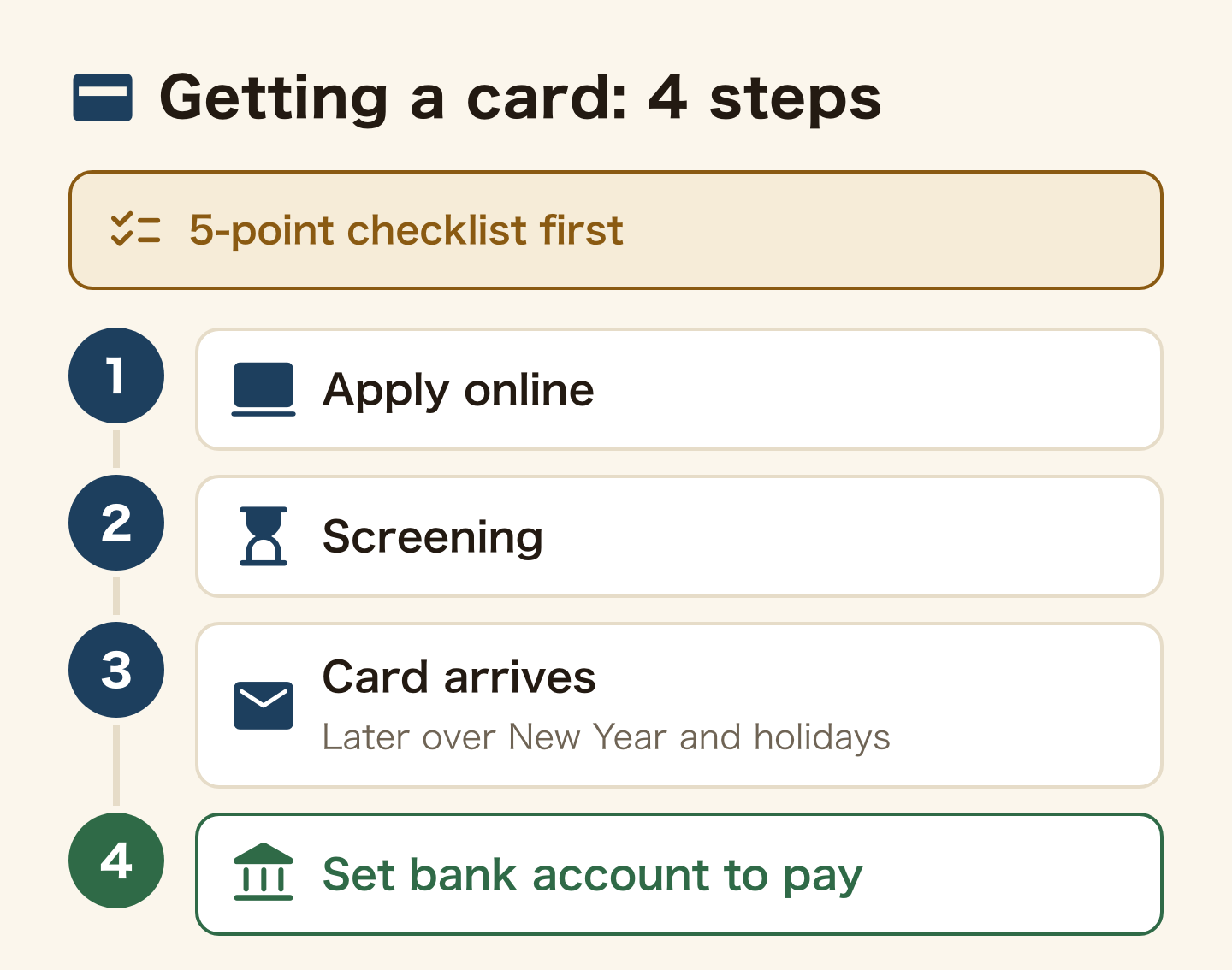
How to apply
You fill in the form online, and the card arrives after screening. According to the official Rakuten Card page, if you apply over New Year or long holidays, the card may arrive later than usual.
Worried about screening? A debit card is a valid path
If your residence period is short or your income is unstable, don’t force an application (a rejection means a 6-month wait). Use a debit card meanwhile – instant deduction from your bank account, no screening. For paying in shops, you can also top up PayPay with cash at an ATM, with no card screening at all. Most online payments and SIM contracts accept debit. Some phone bills and utilities refuse it, though, so check how to pay monthly bills by direct debit instead. Once you renew and your income is steady, try a credit card again.
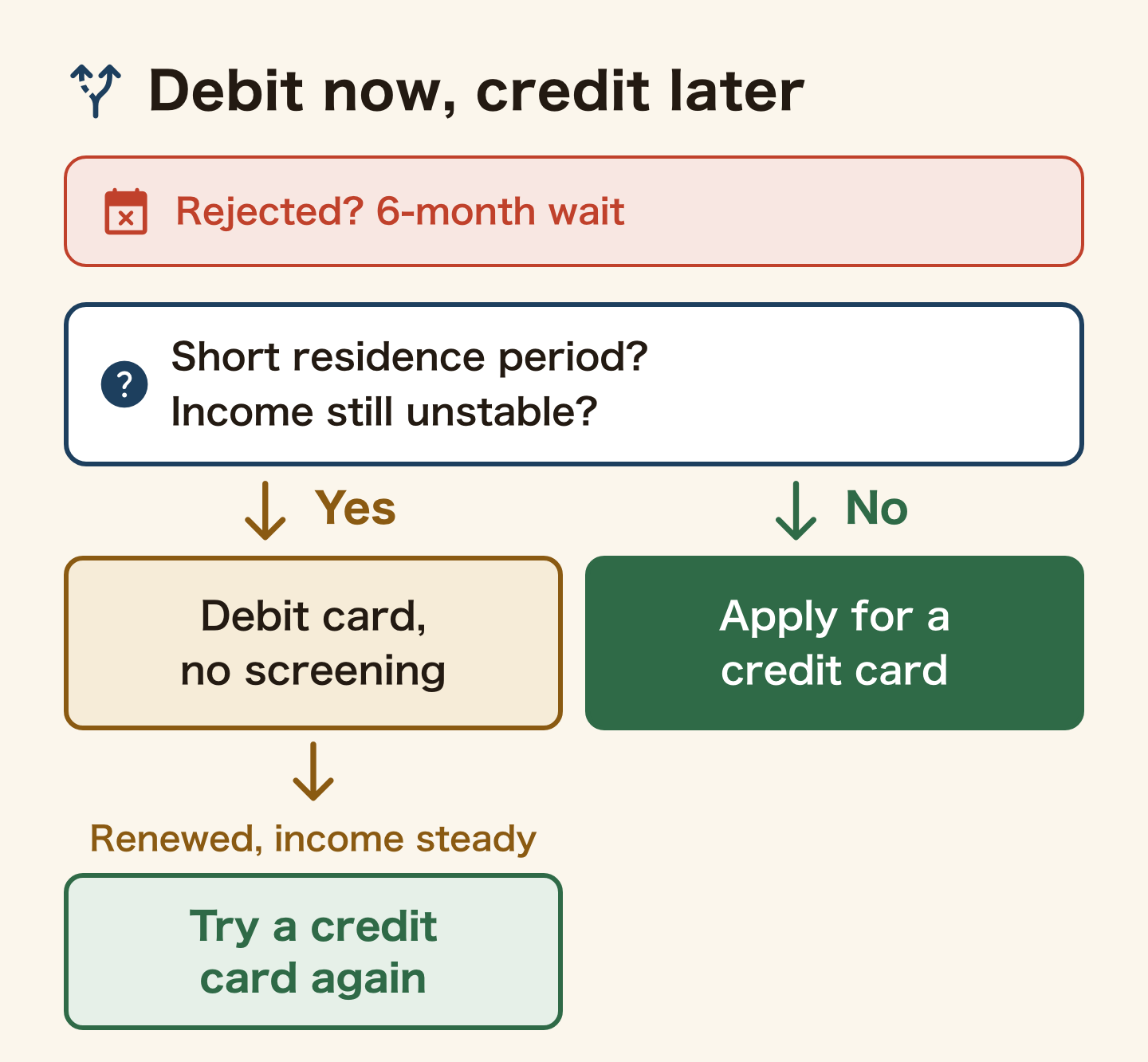
Another realistic option: the Epos Card
- No annual fee, and you can pick it up the same day at a Marui department store counter (residence card is fine for ID)
- Issued by a different company from the Rakuten Card, so it can be your second choice after a Rakuten Card rejection
- A good bridge while you wait out the 6 months after a rejection

Rules once you have a card
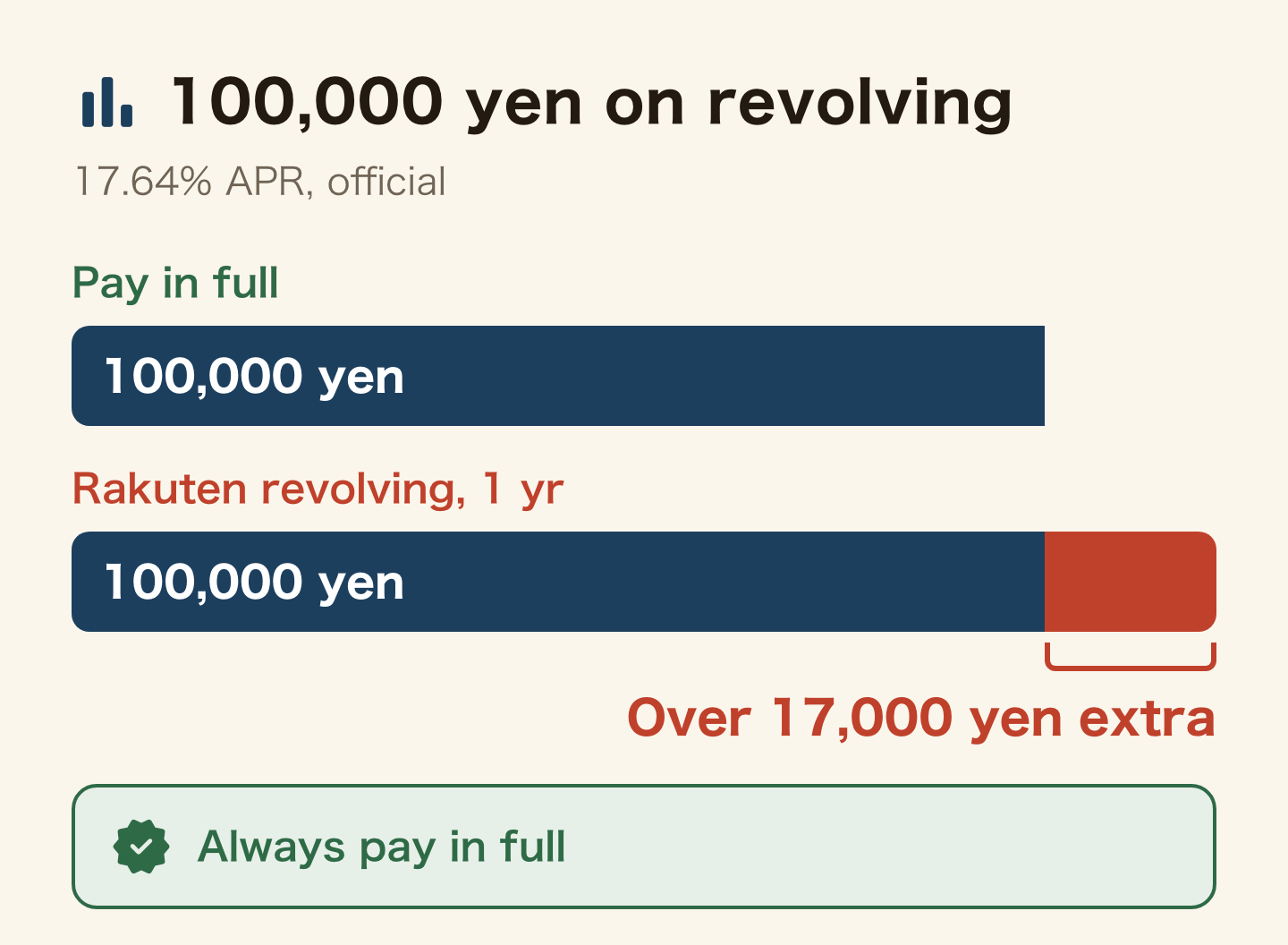
Each month you pay part of the statement and let the rest roll over to the next. Where you come from, that may be simply how a credit card works. In Japan, that way of paying is called revolving (ribo), and on the Rakuten Card it costs 17.64% a year on whatever you leave unpaid.
- Always pay in full (“一括”). Revolving payment (リボ) on the Rakuten Card runs at 17.64% APR (official, August 2026). Leave ¥100,000 on it for a year and over ¥17,000 vanishes in charges. However tempting the offer, never switch to revolving.
- Check your balance before the payment date. Missed payments stay on your record and can hurt future rentals, loans, and residence applications.
- When you leave Japan, close your bank account only after the final payment clears (mind the order of sending money home and closing accounts)
Official sources: Rakuten Card (annual fee, points, eligibility) / Rakuten Card revolving payment (APR) / CIC: how long credit records are kept (checked 26 September 2026)
Frequently asked questions
Can students and part-timers get a card?
Yes. The Rakuten Card is open to students and part-timers from age 18. Write your income honestly, even if it’s small.
My residence period is short – should I apply?
If little time remains, applying after you renew is the safer choice. Card companies do not publish how many months you need. Use a debit card until then.
I was rejected. Can I re-apply right away?
We don’t recommend it. The fact that you applied stays on file at CIC for 6 months. If you apply again right away, the applications pile up in a short span, and that may count against you (screening criteria are not published). CIC’s published list of recorded items does not include the outcome (“rejected”). Wait 6 months and check the list first.
Do I need a Japanese bank account?
Yes, for payments. Open one first if you haven’t.
Is the annual fee really free?
The standard Rakuten Card has no annual fee, ever. Higher-tier cards charge a fee (on the official page, the Rakuten Gold Card is ¥2,200 a year and the Rakuten Premium Card ¥11,000 a year, tax included). You don’t need one for your first card.
What’s the difference between credit and debit?
Credit is “pay later” and builds your history. Debit deducts instantly with no screening. If screening worries you, starting with debit is a good choice.
Summary
- There are three things you can check before you apply – sort them out first, then apply
- First card: the free, 1%-points Rakuten Card
- Go through the 5-point checklist before you apply
- Still unsure? Waiting with a debit card is a smart move too
- After you get it: pay in full, never miss a payment. A card is a tool for building trust.
Related guides
Found this useful? Share it
Send it to a friend who lives in Japan.
WHO WROTE THIS

mori
Japanese. I read the ministries’ own notices, orders and Q&As in the original, and I start from what my Nepalese and Sri Lankan friends in Japan actually ran into. I do not write about what I have not checked or been told.
What this site can and cannot do →Looking for something else?
You may use the figures in this article, including commercially, if you credit this site with a link. How to use our figures