Grow

English

What Is r > g? Piketty’s Formula and Compounding in Japan 2026

r > g is Piketty's claim that returns on capital exceed economic growth. It is a tendency, not a law. Book claims and Japanese official data are kept apart, with the criticism, and a Jack and Jill compounding table at 3%, 5% and 10% you can recheck.
English

Japan Tax on Foreign Income 2026: Non-Permanent Resident 5-Year Rule

A non-permanent resident is a non-Japanese person with 5 years or less in Japan in total over the past 10 years. Interest and dividends from home are taxed in Japan only on the part paid in or sent to Japan, and money sent counts as that year's foreign income first: send 500,000 yen in a year with 100,000 yen of interest and 100,000 yen is taxable. Gains on foreign shares bought while non-permanent are taxed anyway. After 5 years, worldwide income is taxed. Also: the 200,000 yen filing line and bank reports on transfers over 1 million yen. Checked October 2026.
English

Japan DC Pension Plan After You Quit or Leave Japan 2026: 6 Months

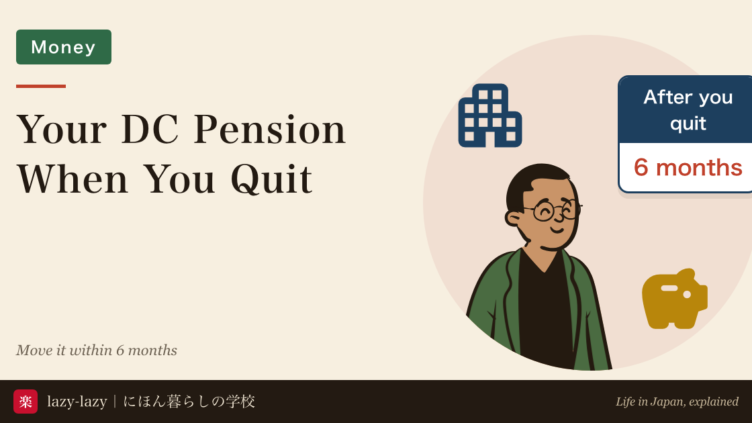
A corporate DC plan does not become cash when you quit. Within six months from the month after you lose membership, move it to a new DC plan or iDeCo, or claim the lump sum. Left alone it is auto-transferred: no investing, 4,348 yen plus 98 yen a month. Foreigners going home with 5 years or less, or 250,000 yen or less, can withdraw it from abroad. Checked October 2026.
English

Japan Pension After Leaving Japan 2026: 10 Years, Then Claim From 65

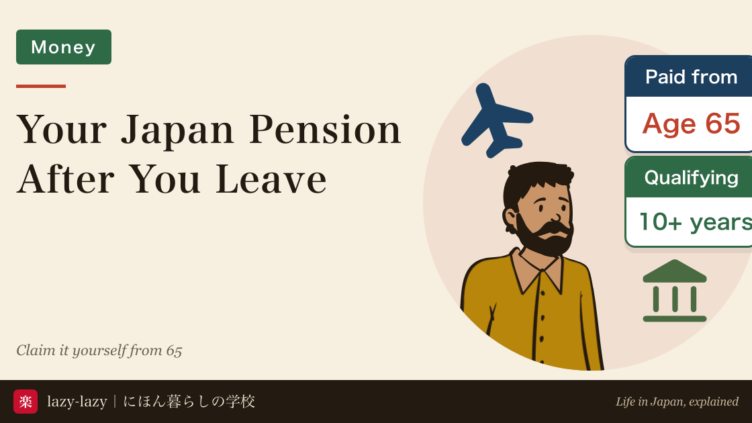
With 10 years, your Japanese pension can be paid in your home country. No claim form is sent abroad: from the day before you turn 65, send Form 101 yourself. A foreign bank works with its SWIFT code. File a status report every birth month. If your country's tax treaty covers pensions, a form waives Japan's 20.42% tax. Checked October 2026.
English

Should Foreigners Invest in Japan? 2026: 5 Reasons Savings Shrink

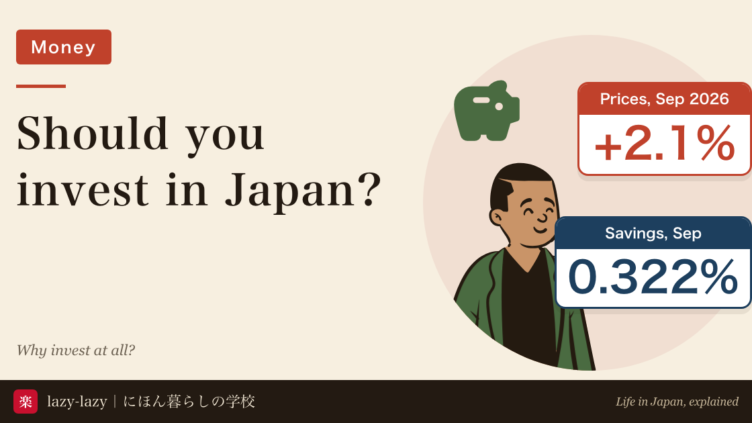
Yes, foreigners can invest in Japan, and the reason to care is simple: prices rose 1.9% in August 2026 while ordinary savings paid 0.322% (Bank of Japan, September). Real wages fell four years running (2022-2025), the employees' pension takes 18.3% split with your employer, the lump-sum refund stops at 60 months, and the pension replacement rate is projected to fall from 61.2%. What differs for foreigners, and how the years until you leave decide your first step.
English

Japan Pension for Foreigners 2026: 9.15% Split, 10 Years to a Pension

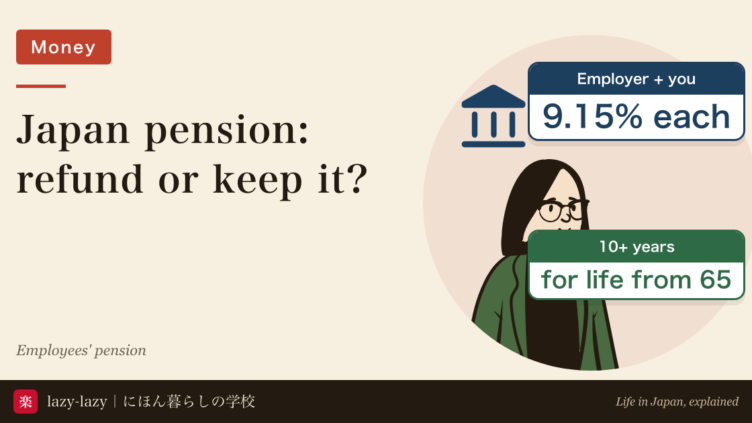
Japan's Employees' Pension (kosei nenkin) covers foreign workers regardless of nationality; part-timers at 20 or more hours a week are enrolled too, students excepted (the 88,000 yen condition ended in October 2026). The premium is 18.3% of pay split half and half with the employer, so 9.15% from you. With a qualifying period of 10 years or more you receive a pension for life from 65, paid to a bank abroad after you leave, and 20 of the 24 social security agreement countries let you add home-country years. Leaving before 10 years, the lump-sum withdrawal returns up to 5 years' worth within 2 years of leaving, but it erases those years; if you might return or seek permanent residence, keeping the record leaves more open. The fork is how long you will be in Japan.
English
iDeCo for Foreigners in Japan: Locked Until 60, and the Exit

Foreign nationals can join iDeCo - the condition is public pension enrolment, not nationality - but assets are locked until age 60.
English

NISA for Foreigners in Japan 2026: How to Open One, and When You Leave

You can open a Japanese brokerage account whatever your nationality, as long as you live here.