Last updated: 18 October 2026
Figures, prices and terms were checked against the 14-day registration rule and municipal issuing fees on 18 October 2026. They change – check the current terms yourself before you sign up or file anything.
Summary
- A juminhyo (住民票) is the official record that proves where you live in Japan.
- Students too: registering is required by law. Within 14 days of settling into a home, file a “moving-in notification” (転入届 / tennyūtodoke) at your city or ward office.
- Bring your residence card and passport.
- Once registered, you can sort out health insurance, a bank account, a phone and a part-time job. That is why it comes first.
- A copy of your juminhyo costs 300 yen at the counter in Shinjuku and Yokohama; each city sets its own fee. You can get one at the counter, or at a convenience store with a My Number Card.
- When you move, it is 14 days again. Ignoring it can bring fines, and can put your status of residence at risk.
Get this done and the one city-office visit unlocks everything after it: the bank, the insurance, the phone – in that order, without going back.
Your juminhyo (住民票) is the document that shows where you live in Japan. It sounds small, but almost nothing else works until you have it – bank, phone, insurance, and jobs all ask for it. This guide explains what it is, how to register, and the mistakes that cause problems.
- What is a juminhyo?
- Do this first: from arrival to registering your address
- What to bring
- What happens if you miss the 14 days?
- Two ways to get a copy (counter or convenience store)
- How your name appears (katakana, furigana, and alias names)
- The juminhyo is the entry point – so register first
- When you move: 14 days again
- Frequently asked questions
- Do this first
What is a juminhyo?
A juminhyo is an official record kept by your city or ward office. It shows your name, date of birth, address, and household (the people you live with). Put simply, it says “I live here in Japan.”
Since July 2012, foreign residents staying more than three months (mid-to-long-term residents) are registered the same way as Japanese residents. International students are included. For a foreign resident it is your proof that you officially live here, which is why so many procedures ask for it. “It doesn’t apply to foreigners” is wrong – always register.
Do this first: from arrival to registering your address
You find a room, unpack, and plan to drop by the city office sometime next month. Where you come from, registering your address may be something nobody hurries. In Japan, it is due within 14 days of settling into your home, and until it is done, health insurance and a bank account stay out of reach.
From landing in Japan to being registered takes four steps. The deadline that matters most is “within 14 days of deciding where you live.”
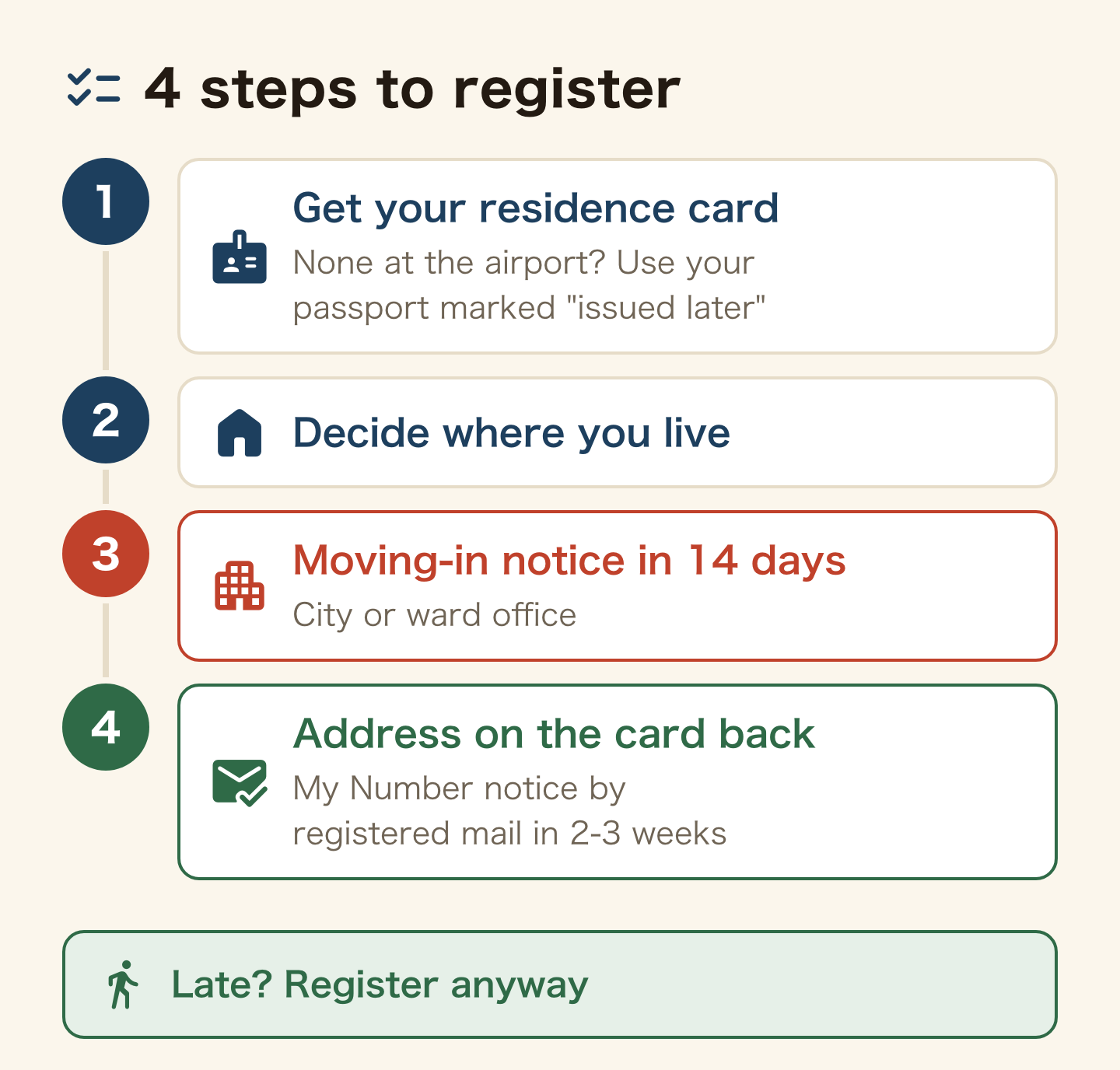
- Receive your residence card when you land. If you did not get one at the airport, your passport is marked to say the card will be issued later, and you can register with that passport (Immigration Services Agency).
- Decide where you will live.
- Within 14 days, go to the city or ward office (市役所 / 区役所) for your new address and file a moving-in notification (転入届 / tennyūtodoke) at the counter (Basic Resident Registration Act, Article 30-46).
- Staff write your address on the back of your residence card and hand it back. That also counts as your address report to immigration (Immigration Act, Article 19-7). From that day you can request copies of your juminhyo. Your My Number (individual number) notice arrives by simple registered mail about 2 to 3 weeks after registration (My Number Card portal, Japanese).
From now on, write your address on forms exactly as it appears on your juminhyo; how to write a Japanese address explains the order, from postcode down to building and room number, and the English version.
What to bring
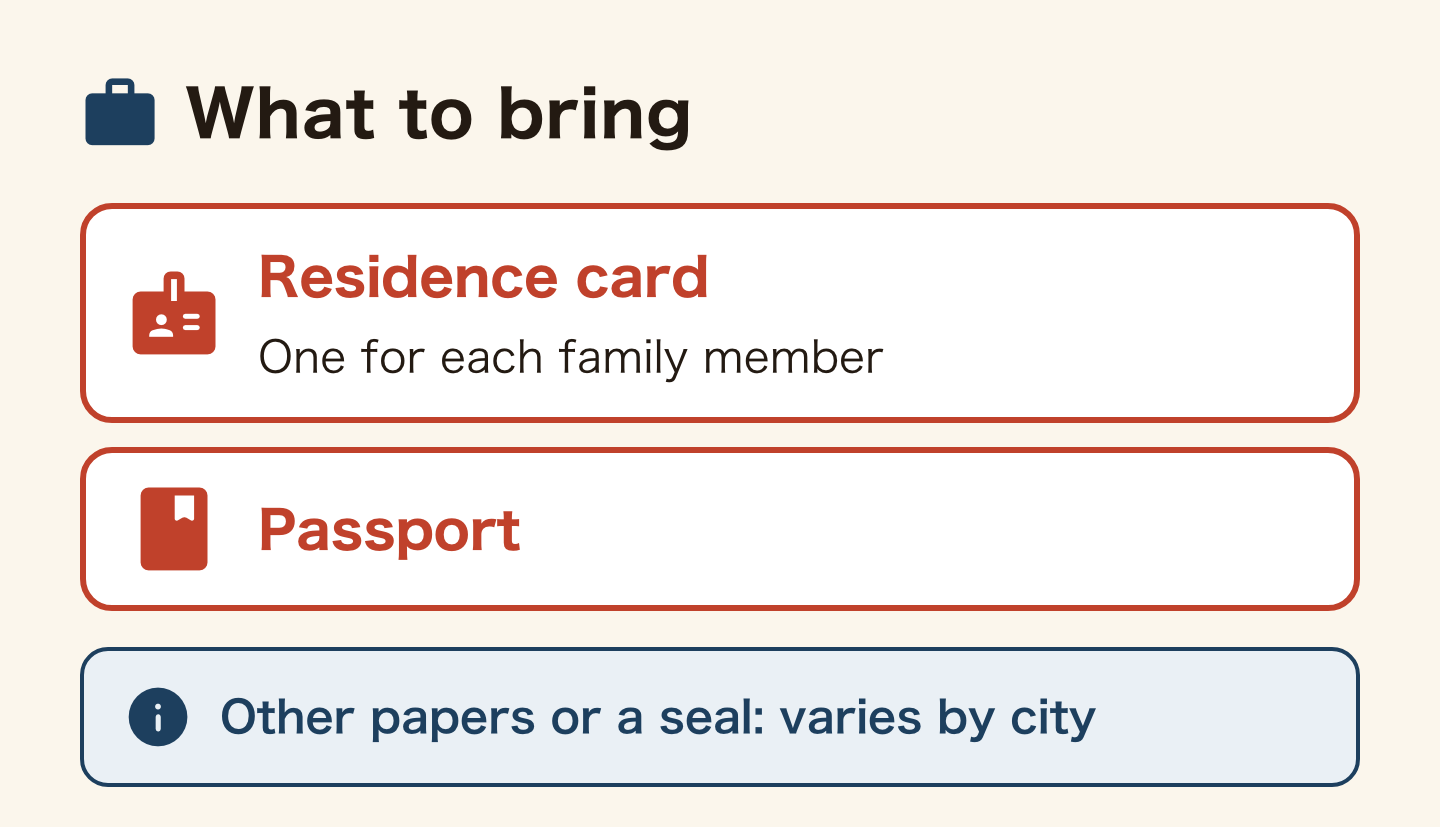
- Residence card (one for each family member)
- Passport
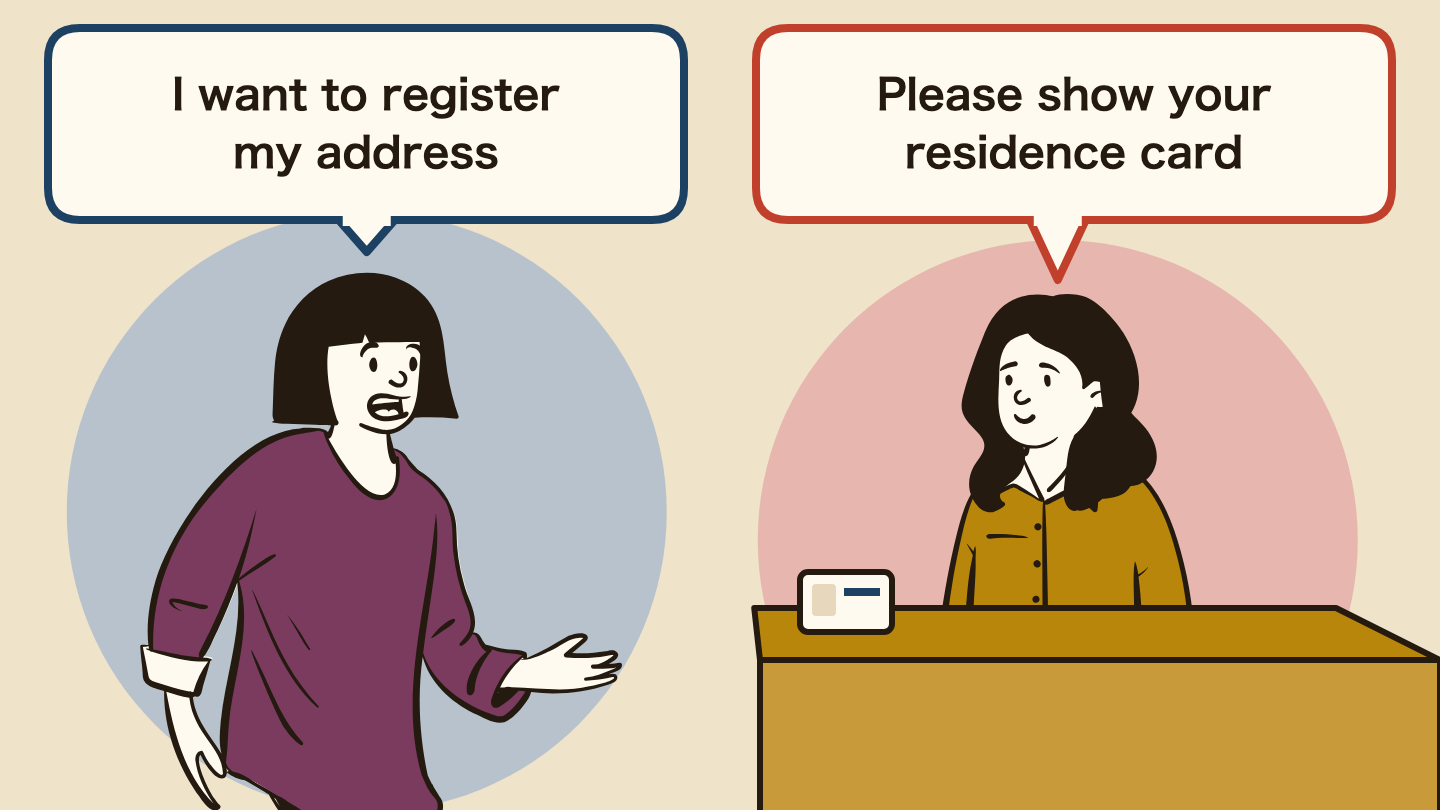
Whether you need other documents or a personal seal (hanko) differs by municipality. If you are unsure, check your city’s website before you go. Tell the counter you want to register your address (転入届) and staff will guide you. If your Japanese is shaky, going with a teacher or a friend helps.
Show this at the counter
Show this to the staff at the resident registration counter of your city or ward office (often called juumin-ka or shimin-ka).
What to say (with reading aids)
「住所の届け出をしたいです。在留カードの住所も書いてください」
“I want to register my address. Please write the address on my residence card too.”
For the staff member(職員の方へ)
住民登録(転入届、または同じ市区町村内なら転居届)をお願いします。在留カードを提出しますので、裏面に新しい住居地の記載をお願いします。これで入管への住居地の届出も済むと理解しています。
Bring your residence card (one for each family member) and your passport. Counter names differ a little by municipality.
What happens if you miss the 14 days?
Worth stating plainly, because the consequences sit across two different laws and one of them is severe.
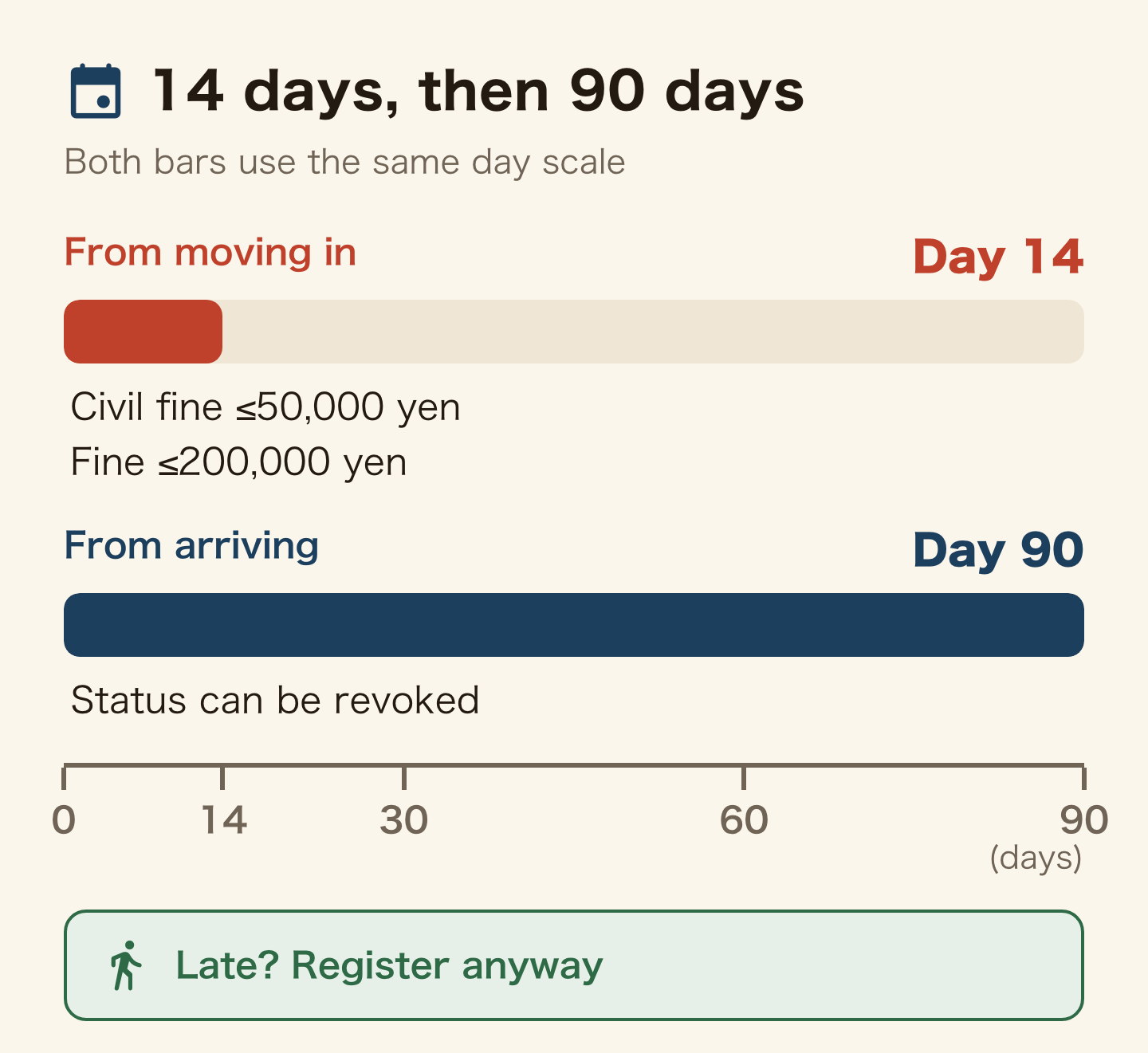
The first is the Basic Resident Registration Act. Miss the 14 days without good reason and you can face a civil fine of up to 50,000 yen.
The second is the Immigration Act, and this is the one that matters. Mid-to-long-term residents must report their address within 14 days of settling there. Failing to report can bring a fine of up to 200,000 yen. Reporting a false address can bring imprisonment of up to one year, or a fine of up to 200,000 yen.
Then the heaviest one. If you do not report your address within 90 days of arriving, without a legitimate reason, your status of residence can be revoked. That stops being about money. That is about whether you can stay in Japan at all. A false report carries the same risk.
If you are already past the deadline
Being late does not make not going an option. You can still register late. If the counter asks why, answer honestly. The worst version of this is the days continuing to pile up unreported – the closer you get to that 90-day line, the more you stand to lose.
Two ways to get a copy (counter or convenience store)
Once you are registered, you can get a “copy of your juminhyo” (住民票の写し) whenever you need one. There are two ways.
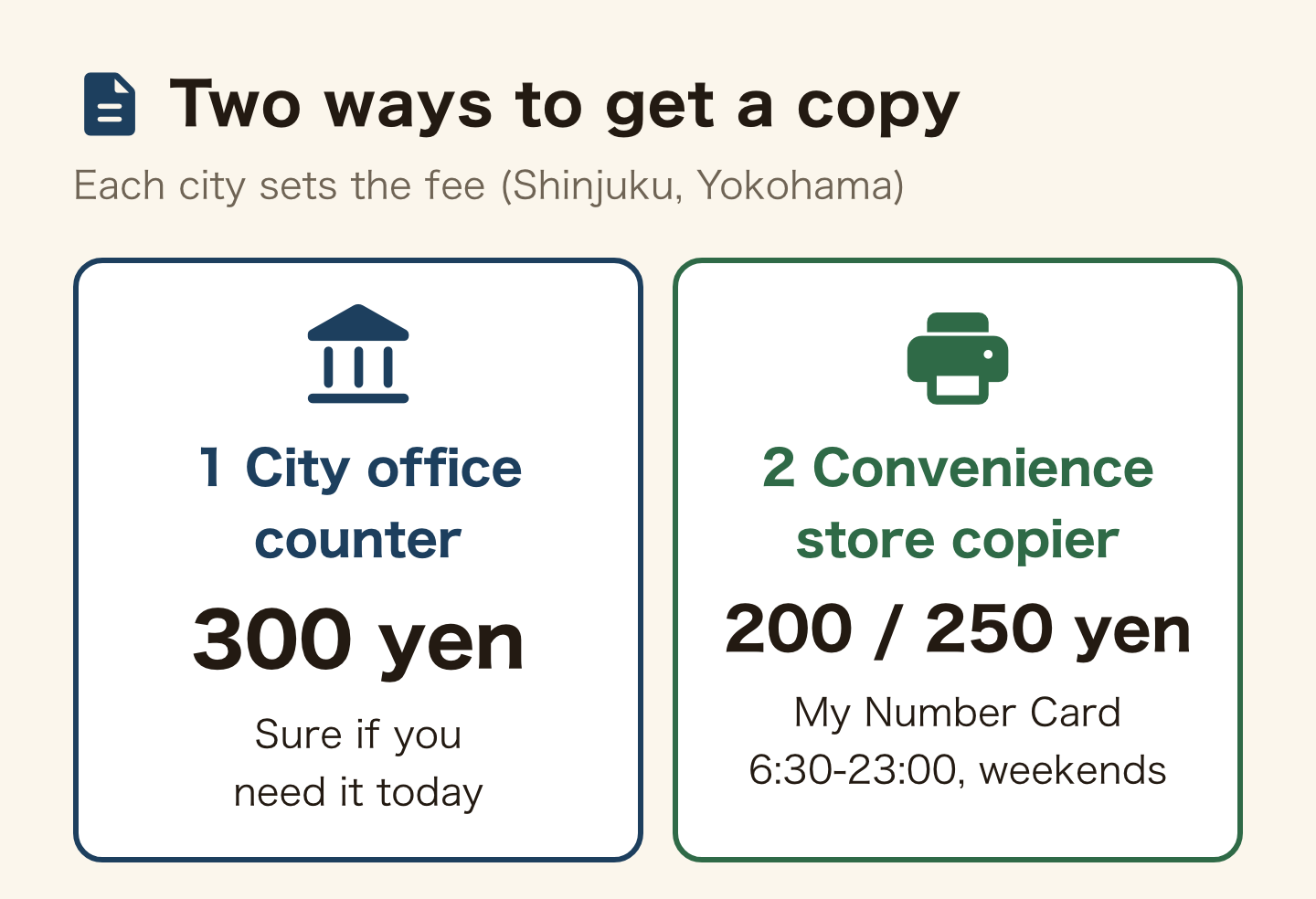
If you need it today, the counter is the sure option. Once you have a My Number Card, you can also print one at a convenience store copier. In Shinjuku and Yokohama this works from 6:30 a.m. to 11 p.m., weekends included. It is cheaper too: 200 yen in Shinjuku and 250 yen in Yokohama.
How your name appears (katakana, furigana, and alias names)
People pick up their juminhyo, look at the name field, and are confused. The mechanics are fixable once you know them.
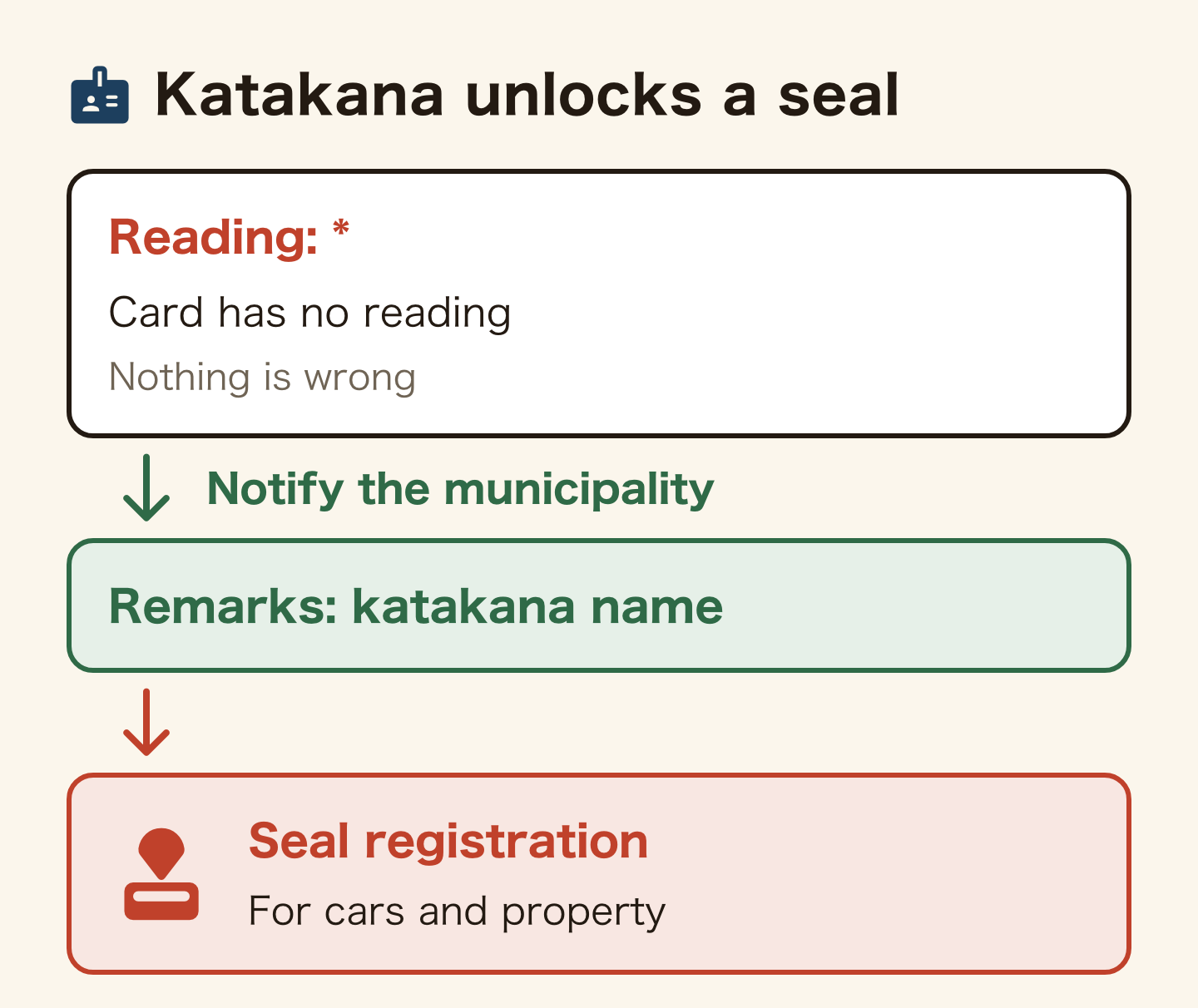
The furigana field shows an asterisk. Since 26 May 2026, juminhyo records carry a phonetic reading of the name – but for foreign residents that field displays as an asterisk, because the residence card or special permanent resident certificate it is built from carries no reading. Nothing has gone wrong.
You do not have to leave it that way. Residents from countries that do not use kanji can file a notice at their municipal office and have a katakana rendering of their name added to the remarks section. If you came from Nepal, Sri Lanka, Vietnam or the Philippines, that is you.
This is not cosmetic. With a katakana rendering in the remarks section, you can register a personal seal (inkan) on the strength of it. Seal registration is what gets asked for when you buy a car or sign a property contract. Doing it early means not being stuck on the day you need it.
There is also the alias name (tsushomei) system. If you have lived in Japan a long time and genuinely go by another name, it can be recorded on your juminhyo – but only if you can evidence that you actually use it. Wanting one is not enough. Ask at the counter.
The juminhyo is the entry point – so register first
Registering is not just paperwork. It is the starting point that sets the rest of your life in Japan in motion. So file your address before you try to get a phone contract, join health insurance, or start a job.
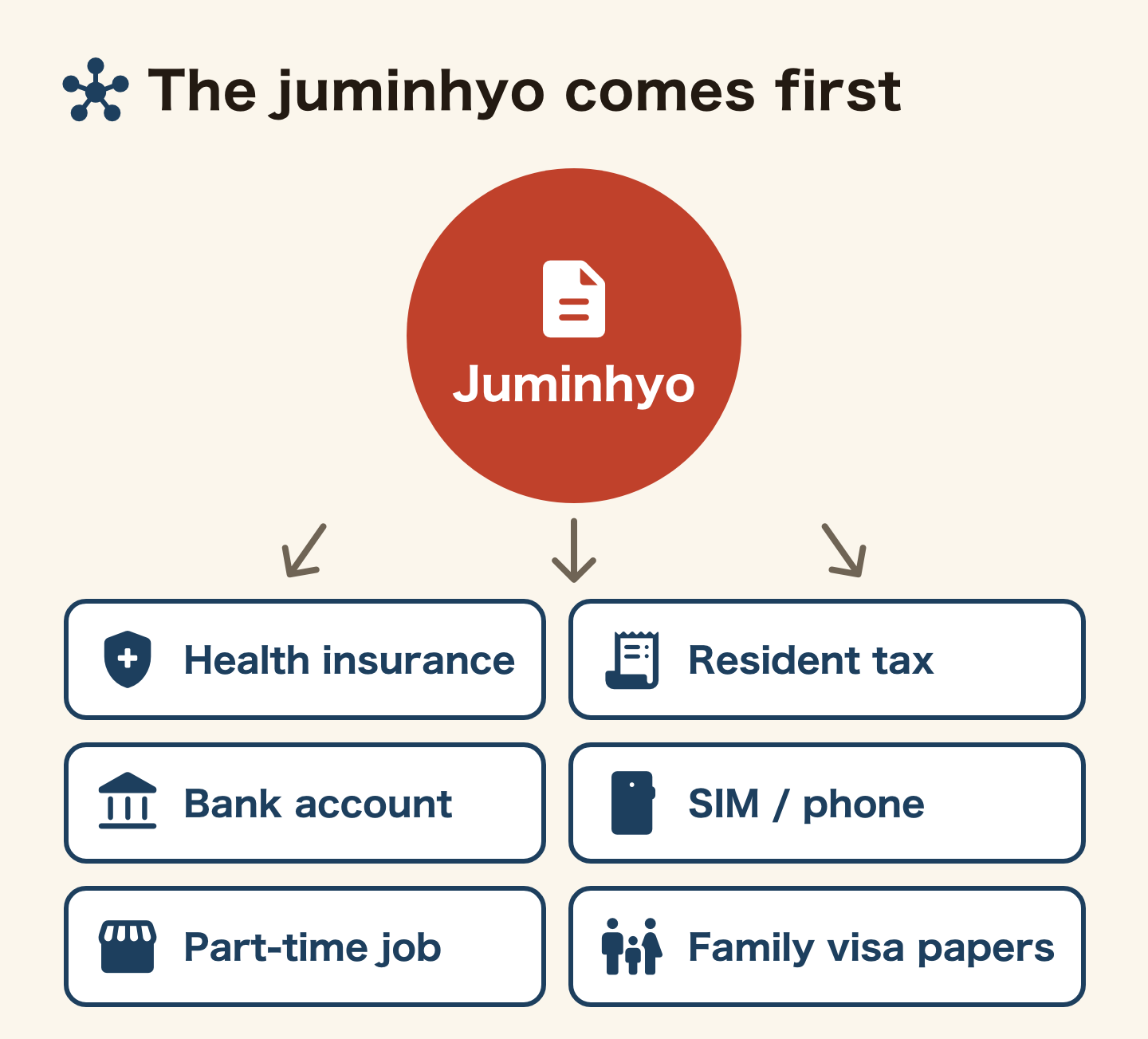
In practice, you will need your juminhyo (or a copy) here:
- National Health Insurance (国民健康保険): registering your address makes you eligible to enrol, which cuts your medical bills to 30%.
- Bank account and phone or SIM: as proof of identity and address.
- Part-time job contracts: employers may ask for a copy to check your identity and address.
- Inviting family: if you pay for your parents’ trip, a household juminhyo showing relationships goes into their visa papers (family visit visa requirements).
- Resident tax (住民税): charged by the city where you are registered on 1 January, based on the previous year’s income (MIC, Japanese). Often nothing in your first year; from year two it depends on what you earned the year before.
When you move: 14 days again
Every time you move while living in Japan, you must report it. A move within the same city is a “moving notification” (転居届 / tenkyotodoke), filed within 14 days of moving. A move to another city takes two steps: file a moving-out notification (転出届 / tenshutsutodoke) at your old city before you move, then a moving-in notification (転入届) at your new city within 14 days of moving in (Basic Resident Registration Act, Articles 22 to 24).
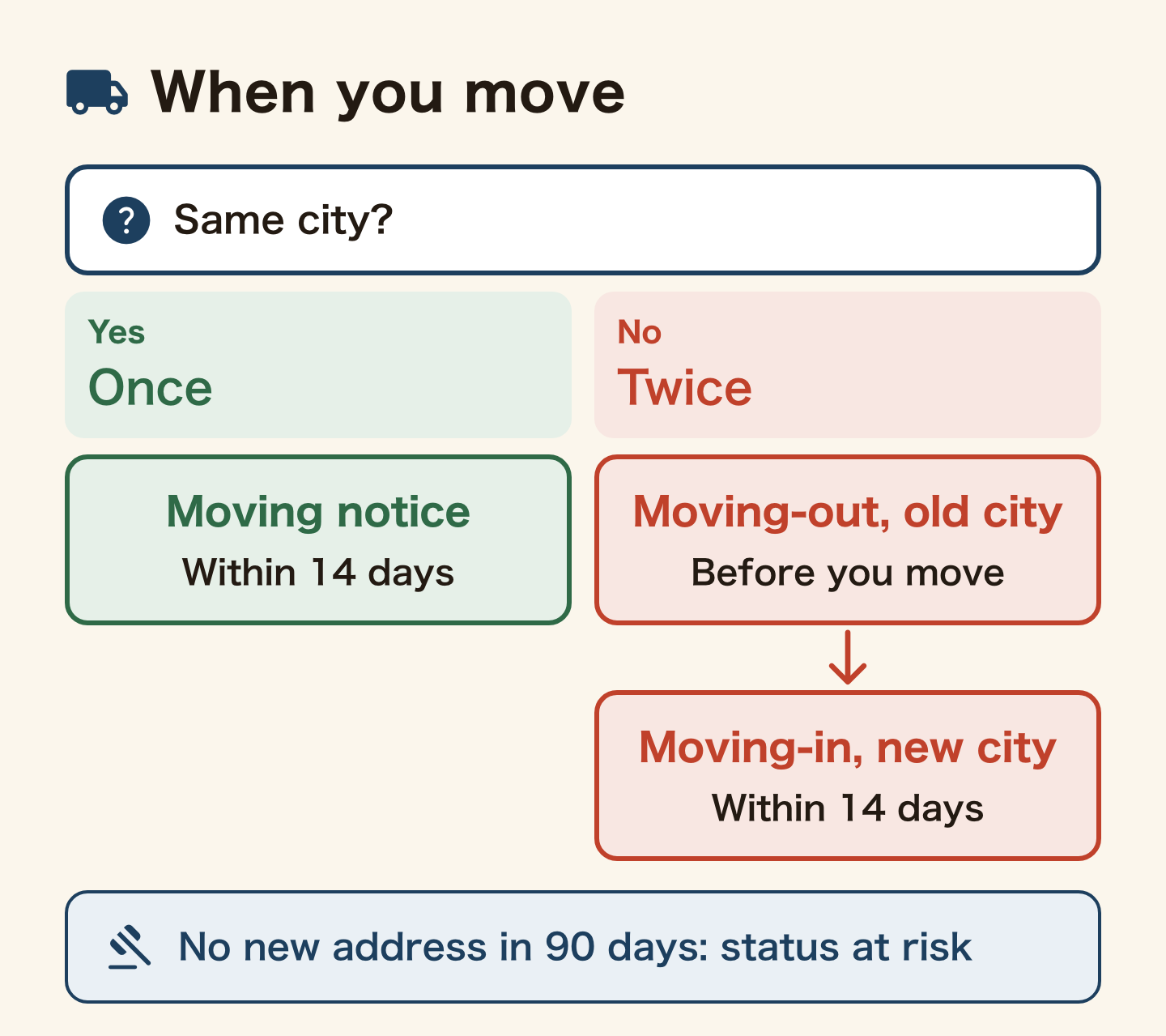
The immigration rule follows you too. If you leave your registered address and do not report a new one within 90 days, without a legitimate reason, your status of residence can be revoked (Immigration Act, Article 22-4).
Forget to report and your health insurance card and important mail go to the old address. So: moved house, city office first. That city office 転居届 is not the post office form with the same name: Japan Post’s change of address is a separate request that forwards your mail free for one year. At the new address, also look up the nearest evacuation site and shelter on the hazard map, so you know where to go in an earthquake. For the whole order of moving paperwork and costs, see moving house in Japan.
Official sources: Immigration Services Agency: address notification after arrival (Japanese) / MIC: Basic Resident Registration for foreign residents (English) / e-Gov: Basic Resident Registration Act, Articles 22 to 24, 30-46 and 52 (Japanese) / e-Gov: Immigration Control Act, Articles 19-7, 19-9, 22-4, 71-2 and 71-5 (Japanese) / My Number Card portal: individual number notice (Japanese) / MIC: individual resident tax (Japanese) / Japan Post: mail forwarding (Japanese) (checked 18 October 2026)
Frequently asked questions
What happens if I don’t register?
Many procedures stop: health insurance, a bank account, school and job paperwork. Reporting your address is a legal duty, and being late can bring fines. If you do not report within 90 days of arriving, without a legitimate reason, your status of residence can be revoked. Always register.
What do I need to bring? Do I need a seal (hanko)?
Bring your residence card and passport and show them at the counter. Whether you need other documents or a seal differs by municipality, so check your city’s website first if you are unsure.
How much does a copy cost, and where can I get one?
Each city sets the fee. At the counter it is 300 yen a copy in both Shinjuku and Yokohama. With a My Number Card you can also get one at a convenience store copier, where it is cheaper: 200 yen in Shinjuku and 250 yen in Yokohama.
Is a juminhyo used for part-time jobs?
Sometimes. Employers may ask for a copy to check your identity and address.
Can they help me in English?
It depends on the municipality. Large cities increasingly have English or multilingual counters or translation tablets; smaller offices may not. Bring a teacher, a friend or a translation app if you’re unsure.
Do I need to re-do it when I move?
Yes. Within the same city, file a moving notification within 14 days of moving. To another city, file a moving-out notification at the old city before you move, and a moving-in notification at the new city within 14 days. If you are late, your insurance card and mail stop reaching you.
Do this first
- A juminhyo is the official proof of where you live in Japan. Students must register too
- Within 14 days of settling into a home, take your residence card and passport to the city office and register your address
- Not reporting within 90 days of arriving can cost you your status of residence. Even if you are late, go
- Once registered, health insurance, a bank account, a phone and a job all start moving
- A copy is 300 yen at the counter (Shinjuku, Yokohama). With a My Number Card you can get one at a convenience store too, for 200 yen in Shinjuku
- When you move, it is 14 days again – don’t forget
Next steps most people take:
Found this useful? Share it
Send it to a friend who lives in Japan.
Once your address is registered, the bank account is next. Some banks accept you with just three months left on your visa.
Bank Account in Japan for Foreigners →WHO WROTE THIS

mori
Japanese. I read the ministries’ own notices, orders and Q&As in the original, and I start from what my Nepalese and Sri Lankan friends in Japan actually ran into. I do not write about what I have not checked or been told.
What this site can and cannot do →Looking for something else?
You may use the figures in this article, including commercially, if you credit this site with a link. How to use our figures