This article contains affiliate links.
Last updated: October 2026
Figures, fees and conditions were checked on 18 October 2026 against Japan Post Bank’s notice for foreign customers, Rakuten Bank’s account opening steps and the Financial Services Agency’s page on dormant deposits. They can change, so always check the latest conditions yourself before you apply or start any procedure.
In short
- Each bank sets its own conditions, and some will turn you away if little time is left on your residence card. New arrivals often get stuck here.
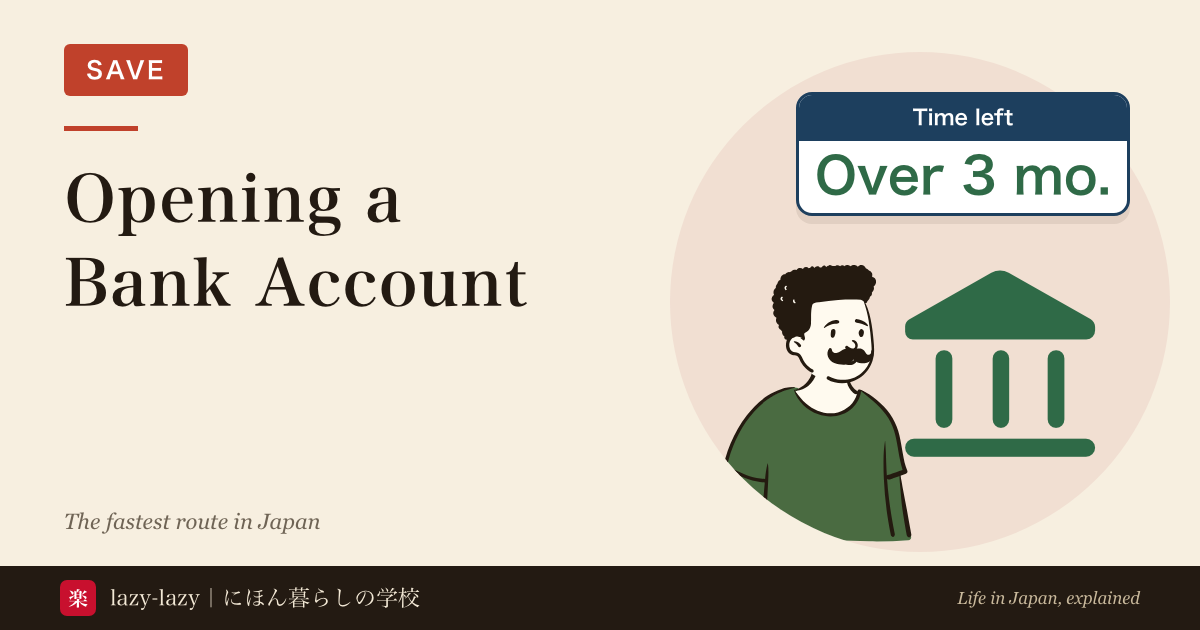
- Japan Post Bank (yucho) publishes its rule: you can apply as long as your period of stay does not end within 3 months of the day you apply. That makes it the realistic first choice for new arrivals.
- Online banks like Rakuten Bank need no personal seal (hanko). You apply online and send your ID documents through the app.
- You need a bank account before you can get paid or apply for a credit card. Most banks ask for a Japanese phone number, so having a SIM first makes it smoother.
- Before you leave Japan for good, close the account, or ask your bank how to keep it. Leaving it untouched can turn it into a dormant account.
Knowing Japan Post Bank’s 3-month rule in advance, you skip the day lost to being turned away at a counter and hunting for another bank. Even right after arriving, you know which bank you can apply to that same day.
If the reason you want an account is sending money home, check the transfer fees too
An account is no use if the money gets shaved off on the way out. An overseas transfer from a bank counter costs 5,500-12,500 yen in fees per 100,000 yen (MUFG Bank’s official fee table, checked August 2026). On top of that comes a mark-up on the exchange rate that no fee table shows. Wise uses the real rate and shows the fee as a number before you send, so the arriving amount is fixed in advance.
Why open a bank account so early?
A bank account is your own account at a bank, where you keep money, receive your pay and make payments. It is the foundation of life in Japan. You need one to receive your part-time pay, to sign up for most SIM plans, and to apply for a credit card. It is also what lets you pay your phone and Wi-Fi by direct debit without a credit card. Skip it, and you get stuck waiting on almost every other guide on this site.
The catch is timing. Some banks will not open an account for someone who has just arrived. Knowing which banks accept new arrivals, and which need you to wait, saves weeks of frustration.
The residence-period wall – and Japan Post Bank’s published rule
You take your residence card and passport to a big bank near the station. Where you come from, ID may be all it takes to open an account. In Japan, if too little time is left on your residence card, some banks will turn you away.
Each bank sets its own conditions, and some refuse applicants with little time left on their residence card. Japan Post Bank states its rule officially: if your period of stay ends within 3 months of the day you apply, it cannot open an account. In other words, you can apply if more than 3 months remain (checked October 2026). People whose stay granted on entry was 3 months or less, and who have no residence card, cannot open one.
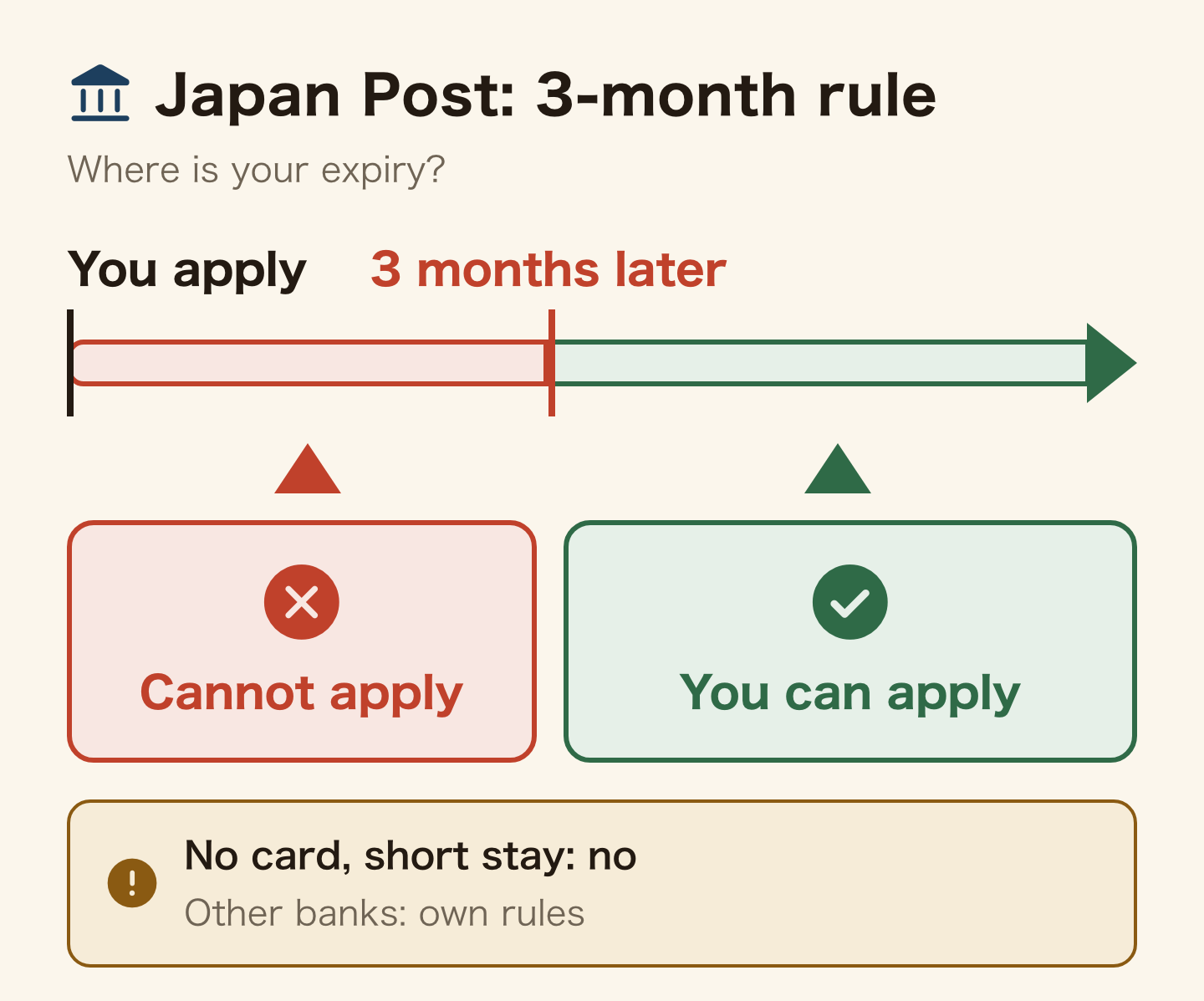
If you have just arrived, or little time is left on your period of stay, Japan Post Bank is the realistic first choice. Once you have an account history and a longer period of stay, other banks open up as options too. With an account in place, you can also link it to PayPay and top up from it (PayPay asks for its identity check before you can register a bank account).
Which is the best bank account for foreigners in Japan?
| Bank type | Minimum residence period | Personal seal (hanko) | Screening and conditions |
|---|---|---|---|
| Japan Post Bank | More than 3 months left (official) | Often required | May take time, or be declined |
| Online banks (e.g. Rakuten Bank) | Varies by bank – check | Usually not required (Rakuten Bank: no form or seal needed) | Screened (may call your workplace or school) |
| Regional banks, credit unions | Varies by branch – check | Often required | Conditions vary by bank (check the branch or website) |
| Megabanks (MUFG, SMBC, etc.) | Check with the bank | Required | Conditions vary by bank (check the branch or website) |
There is no single foreigner friendly bank in Japan, because the answer changes with how long you have been here. In your first months, Japan Post Bank states its rule officially, so you can tell whether you qualify. Later, online banks, with no trip to a branch, become an option too. That is the whole comparison: the best account for you is the one whose residence period requirement you already meet.
Online banks are worth a close look once you have settled in: no trip to a branch, no personal seal to buy, and most of the process happens on your phone. The trade-off is that customer support is online-only, which can matter if your Japanese is still limited.
What you need to bring
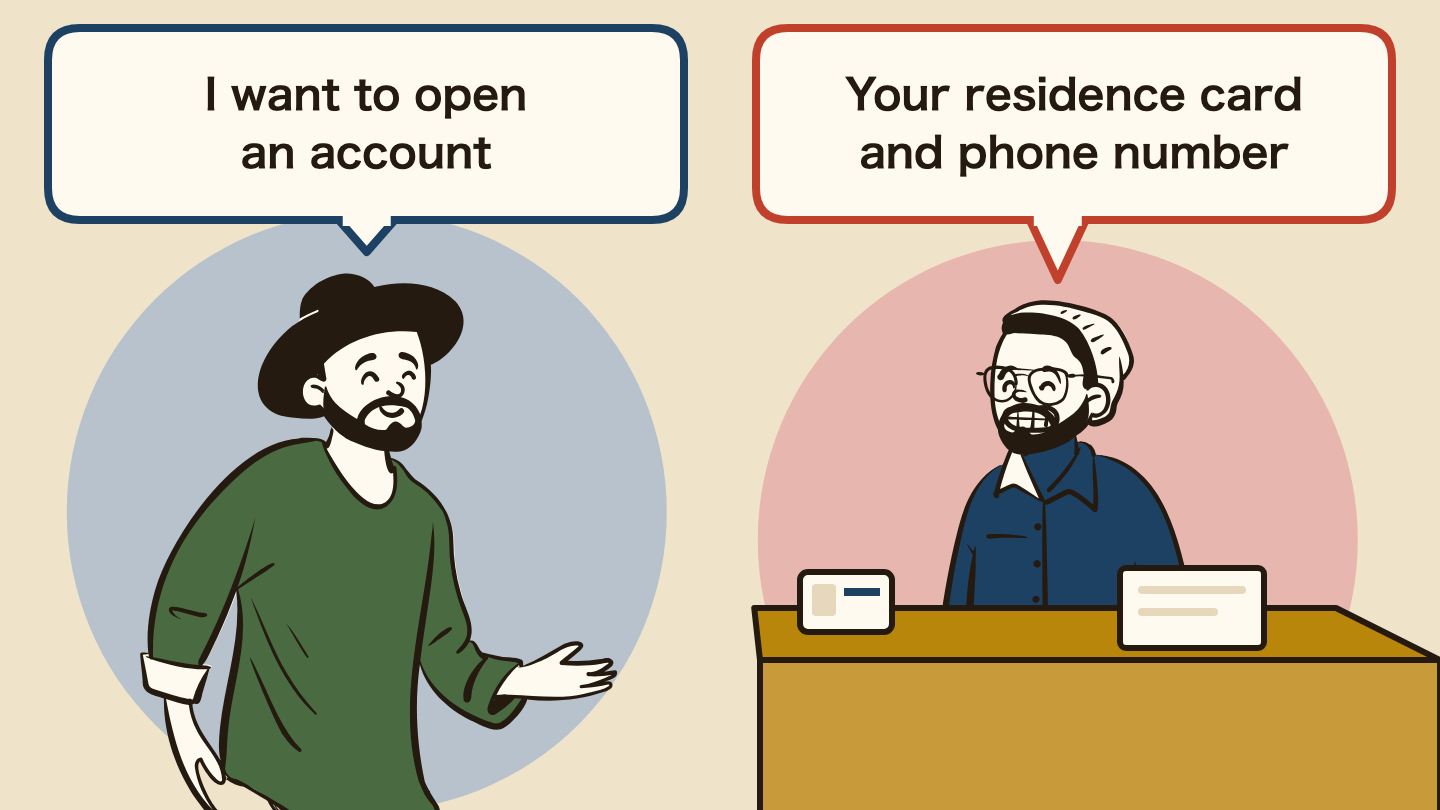
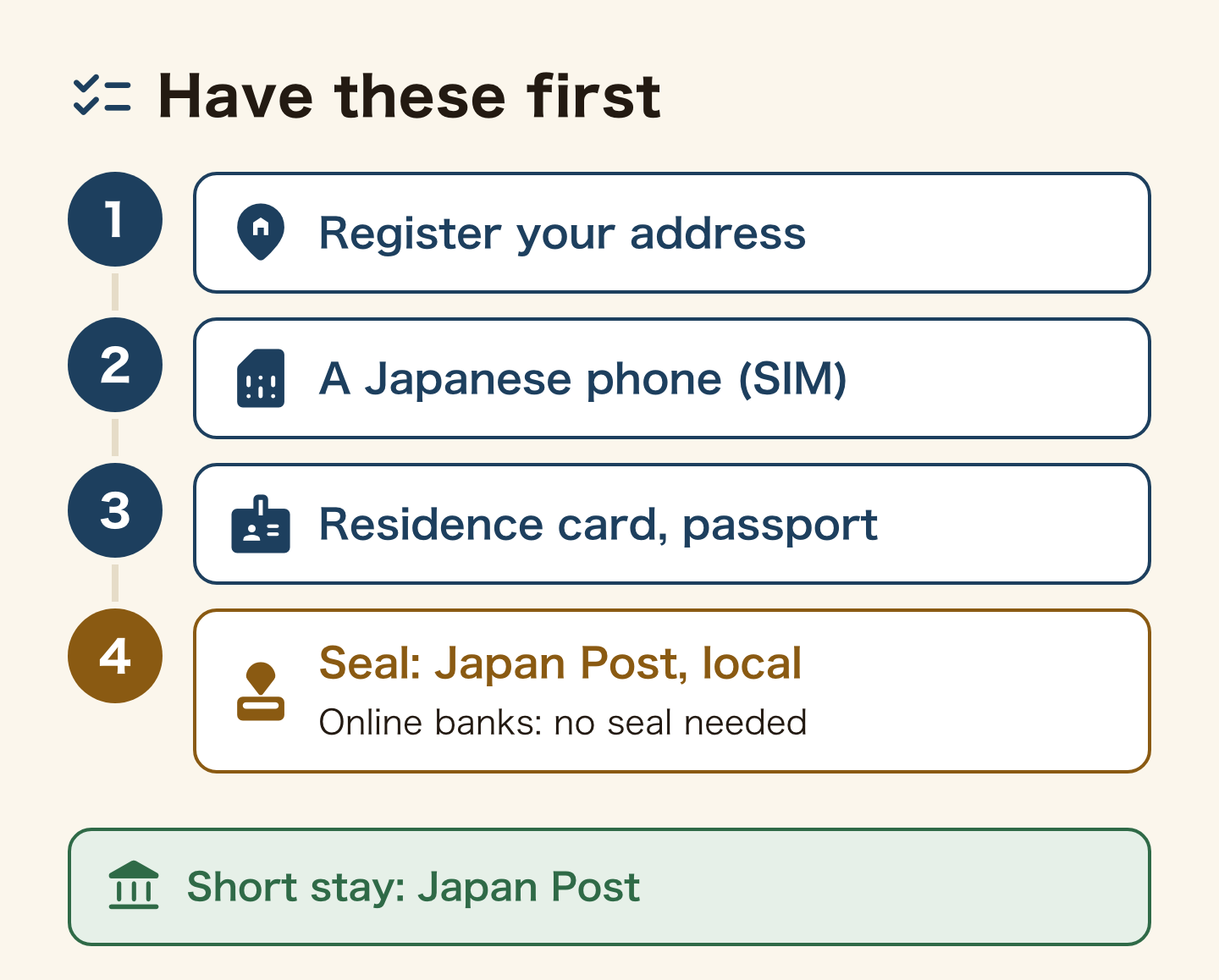
Bring your residence card, your passport, proof of your registered address, and a Japanese phone number. At Japan Post Bank, students (Student status) also need their student ID, and technical intern trainees their employee ID. If you have none, your school or employer fills in a proof of enrollment.
- Residence card (zairyu card): the most important proof of identity and status
- Passport: as a second ID document
- Registered address: you need juminhyo registration done first – most banks will not accept an address that is not officially registered
- A Japanese phone number: get your SIM sorted if you can, though some banks accept the phone number of your school or employer as a temporary stand-in
- A personal seal (hanko): required by some banks, skippable at most online banks
What happens when you leave Japan for good?
The standard rule is that non-residents are asked to close their Japanese bank account. Leaving it open and unused for years can turn it into a dormant account.
- To close an account you generally need your passbook, cash card, residence card and personal seal (if you registered one)
- If you leave the account open and inactive, it is treated as a dormant deposit after 10 years with no transactions, at Japan Post Bank and other banks alike. You can still withdraw the money afterwards, but it takes extra steps
- Some banks will let you keep an account open after you leave if you have a genuine reason, such as receiving a Japanese salary – ask your bank directly before you leave
- If you move within Japan or plan to leave later, update your registered address with the bank as soon as it changes – an outdated address can freeze services like online banking. On forms, write your address exactly as it is on the back of your residence card and your juminhyo
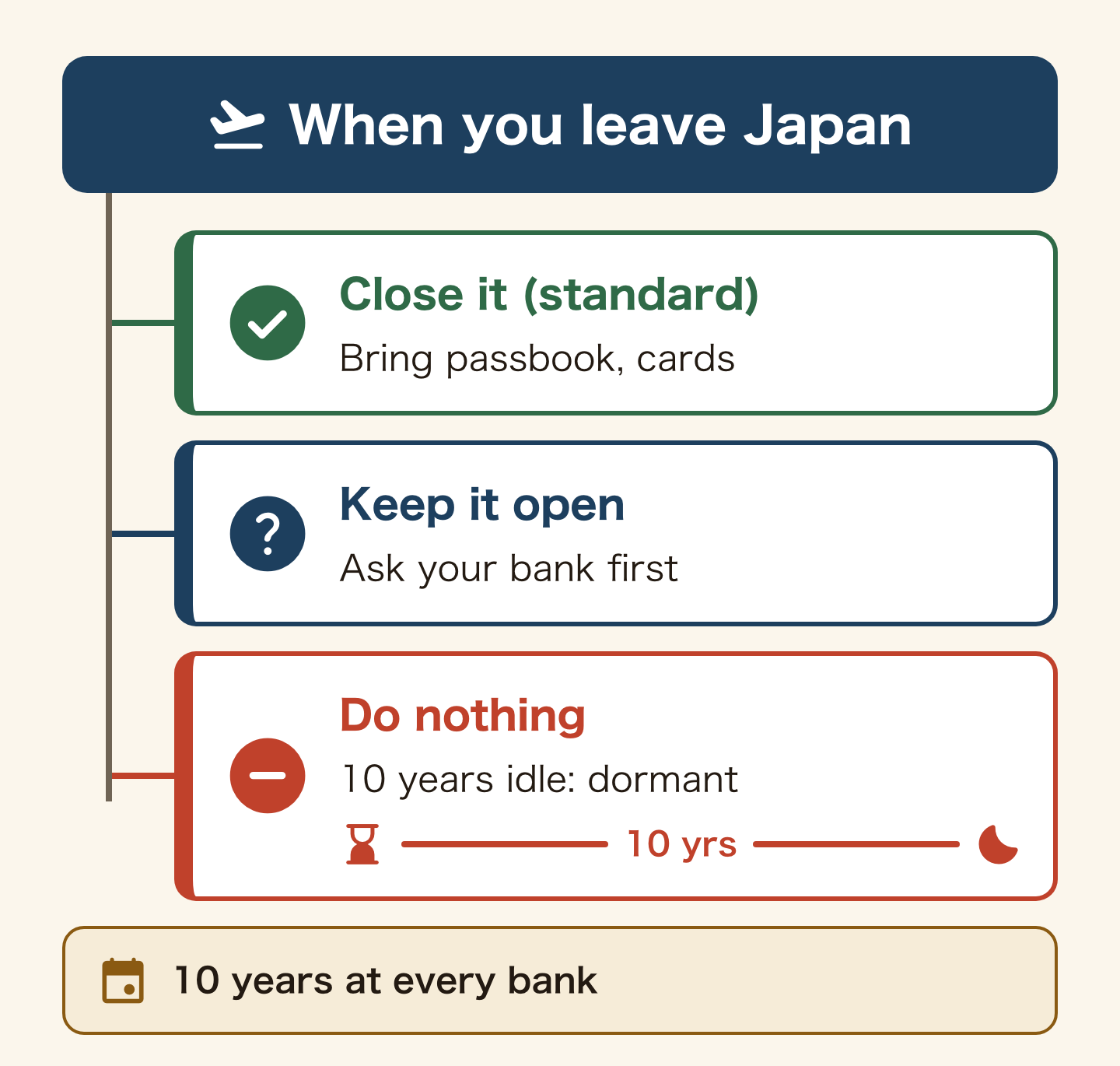
Whatever you decide, close the loop before you fly out: either formally close the account, or confirm with the bank exactly what you need to do to keep it open as a non-resident. For the book lesson behind paying yourself first, see The Richest Man in Babylon, 7 Lessons for Japan 2026 (5 Skills).
Official sources: Japan Post Bank, notice for foreign customers opening an account (Japanese) / Financial Services Agency, dormant deposits (Japanese) / Rakuten Bank, account opening steps (Japanese) / Japan Post Bank, English guide (checked 18 October 2026)
Frequently asked questions
Can I open a bank account right after arriving in Japan?
It depends on the bank. Each bank sets its own conditions, and some refuse applicants with little time left on their residence card. Japan Post Bank accepts you as long as your period of stay does not end within 3 months of the day you apply, which makes it the realistic first option for new arrivals.
Do I need a personal seal (hanko) to open an account?
Some banks require one, but online banks such as Rakuten Bank let you apply without a seal, so you can open an account without buying a hanko. City offices and rental contracts may still ask for one, so check when you need a hanko and how to get one first to avoid a second trip.
Can I open a bank account before I register my address?
Almost never. Register your address (juminhyo) first. Banks need an officially registered address, not just where you happen to be staying. On the form, write that address exactly as it is on the back of your residence card.
What happens to my account if I leave Japan without closing it?
You are generally expected to close it as a non-resident. If it stays open and inactive, it becomes a dormant deposit after 10 years with no transactions, at Japan Post Bank and other banks alike. After that, getting the money out takes extra steps.
Which bank is easiest for a student with a short remaining visa?
Japan Post Bank is usually the most realistic first choice. It publishes its rule, and the rule is loose: you can apply if more than 3 months remain on your period of stay.
Summary
- A bank account is usually your first financial step in Japan – your pay and credit cards depend on it
- Conditions differ by bank; Japan Post Bank accepts you if more than 3 months remain on your period of stay
- Online banks need no personal seal, and you apply from your phone
- Before you leave for good, close the account or confirm the rules for keeping it as a non-resident
Related guides
Found this useful? Share it
Send it to a friend who lives in Japan.
With an account open, the card is next. Checking these five things first is what keeps you from being refused.
Credit Cards for Foreigners in Japan →WHO WROTE THIS

mori
Japanese. I read the ministries’ own notices, orders and Q&As in the original, and I start from what my Nepalese and Sri Lankan friends in Japan actually ran into. I do not write about what I have not checked or been told.
What this site can and cannot do →Looking for something else?
You may use the figures in this article, including commercially, if you credit this site with a link. How to use our figures