Looking for work

Earn
After Japanese Language School: The Four Roads and What Each Needs

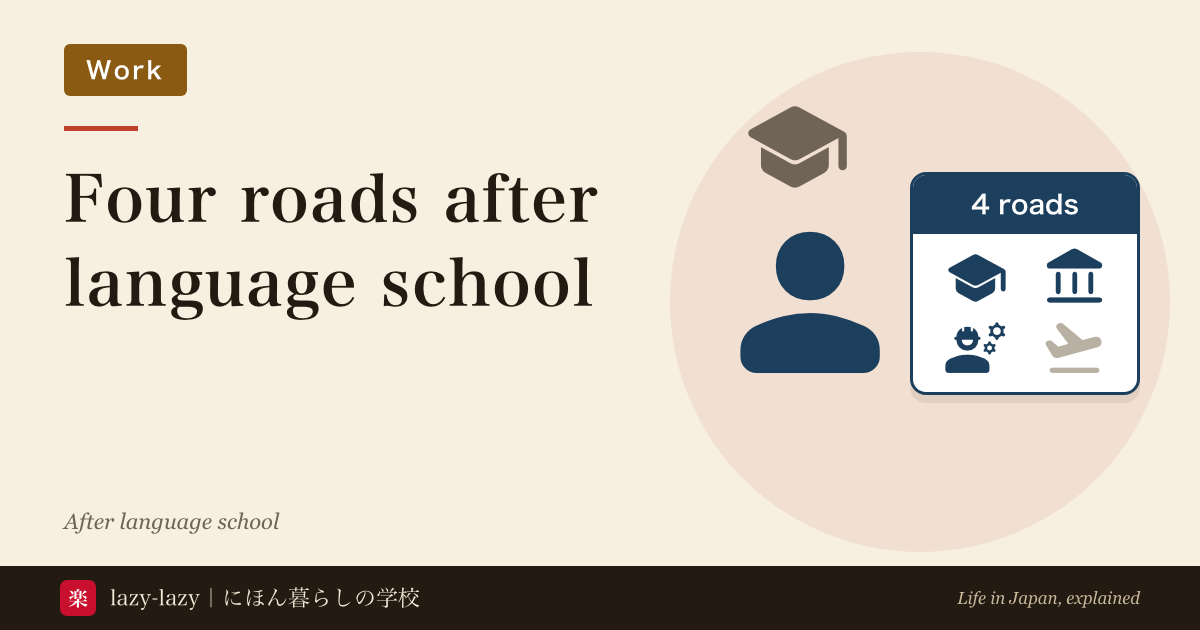
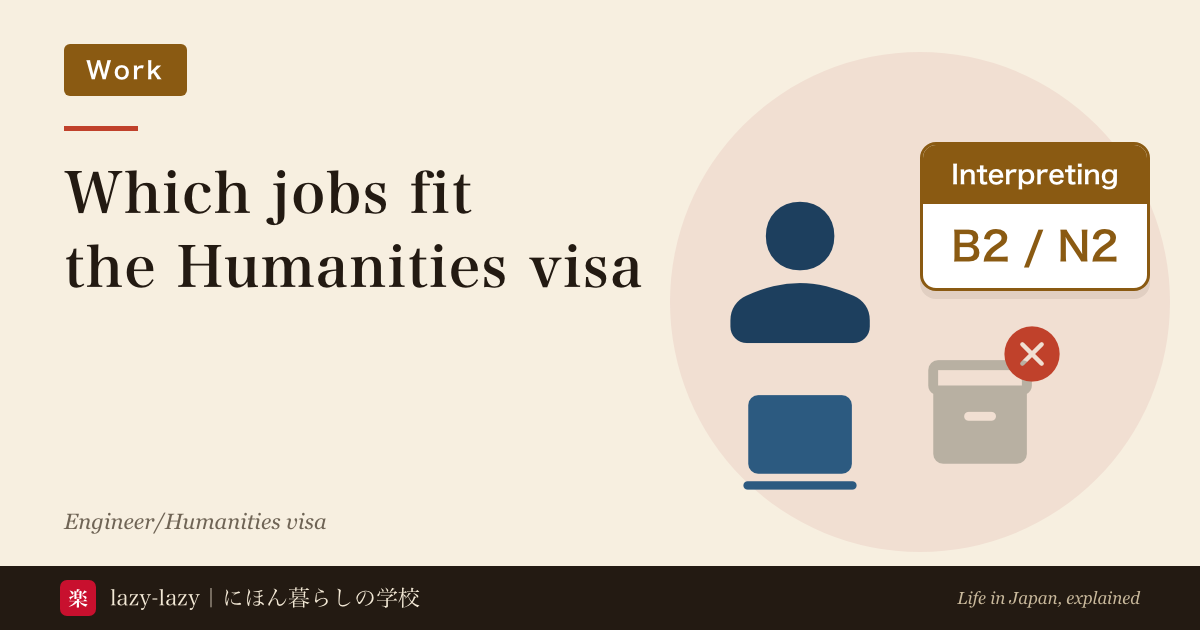
A language school has no job pipeline, and that is not because you are behind. Language school alone does not meet the education requirement for a work visa, so listings never arrive at the school. There are four roads out: vocational school, university, specified skilled worker, and going home. Of last year's hires 44.7% held a university degree and 24.5% a vocational one. A course carrying senmonshi also makes you eligible to transfer into a university (MEXT).
Earn
Where International Students Actually Get Hired in Japan (2026 Data)

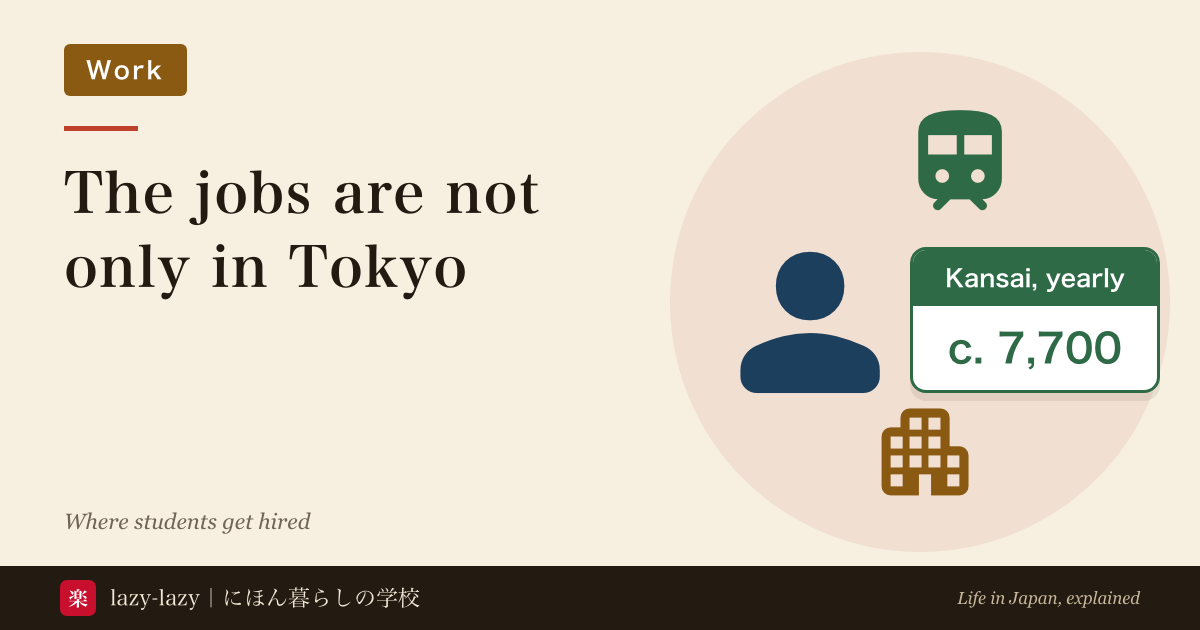
Last year 39,766 students changed from student status to a working one, including 3,909 Nepalese, at a 96.7 percent approval rate. It looks empty because Tokyo holds 42.4 percent, but the Kinki region has 7,754 a year and Osaka plus Hyogo about 5,900, all within commuting distance. The catch: 55.8 percent of hires are at companies under 100 staff and 25.7 percent start under 200,000 yen a month.
Earn
Work Visa Japan: Salary Data by Visa Type and the Equal-Pay Rule

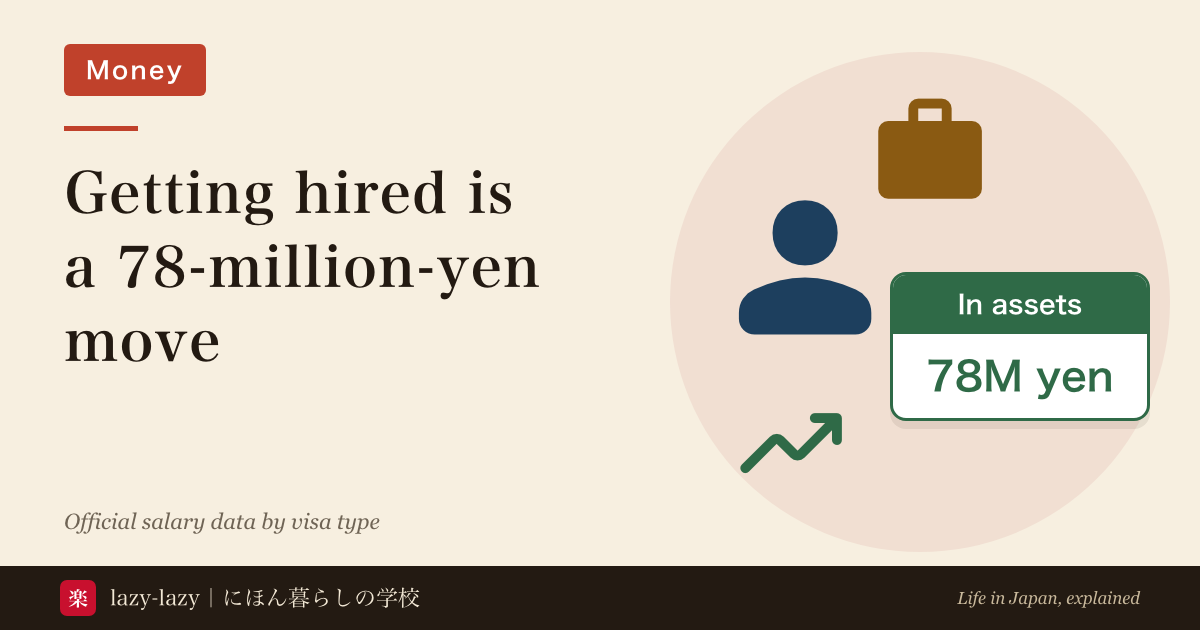
Government data shows every work visa category out-earns the student part-time ceiling of 137,312 yen a month. The Engineer/Specialist visa averages 313,200 yen. Under the 4 percent rule, getting hired is equivalent to about 53 million yen in assets. Equal pay with Japanese workers is a legal requirement, and published cases show visas refused over cheap offers - and over a student who worked 200 hours a month.
English

JASSO Scholarship: 30,000 Yen a Month, Language Schools Included

Before you take on more shifts: the Monbukagakusho Honors Scholarship pays 30,000 yen a month at a Japanese language school and 48,000 yen at university, graduate school or vocational college, and none of it is repaid. Language school students face no JLPT N2 requirement. But you cannot apply yourself - schools nominate, with a limited number of places, so nothing starts until you ask the office.
Earn
Social Media for Foreigners in Japan 2026: X, Instagram and LinkedIn (You Don’t Have to Monetise)
Social media arrives fast; a blog gets found later by search. Use both. You do not need to monetise, and not doing so keeps your residence status out of it. But 42% of mid-career recruiters check applicants' social media.
Earn

Learn Kanji With Japanese School Drills 2026: 1,026 Characters, Free to Print

Living in Japan but still cannot read the paperwork? Use the drill books Japanese children use, from grade 1. Six grades is 1,026 kanji, close to JLPT N2, and you can print them free.
Earn

Work in Japan Without a Degree 2026: The Three Visa Routes

A degree does not decide whether you can work in Japan, only which route you take. Specified Skilled Worker asks for tests instead of schooling. Includes the dispatch rule that catches people out.
Earn

Getting a Driving Licence in Japan as a Foreigner (2026)

Converting a licence costs 4,850 yen; starting from zero costs 200,000 to 400,000. The price swings over 100,000 yen with timing, workers can reach the cheap season, and Japanese is the real gate.
Earn

Start a Blog in Japan: Practice Japanese, Build a Portfolio

Japanese practice arrives in weeks, a portfolio in months, income maybe never. Why a visible body of work helps your job hunt and your student-to-work visa change, and why publishing is free but earning depends on your visa.
Earn

Keigo vs Casual Japanese 2026: What to Say at Work

You can work a Japanese part-time job with only desu and masu plus eight set phrases. The direction trick that makes sonkeigo and kenjougo click, and the mistake guides skip: being too formal with friends keeps people at a distance.
English

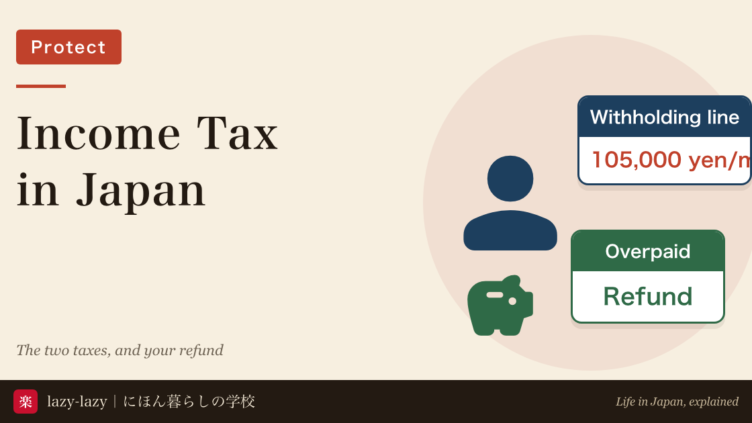
Income Tax in Japan for Foreigners 2026: Get Your Refund

Income tax gets withheld automatically, but most student workers overpay and can get it back. The income walls (1.1 million and 1.6 million yen), the 270,000 yen student deduction almost nobody explains in English, and how to claim it all back.
Earn

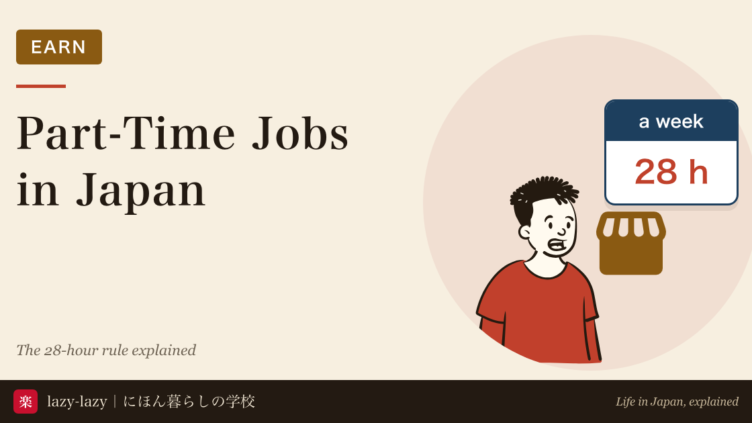
Part-Time Jobs in Japan for Students 2026: The 28-Hour Rule

Working part-time as a student needs a free permit and staying under 28 hours a week total across every job. Banned jobs, dark part-time job scams, safe ways to find work, and typical pay by job type.
English

Student Visa to Work Visa in Japan: 97% Are Approved — Why Some Are Not

In 2024, 96.7% of applications to change from a student visa to a work visa were approved. Refusals are about 1 in 30 — but whether you are that one is decided long before you apply. The 28-hour rule, attendance, and matching your major to the job.
Earn

How to Make Money in Japan as a Foreigner: What Your Visa Allows

What your visa really allows in Japan: side jobs on a work visa, the 28-hour rule for students, full freedom for spouses and permanent residents - and the two things that are always legal.