Last updated: October 2026
In short
- How much you can earn in Japan is decided by your residence status (visa). The same side job can be legal for one person and illegal work for another.
- Permanent residents, spouses of Japanese citizens and Long-Term Residents: no work limits. Anything a Japanese citizen can do, you can do.
- Work visa (Engineer, Specialist in Humanities, etc.): side jobs outside your approved field are not allowed in principle. You need individual permission, or you stay inside your field.
- Students: up to 28 hours a week with the standard permission. Registering a business is dangerous – it can need a separate permission, or a change of visa.
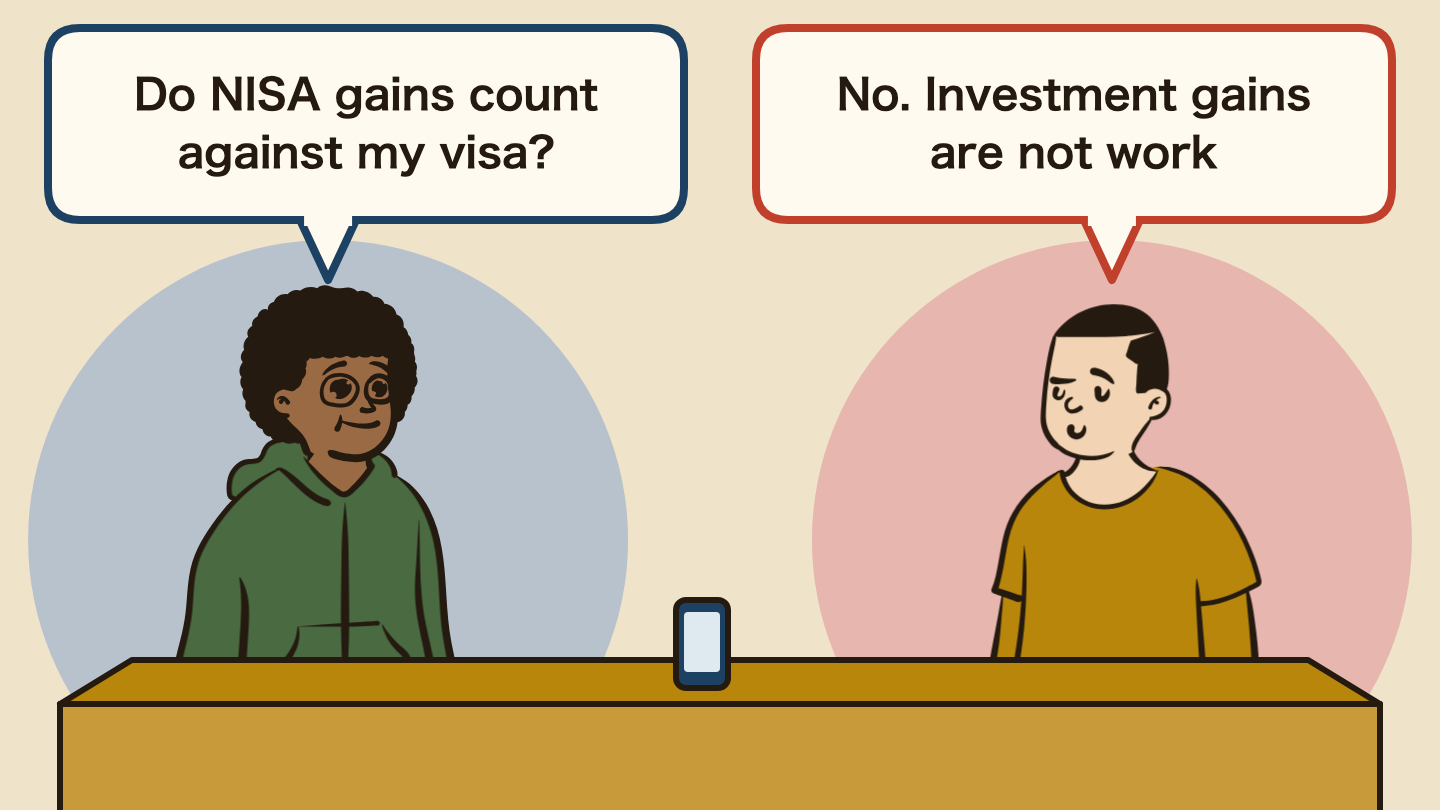
- Always legal on any visa: investment gains (NISA) and selling your own used items – they are not “work”.
Knowing this, you can answer “is this legal on my visa?” in three seconds when a side job comes up – and never be the person who loses a status of residence over it.
One term first. Shikakugai katsudo (資格外活動 / “activity outside your status”) means doing paid activity that your current residence status does not cover. A student working part-time is doing exactly this – with a permission stamp that makes it legal.
- Why is my visa the rulebook for earning?
- On a work visa: which side jobs are legal?
- Married to a Japanese citizen, or a permanent resident?
- Students: how far does the 28-hour rule go?
- What is always legal, on any visa?
- The ultimate earning skill: climb the visa ladder
- Quick reference: what can each visa do?
- Frequently asked questions
- I am on a work visa. Can I do delivery apps on weekends?
- I am married to a Japanese citizen. Are side jobs and startups free?
- I am a student. Can I register a business for my blog or resale income?
- Can I invest with NISA on any visa?
- Is selling things on flea-market apps OK for my visa?
- I am not sure which rule applies to me.
- Summary
- Related guides
Why is my visa the rulebook for earning?
Because working outside what your visa allows is “illegal work” – and the worst outcome is not a fine. It is a refused visa renewal and leaving Japan.
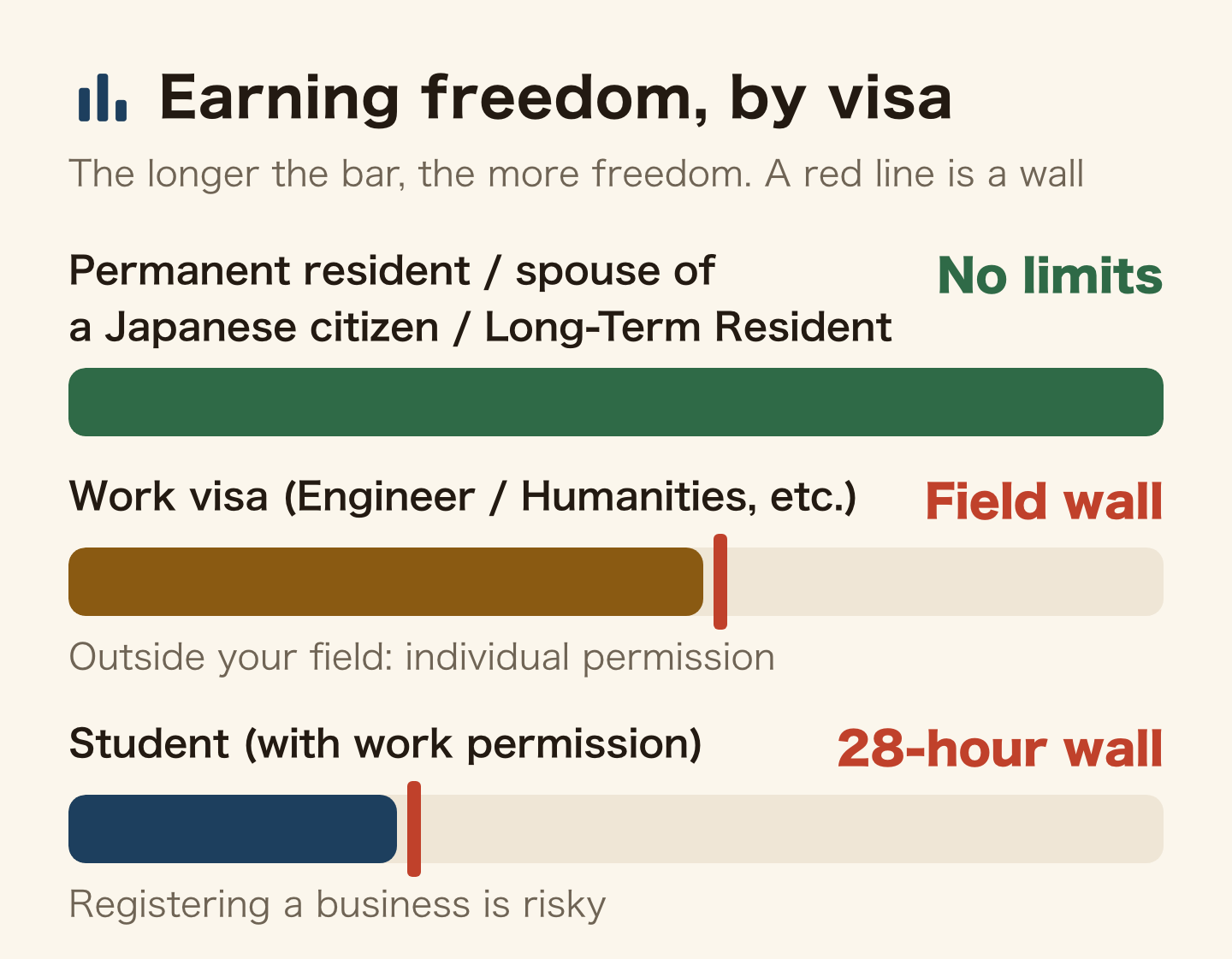
When a Japanese person starts a side hustle, all they need is motivation. A foreigner has one extra wall to check first: immigration law. Knowing the rules before you earn is the strongest earning skill you can have. Here is how much freedom each status really gets:
On a work visa: which side jobs are legal?
You work at your company on weekdays and pick up a few delivery-app orders at the weekend for extra cash. Where you come from, what you do with your free time may be entirely your own business. On a Japanese work visa, taking work outside your approved field without individual permission is illegal work.
Only work inside your approved field may be done without extra permission – and if you are unsure it is inside your field, ask immigration. Delivery apps, restaurant shifts and resale are outside most work visas – doing them without individual permission is illegal work.
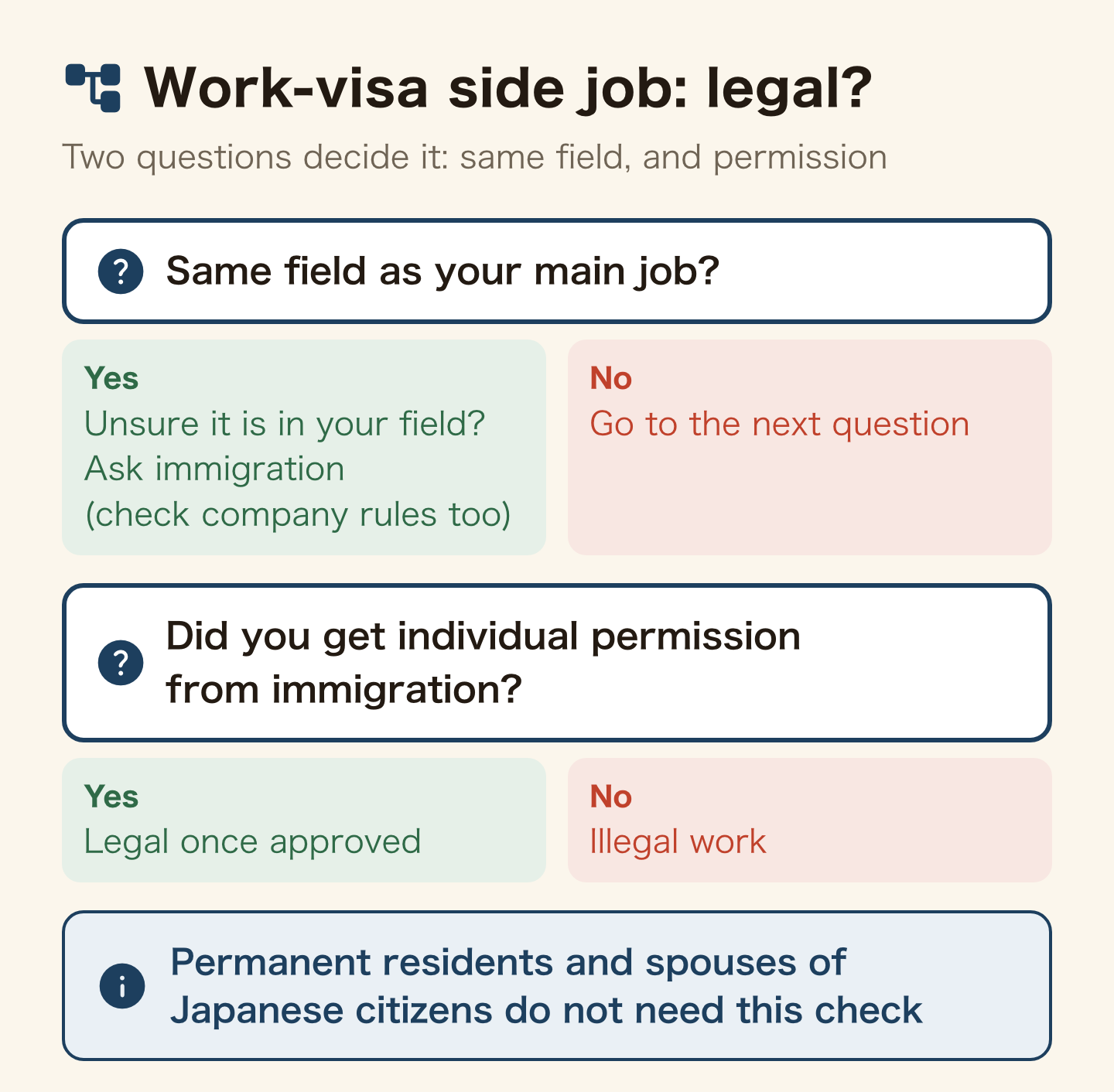
- Route A – stay in your field. An IT engineer taking a weekend programming contract is usually the kind of work your visa already covers. Whether a job is really inside your field is not always clear – if you are unsure, ask immigration before you start. Do check whether your employer allows side work.
- Route B – individual permission. For work outside your field, you apply to immigration for each case: which company, what work, how many hours. Unlike the student permission, this is screened one by one.
Starting a company is a different story. That requires changing to a Business Manager visa – a high bar. Under the rules in force since 16 October 2025, you need capital of 30 million yen or more and at least one full-time employee, among other conditions. On a work visa, the real earning power is changing jobs for higher pay, building your skills and Japanese, and moving toward a freer status.
Married to a Japanese citizen, or a permanent resident?
Then there are no work restrictions at all (the same goes for Long-Term Residents, teijusha). Part-time jobs, delivery apps, video editing, a blog, even founding a company – all of it is open to you.
- No field wall, no time wall – the same conditions as a Japanese citizen
- This is the only status where the full “side hustle” playbook applies
If you have married a Japanese national, switching to the spouse visa is what lifts these limits. One caution: a spouse visa depends on the marriage. Divorce or bereavement can shake the status itself – so while you enjoy the earning freedom, keep protecting the status in mind.
Students: how far does the 28-hour rule go?
With the standard permission you may work up to 28 hours a week across all jobs combined (8 hours a day during long school holidays; separately, Japan’s labour law caps work at 40 hours a week). Adult-entertainment venues are strictly off-limits, and registering your own business is risky.
- Wide choice of jobs: convenience stores, restaurants, delivery, light work – all fine inside 28 hours (delivery by car or scooter starts with converting your home licence). But work connected to adult entertainment (pachinko parlors, hostess bars) is banned even as a dishwasher.
- The business trap: if resale or blogging grows and you register as a sole proprietor, the standard 28-hour permission only covers self-employed work whose hours can be objectively checked. If they cannot, you need individual permission. Setting up a company, hiring staff or opening an office means changing to a Business Manager visa (Immigration Services Agency, work permission for students (Japanese)). At renewal, immigration also looks at whether you were actually studying (Immigration Services Agency, guidelines for changing and renewing status (Japanese)). Earn within part-time work; save the business idea for after you change status.
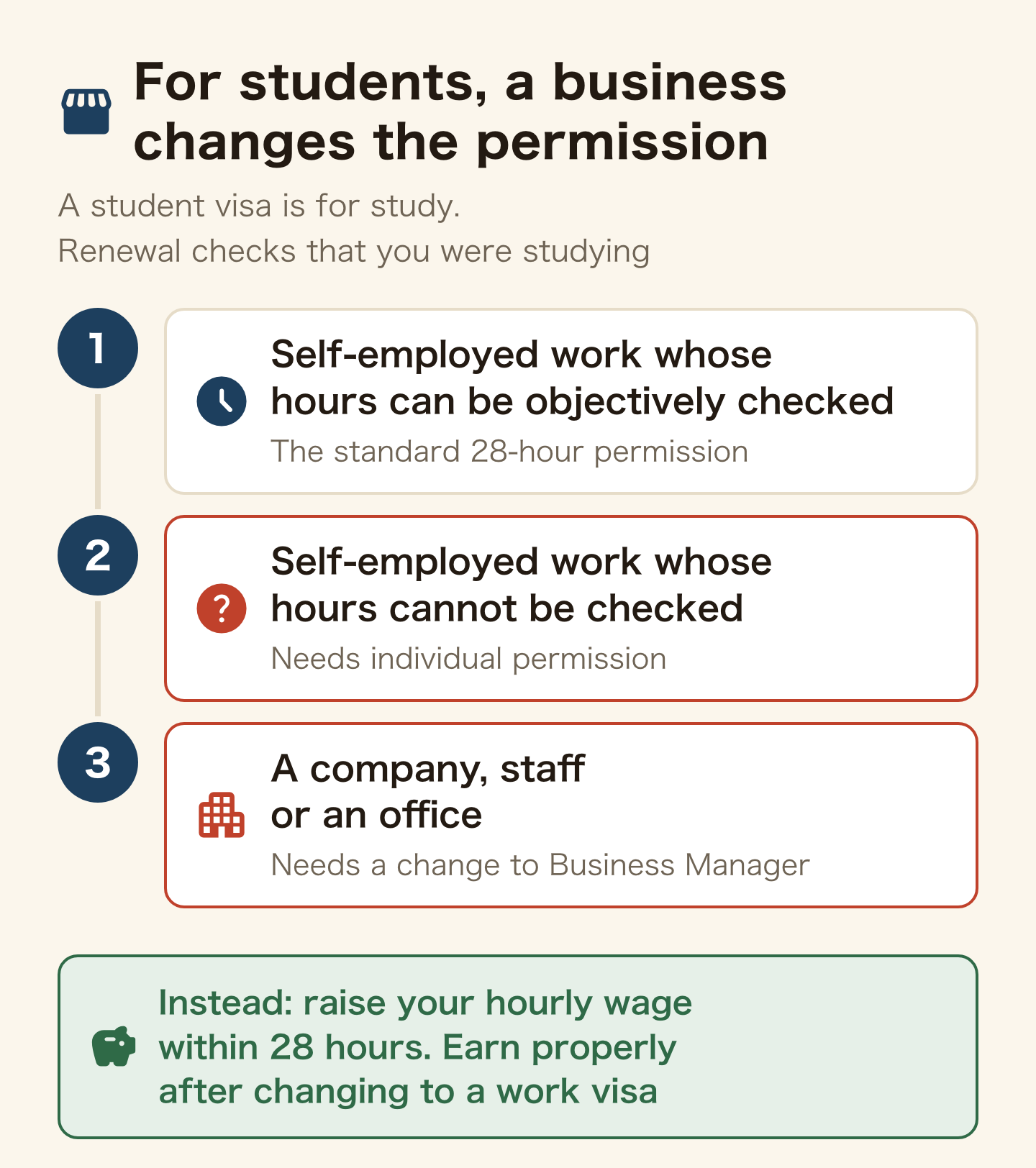
The student earning path that actually works: raise your hourly wage (better Japanese means better-paid jobs) and change to a work visa after graduation – then earn properly.
What is always legal, on any visa?
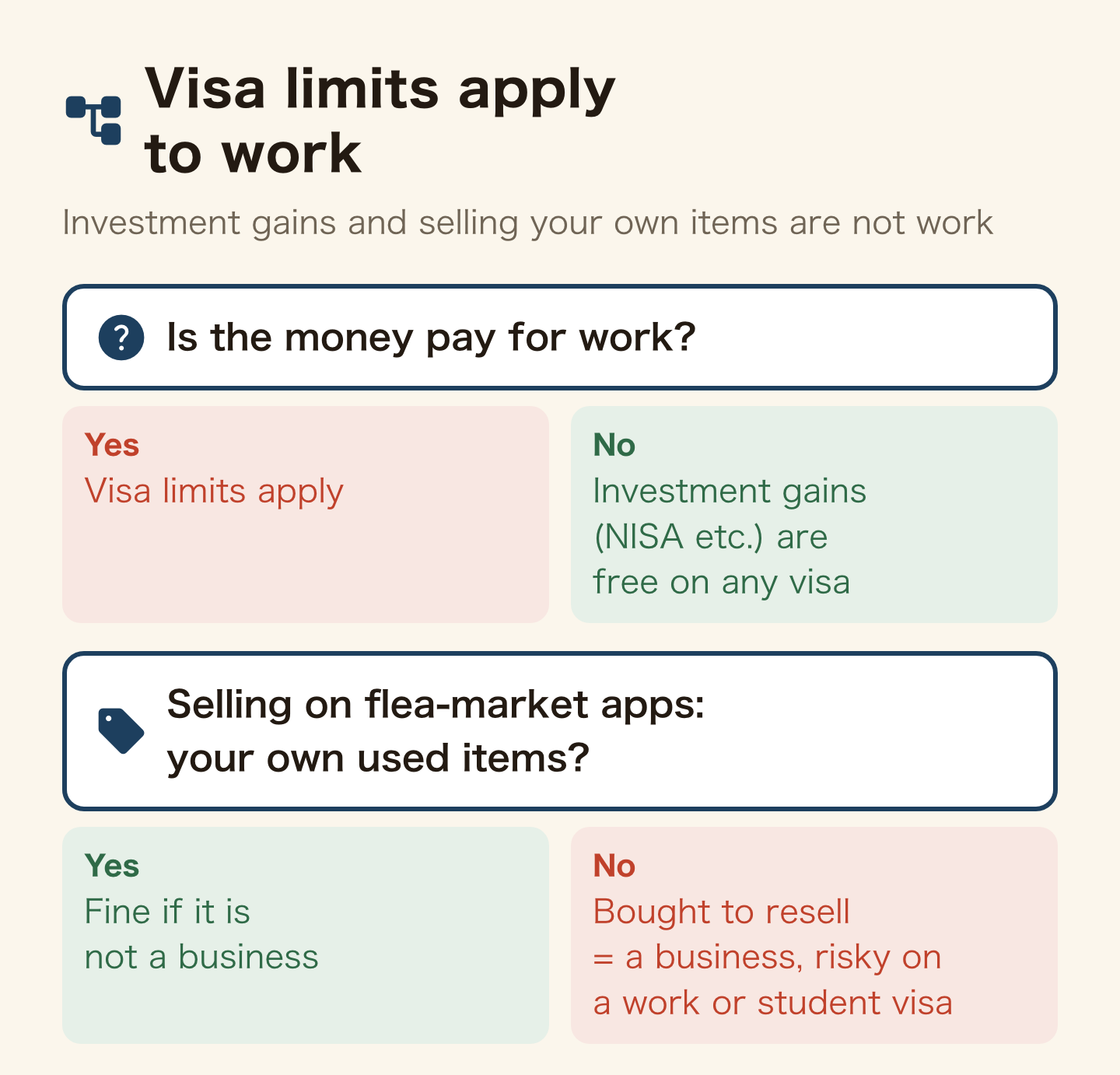
Two things, because they are not “work”: investment gains, and selling your own used items.
- Investing: profits from NISA and other investments are not labor income, so visa work limits do not apply. (If you later leave Japan and become a non-resident, account rules change – check separately.)
- Selling your things: selling your own used items on flea-market apps is fine. Buying items to resell is a business – risky on a work visa or student visa.
The ultimate earning skill: climb the visa ladder
Earning freedom grows with each step of the ladder: student, then work visa, then permanent resident (in principle after 10 years in Japan, among other conditions) or spouse. Moving up a step is worth more than any side hustle.
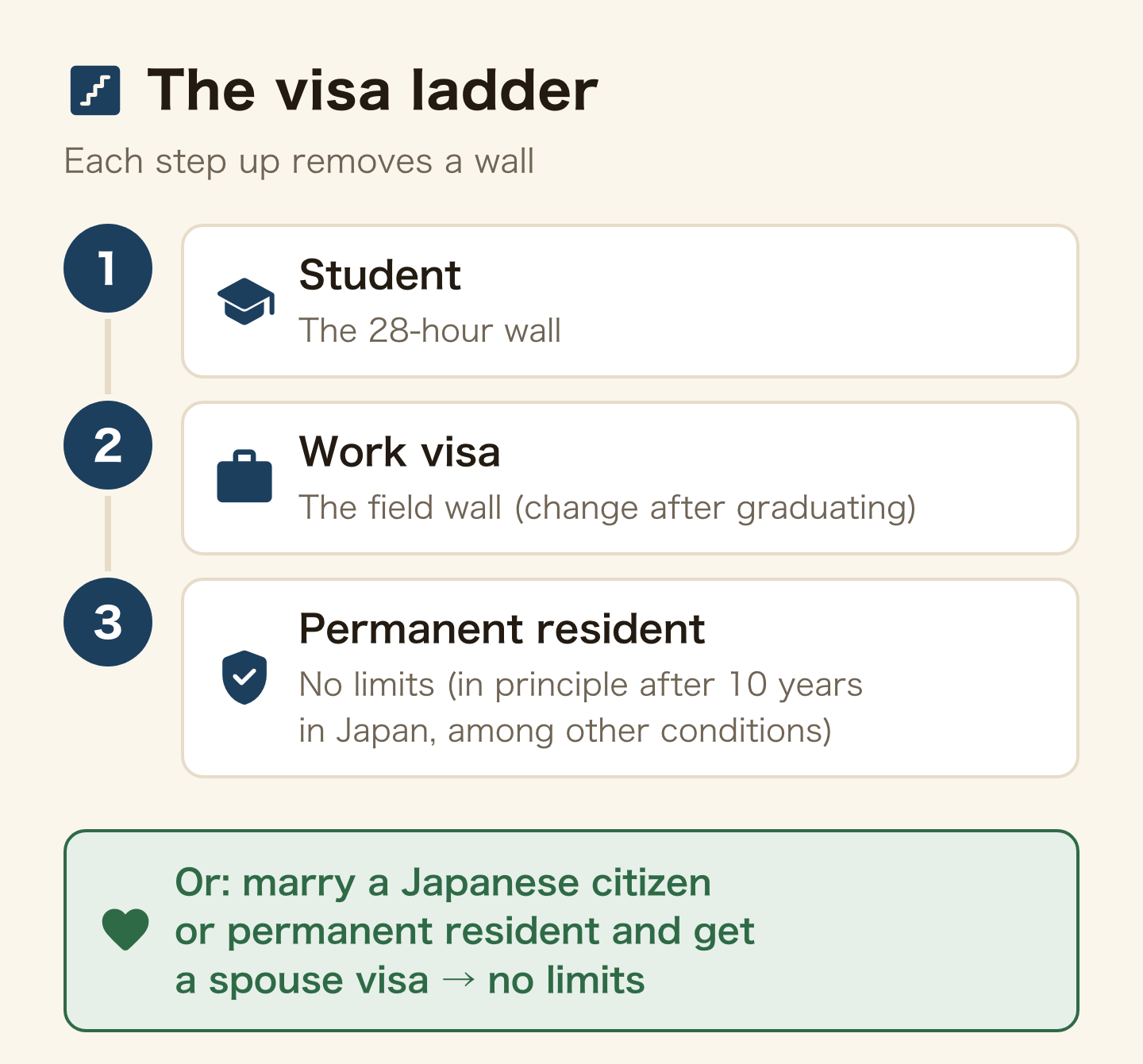
Quick reference: what can each visa do?
| Main job | Side job in another field | Start a company | Investing, selling own items | |
|---|---|---|---|---|
| Permanent / spouse / long-term resident | Free | Free | Free | Free |
| Work visa | Approved field only | Individual permission needed | Business Manager visa required | Free |
| Student | 28 hours, permission needed | Inside 28 hours, no business | Dangerous – do not | Free |
Immigration decisions are case by case. If your situation is unclear, ask the Immigration Services Agency, your school office, or a gyoseishoshi (行政書士 – an administrative lawyer for immigration paperwork) before you act (as of October 2026).
Official sources: Immigration Services Agency, permission to engage in activities outside your status (Japanese) / ISA, part-time work permission for students (Japanese) / ISA, application for permission to engage in other activities (Japanese) / Immigration Services Agency: amendments to the landing criteria for the Business Manager status (Japanese) / Immigration Services Agency, guidelines for changing and renewing status (Japanese) / ISA, permanent residence guidelines (Japanese) (checked 8 October 2026)
Frequently asked questions
I am on a work visa. Can I do delivery apps on weekends?
In principle no. Delivery is outside the field of most work visas, so doing it without permission is illegal work. You would need individual permission (shikakugai katsudo) from immigration first.
I am married to a Japanese citizen. Are side jobs and startups free?
Yes. Spouse and permanent-resident statuses have no work restrictions – side jobs, startups, any industry, same as a Japanese citizen.
I am a student. Can I register a business for my blog or resale income?
We do not recommend it. Self-employed work whose hours cannot be checked needs individual permission, and a company or staff means changing to a Business Manager visa. At renewal, immigration also looks at whether you were actually studying. Stay within 28 hours of part-time work and revisit the business after changing status.
Can I invest with NISA on any visa?
Yes. Investment gains are not labor, so work limits do not apply. If you later leave Japan and become a non-resident, account rules change – check that separately.
Is selling things on flea-market apps OK for my visa?
Selling your own used items is fine if it is not a business. Buying items in order to resell them counts as business and can become illegal activity on a work or student visa.
I am not sure which rule applies to me.
Immigration rules are judged case by case. Ask the Immigration Services Agency, your school office, or a gyoseishoshi (immigration paperwork specialist) before acting.
Summary
- Your earning freedom is decided by your visa – know the rule before you earn
- Permanent / spouse / long-term resident: no limits
- Work visa: other fields need individual permission
- Student: 28 hours, never register a business
- Investing and selling your own items are always free – and the ultimate earning skill is climbing the visa ladder
Related guides
Found this useful? Share it
Send it to a friend who lives in Japan.
WHO WROTE THIS

mori
Japanese. I read the ministries’ own notices, orders and Q&As in the original, and I start from what my Nepalese and Sri Lankan friends in Japan actually ran into. I do not write about what I have not checked or been told.
What this site can and cannot do →Looking for something else?
You may use the figures in this article, including commercially, if you credit this site with a link. How to use our figures