This article contains affiliate links.
Last updated: July 2026
In short
- Your landlord cannot raise your rent unilaterally. Under a standard lease, a rent increase requires your agreement.
- You are strongly protected by the Act on Land and Building Leases. Saying no does not get you evicted.
- If you do not agree, you can simply keep paying your current rent and the lease continues.
- Three things matter most: do not sign anything on the spot, check your contract, and keep a record of every exchange.
- That said, if the reason is reasonable and cheaper than moving, accepting it can be the smart choice. The decision is yours.
Bottom line first: a rent increase needs your agreement to take effect
“My landlord suddenly said they are raising my rent” and “I am scared that saying no means getting kicked out” are worries a lot of students have. You can relax: in Japan, tenants are protected by strong, specific law.
Under the standard fixed-term-free lease (futsu shakka keiyaku) that most renters have, changing the rent requires agreement from both you and the landlord. If your landlord says “I am raising it” and you say “I do not agree,” the increase simply does not go into effect.
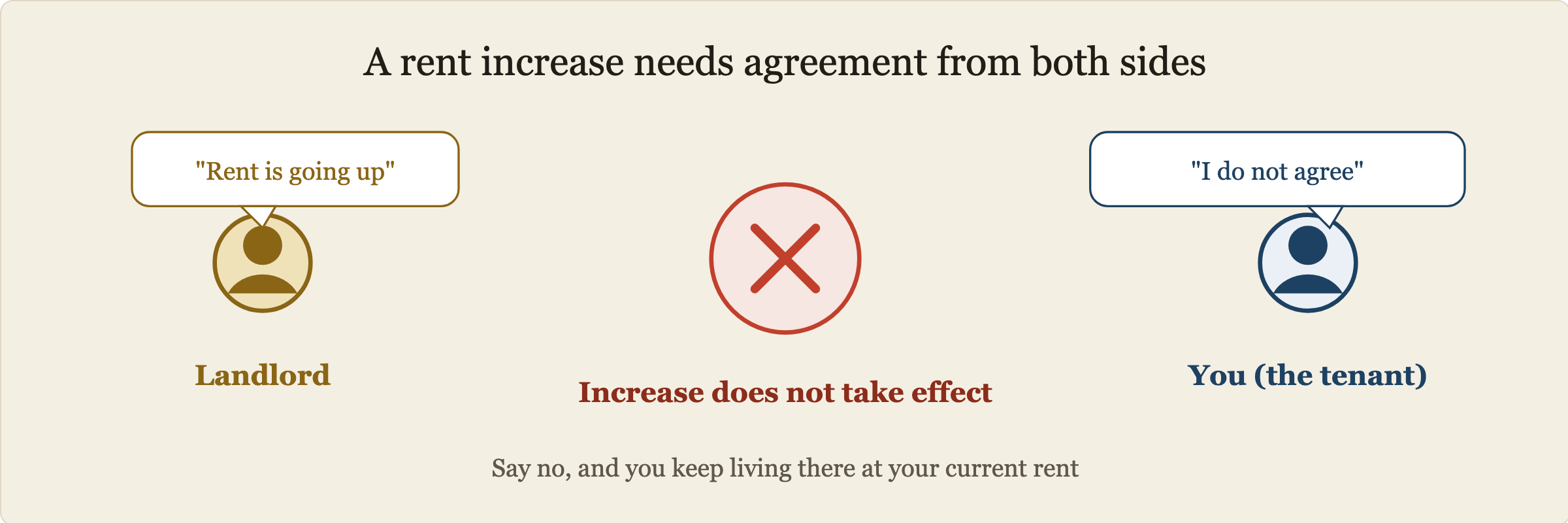
The law behind this is the Act on Land and Building Leases (shakuchi shakka ho). You cannot be evicted just because your landlord wants to charge more, and if you do not agree to an increase, you can simply keep paying what you already pay – that is the baseline.
Why rent increases are becoming more common
Rents are climbing across Japan, and complaints about rent disputes to the National Consumer Affairs Center have risen sharply in recent years. The drivers include:
- Rising land prices and property taxes: landlords face higher holding costs
- Higher construction and labor costs: new-build rents go up, and existing units follow
- Demand in major cities: vacancies are shrinking in places like Tokyo and Osaka, pushing rents higher
In other words, rent increase notices are only going to become more common. That is exactly why knowing you can say no matters.
5 steps for when a rent increase notice arrives
If you actually receive a “we are raising your rent” notice, work through these steps calmly, in this order.
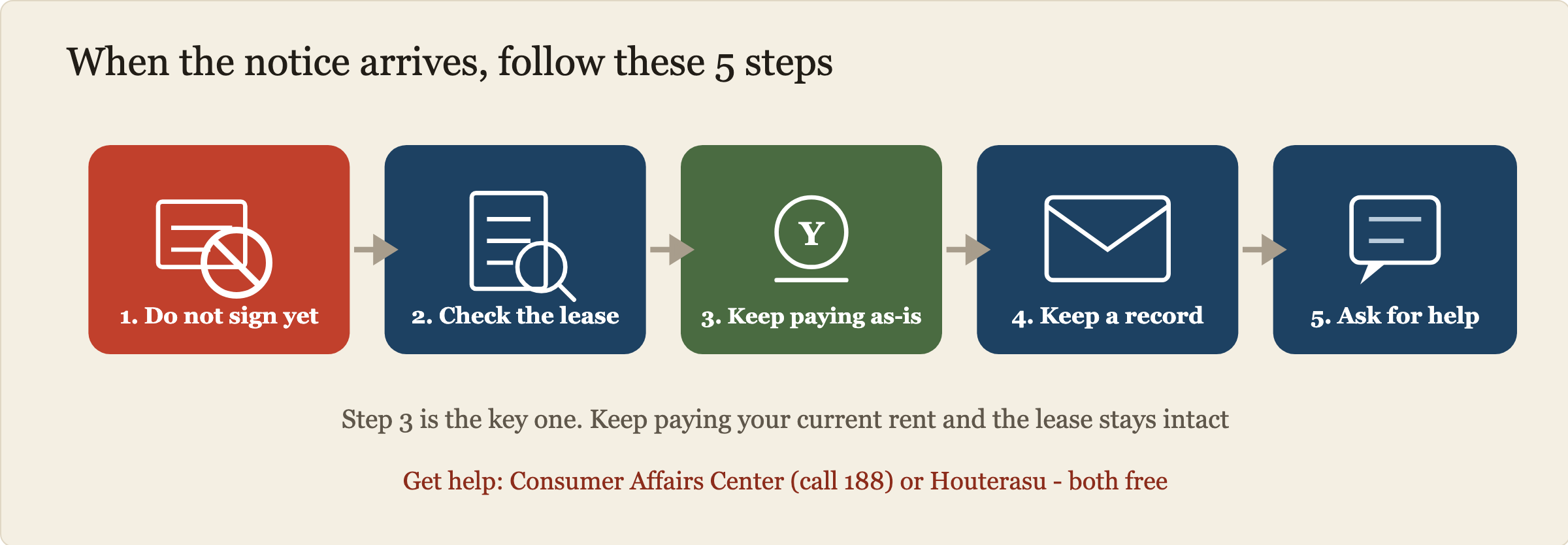
Step 1, do not sign anything on the spot, matters most. Signing a notice or a consent form gets treated as agreement, which is hard to reverse later. It is fine to simply say “let me check and get back to you.”
Say no, or accept? The choice is yours
So far this has been about your right to refuse – but accepting can sometimes be the better deal. Use this logic to decide.
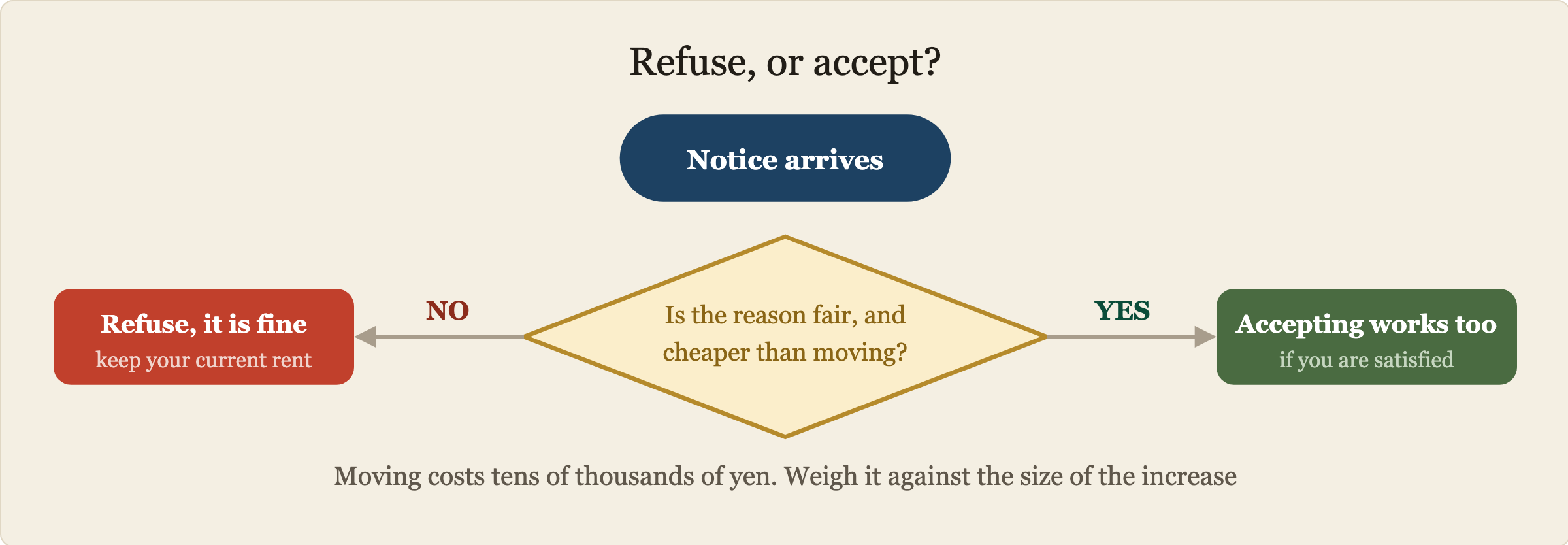
Moving comes with move-in costs (deposit, key money, agency fees) plus the cost of the move itself, easily hundreds of dollars. A small increase can genuinely be cheaper to accept than to move away from. On the other hand, if the increase is large or the reason is unclear, refuse it or negotiate. The law puts the decision in both parties’ hands – meaning the final call belongs to you.
Frequently asked questions
Q. If I refuse the increase, will I be evicted?
No. Under a standard lease, refusing a rent increase alone is not grounds for forced eviction. You are protected by the Act on Land and Building Leases, and the lease continues as long as you keep paying your current rent.
Q. I was asked to sign a rent increase notice.
Do not sign it on the spot. Signing gets treated as agreement. Say “let me check the details and get back to you,” then review your contract and where to get advice.
Q. If I refuse, which rent amount should I pay?
If you do not agree, it is fine to keep paying your current rent. If the landlord refuses to accept the payment, there is a legal deposit procedure (kyotaku) through the Legal Affairs Bureau. If you are unsure, contact a Consumer Affairs Center or Houterasu.
Q. Does a fixed-term lease work differently?
Yes. A fixed-term lease (teiki shakka) ends at a set date, and terms can change when it is renewed. Check your own contract first to see whether you have a standard lease or a fixed-term one.
Q. Where can I get advice?
Your municipal Consumer Affairs Center (call 188), Houterasu (Japan Legal Support Center), or your school’s international student office all offer free consultations. Bring your evidence – the notice and any records of communication – when you go.
Summary
- Under a standard lease, a rent increase needs your agreement to take effect
- You are protected by the Act on Land and Building Leases. Saying no does not get you evicted
- If you do not agree, you can simply keep paying your current rent
- Follow three rules: do not sign, check your contract, keep a record
- Whether to accept is your call, weighed against the cost of moving. If unsure, call 188
Related guides
Found this useful? Share it
Send it to a friend who lives in Japan.
WHO WROTE THIS

mori
Japanese. I read the ministries’ own notices, orders and Q&As in the original, and I start from what my Nepalese and Sri Lankan friends in Japan actually ran into. I do not write about what I have not checked or been told.
What this site can and cannot do →Looking for something else?